
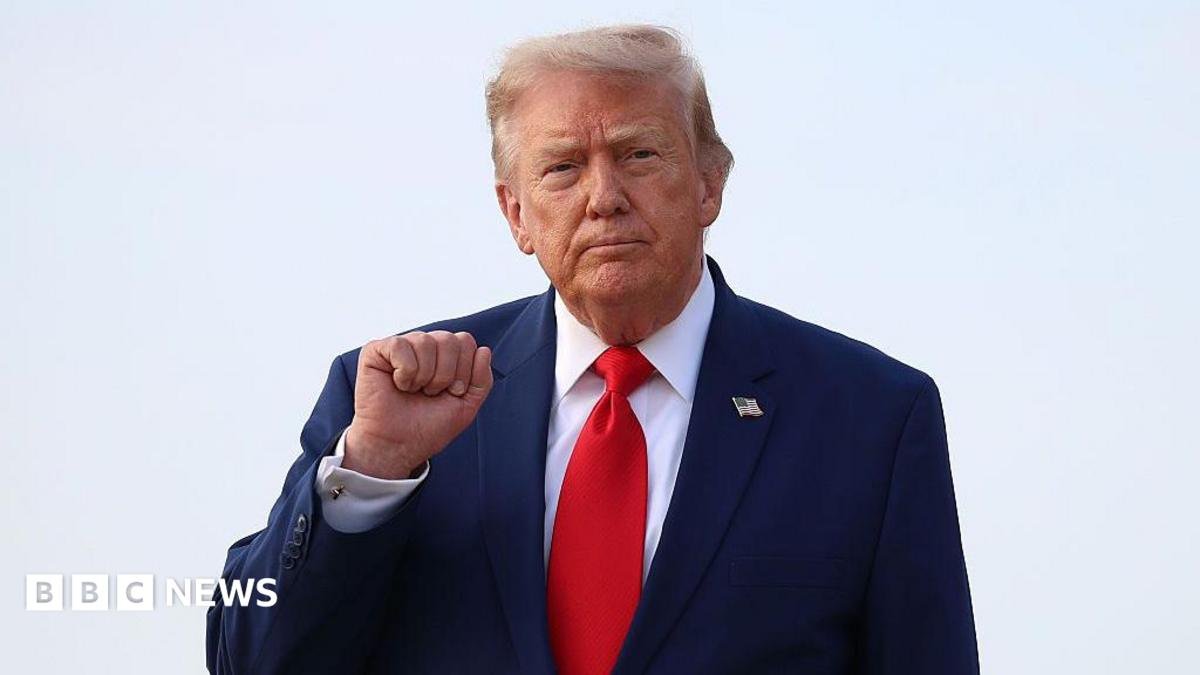
President Donald Trump has a long way to go as he seeks justification for building a tariff wall around the United States, including against key allies.
From the opioid crisis to illegal immigration and then the need to bring manufacturing back to American shores, the list goes on.
Almost every month during Trump’s second term, a new justification has emerged for the trade tariffs he is trying to impose on allies.
Some of them were canceled by the courts, others by economic reasons, and some even by their own logic. So Trump has now proceeded to effectively charge dozens of trading partners with trading in goods produced using forced labor.
It’s “tariffs in search of power,” as one industry insider put it. The forced labor line underpins President Trump’s tariffs, despite challenges from Congress or the courts.
In practice, the fees in different countries are remarkably similar to the previous round of tariffs put in place supposedly for very different reasons.
The good news for the UK is that the regime remains essentially the same as before.
What has changed is that our closest neighbors in the European Union now have a much better deal than before and are in turn in a better situation than the UK.
While the UK and EU appear to have a 10% rate each, the EU has a flat rate and in the UK the tariffs will apply alongside other tariffs on a range of goods including footwear and textiles.
The government negotiated effective side deals for drugs, steel, aluminum, cars and, with the help of King Charles, whiskey.
However, at the end of this process, the EU’s overall effective trade-weighted tariff rate (8.5%) may be slightly lower than the UK’s (6.8%).
It shouldn’t make a big difference, but the help provided by the first deal and post-Brexit trading freedoms appears to have been short-lived.
British Chambers of Commerce trade expert William Bain points out the competitive advantages of EU exporters to the US in some sectors.
The EU achieved better treatment because it introduced a ban on forced labor products, something that the UK did not do.
This is not an indictment of the use of forced labor in supply chains. We are talking about the adoption of special legislation reflecting the US ban on products in the supply chains of which forced labor was used.