

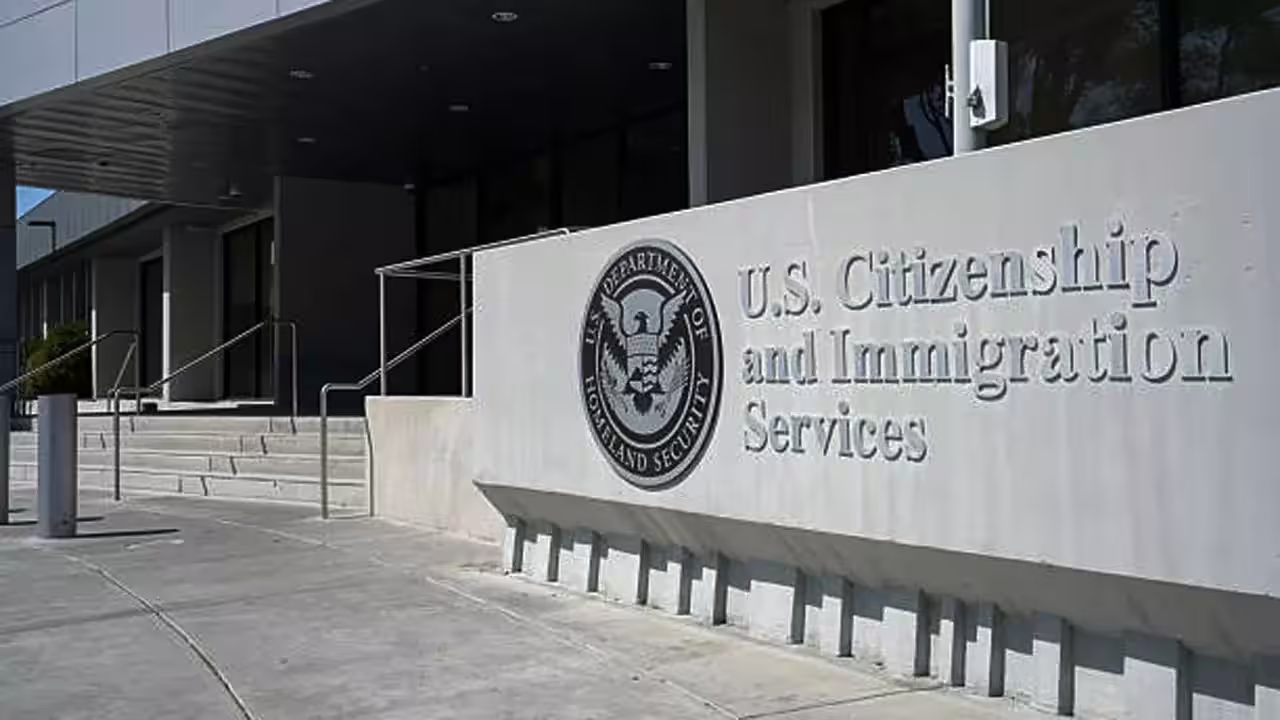
 US Citizenship and Immigration Services (USCIS) announced that it has received enough petitions to meet the H-1B visa cap for fiscal year 2027, meaning there will be no additional lottery rounds. In an alert issued July 17, 2026, the agency said it had reached both the cap for regular H-1B visas of 65,000 and the U.S. graduate degree exemption of 20,000, also known as the master’s cap. This update marks the end of the H-1B cap selection process for this year.
USCIS reports FY 2027 H-1B limit has been reached
In its alert, USCIS said it had received enough petitions to meet Congress’s cap of 65,000 regular H-1B visas, as well as 20,000 U.S. graduate-level H-1B exemptions, commonly known as the master’s cap, for fiscal year 2027.The agency will now continue processing petitions that were selected and filed under this year’s limit.“USCIS has received enough petitions to reach the congressionally mandated limit of 65,000 regular H-1B visas and 20,000 H-1B graduate visas in the United States, known as the graduate limit, for fiscal year 2027,” warning has been read.
No second H-1B lottery expected
This announcement means that USCIS will not conduct a second H-1B lottery in FY 2027. Typically, an agency will only hold another lottery if it does not receive enough eligible petitions to meet the annual limit.This year, many applicants and employers were anticipating the possibility of another qualifying round due to several major changes to the H-1B application process.
FY 2027 brought major changes to H-1B eligibility.
Notably, FY 2027 was the first year that USCIS used a wage-based lottery, replacing the previous random selection system. Under the new process, higher paying jobs were given a greater chance of selection. The number of H-1B registrations has reportedly dropped sharply. There were approximately 211,600 registrations in FY 2027, compared to 343,981 in FY 2026.In September 2025, the Trump administration also introduced a $100,000 H-1B petition fee, which prompted many employers to file fewer registrations and become more selective about the candidates they sponsored.