

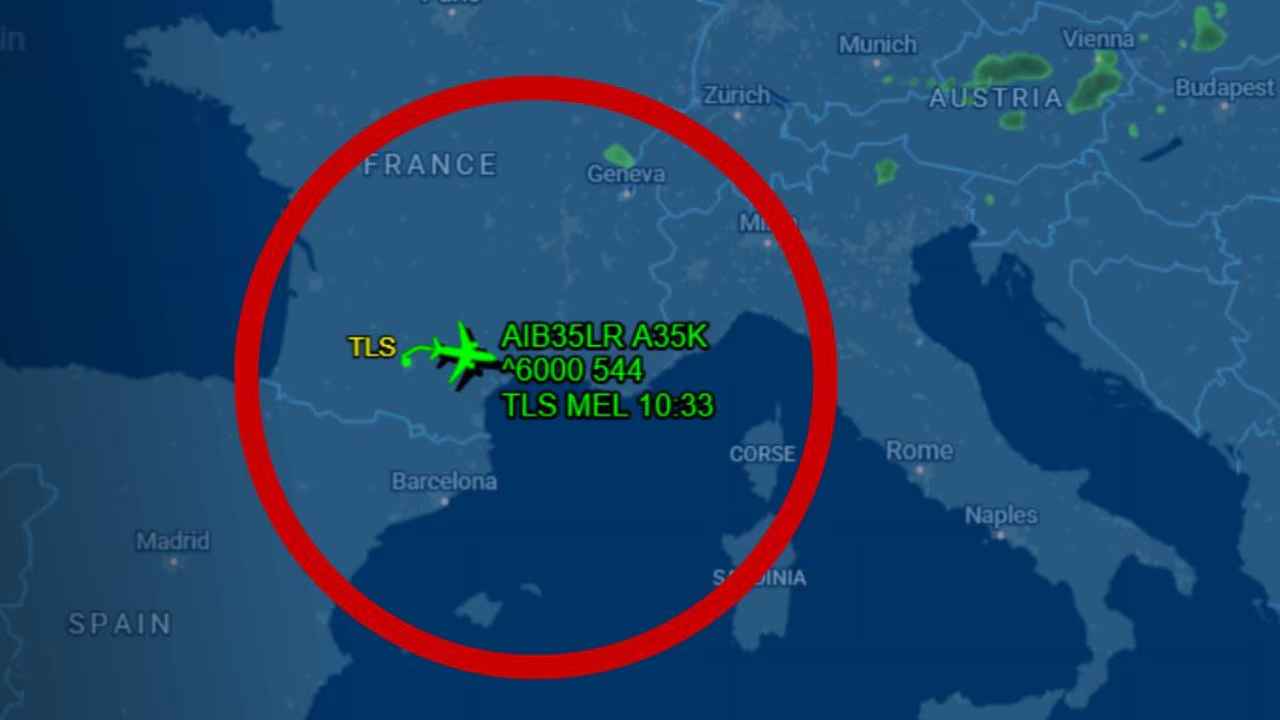
Observers and aviation enthusiasts are watching closely as the world’s longest-haul commercial aircraft makes its maiden flight to Australia.
The Airbus A350-1000ULR, commissioned by Qantas to fly non-stop between Sydney and London from October 2027, embarks on a test flight from Toulouse, France to Melbourne, Australia.
The plane took off from Toulouse at 7.33am local time on Thursday (3.33pm AEST) and is due to land in Melbourne around 10.30am on Friday after 7pm.
Shortly after departure, the flight became the most tracked flight in the world on online tracker Flightradar24. More than 10,000 people tuned in to watch the broadcast.
On June 2, the aircraft successfully completed its first test flight of three hours and 43 minutes over France and the French Atlantic coast.
Qantas first announced Project Sunrise in 2017 and then ordered 12 specially designed A350-1000ULR aircraft from Airbus in 2022.
The first aircraft was due to be delivered this year, but the delivery date has been delayed until April 2027. After delivery of the first aircraft, the remaining 11 will follow over the next two and a half years.

Melbourne makes a test flight, but not a real one
Although the landmark test flight landed in Melbourne, there was no indication of when the city could actually begin non-stop flights for real.
News.com.au was at Airbus headquarters in Toulouse in June when Qantas CEO Vanessa Hudson announced Project Sunrise’s first route would be Sydney to London. The flights will go on sale in February and begin in October next year.
Ms Hudson expects the Sydney-New York route to launch shortly after the London flight in the last couple of months of 2027.
Qantas needs three aircraft to operate each route daily, meaning six more aircraft will be delivered once the daily Sydney-London and Sydney-New York flights are launched.
But Ms Hudson would not say when Melbourne-London or Melbourne-New York might become a reality, saying only that there would be discussions after Sydney.

Ms Hudson said she hoped the launch of the Sydney-London service would stimulate demand for the service from other airports.
“We will be able to announce routes gradually as new aircraft arrive over the next two and a half years,” she said.
“Demand can change. We know how demand can change and we’re going to respond to that.”
When news.com.au asked Qantas chief financial officer Rob Marcolina why Sydney was chosen to launch Project Sunrise flights over Melbourne, he said it was the size of the market that gave Sydney the advantage.
“Any one of them would have been a great choice, but one of them had to go first and I think we’re very pleased that it’s coming from Sydney,” said the finance director, who is originally from Melbourne but now lives in Sydney.
The airline’s intention is to actually use those ultra-long-haul aircraft that arrive after the first six on existing routes such as Perth-London and Auckland-New York.
Ms Hudson said this meant they could reallocate older aircraft and potentially open new routes.
“This will free up the 787 and allow us to expand the network more widely,” she explained.
“(An exciting destination we’ve wanted to fly to for years has been Chicago, connecting the east coast to Chicago. There are potentially other ports in North America, Canada, South America, as well as west of Perth that could seasonally connect potentially Athens or Africa.”
From Sydney to London via the North Pole
Qantas Chief Technical Pilot Alex Passerini spoke about the unusual trajectory of the Sydney-London non-stop flight.
The new “north polar flight path” will be used for about 20 percent of flights, especially during the northern winter.
It may seem strange for an airline to take the long route to London in terms of distance, but by avoiding the winds at certain times of year and with less air traffic, it may actually be a faster option.
Mr Passerini explained to news.com.au at Airbus headquarters in France that there were airlines crossing the North Pole region today, but this would be the first commercial airline from Australia.
“The whole approach is very different from what we are used to,” he said.
“We end up flying over the North Pacific, Alaska, Greenland, Iceland and entering London from the north, where, you know, you really have to stop and think about it.
“We’re crossing different airspace, slightly different procedures, in the polar region you have to think about some other things. Things like communications and space weather,” Mr Passerini said. “On our flights to South America we fly over the South Pole region, so the South Pole region is familiar to us, but this is a new region for us as the North Pole region.”
According to Qantas’ plans, the fastest flight time from Sydney to London will be 19 hours 25 minutes, and the slowest will be 20 hours 55 minutes. Flight times from Sydney to London are expected to be faster, ranging from 18 to 20 hours.
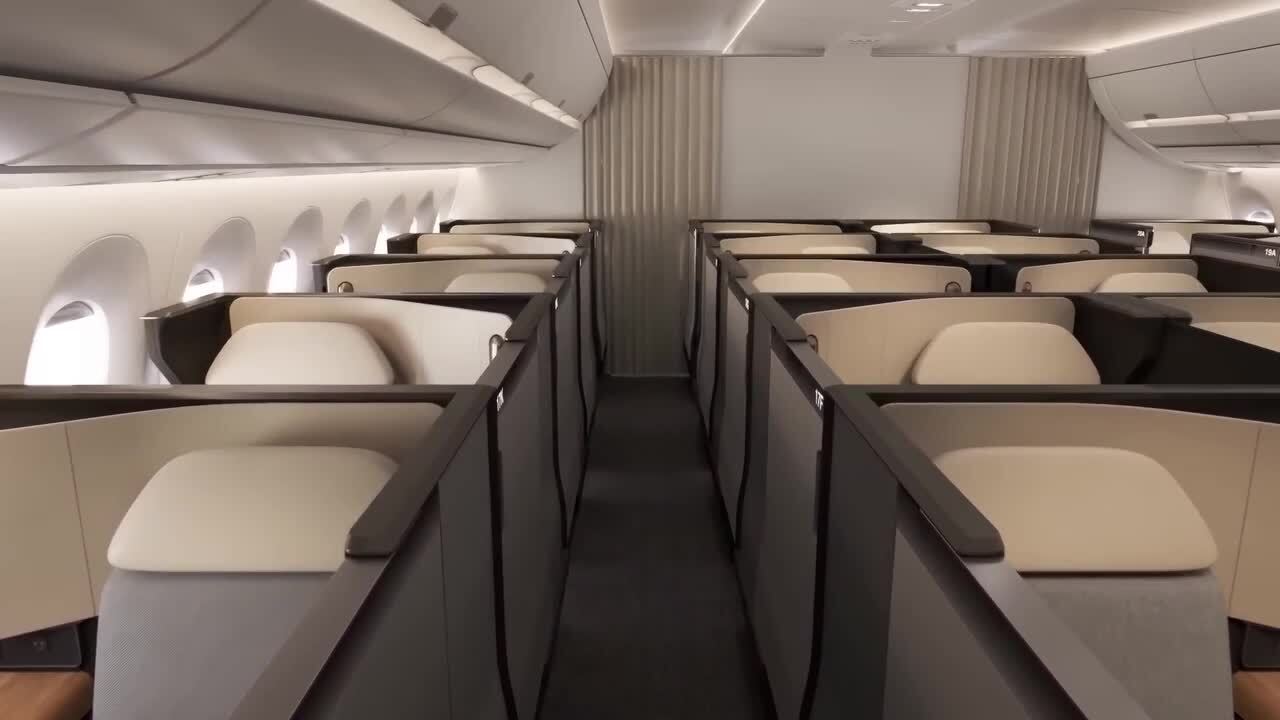
The flight will be dark for 12 hours.
Passengers will have to cross between nine and eleven time zones en route to London and between 14 and 16 time zones on the flight to New York, depending on the time of year.
Stuck on a plane for 21 hours and crossing time zones faster than their body clock, there’s a lot to think about regarding the health of these future clients.
There is the issue of sleep deprivation or untimely sleep, fatigue and jet lag, long periods of immobility and potential dehydration.
Qantas turned to the expertise of Peter Quistulli, professor of sleep medicine at the Charles Perkins Center at the University of Sydney, for help.
Professor Quistulli explained that the traditional airplane model was to get passengers onto the plane safely, feed them, turn off the lights, then wake them up and feed them again.
But the optimized approach involved consciously scheduling meal and sleep times.
He said light intensity, color and timing were “very important” in influencing our circadian clock, as well as what foods were served and when.
“Light is the strongest environmental signal to the body clock,” he said.
Qantas has selected 12 lighting scenes for the A350-1000ULR, including sunrise and sunset, which gradually move around the cabin to help customers adjust.
Passengers can expect a huge 12-hour window of darkness to promote sleep on the Sydney-London flight.
When it comes to food, Professor Quistulli said that before bed on a flight you should eat “not heavy, low in fat and more protein”.
“You can use spices strategically when you want to keep people awake,” he added.
However, it appears that customers will still have the opportunity to participate.
When news.com.au asked whether all food items would be optimized, Professor Quistulli said optimized items would likely just be an option on the menu with an asterisk indicating it was a recommendation.
There are no details yet about what the food will be like.
The plane also has a wellness area, located between Premium Economy and Economy, available to everyone, with instructor-led exercises developed by the Charles Perkins Center.
Read similar topics:Qantas