

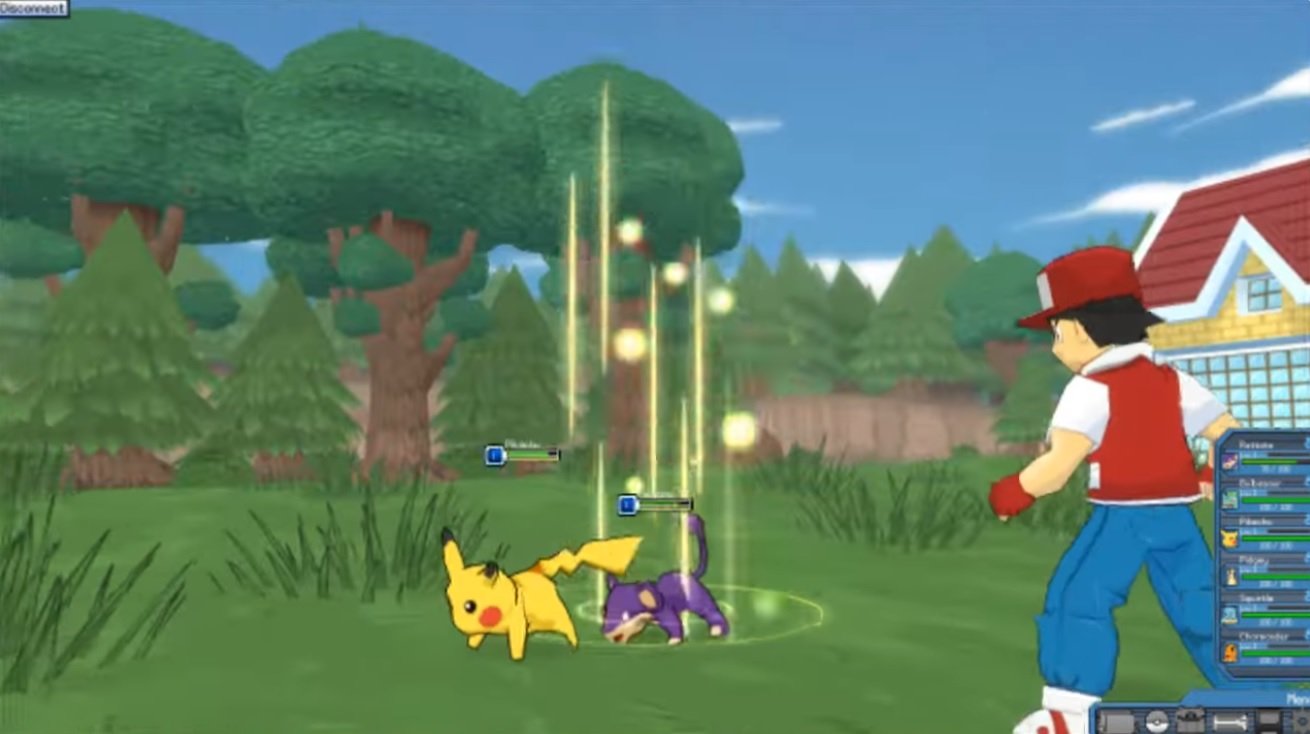
Last week, the Japan Patent Office (JPO) published a notice of rejection of Nintendo and The Pokémon Company’s separate patent application No. 2026-019762. This patent application, which describes an “in-game monster catching system,” is closely tied to an ongoing legal dispute with developer Palworld Pocketpair, so it’s no surprise that the denial has attracted attention.
But interestingly, Japanese users have noted the uncharacteristically searing language used by the JPO expert in response to Nintendo’s counterarguments, and people are happily posting their “favorite quotes” from legal sources. Industry professionals such as Japanese patent attorney Kiyoshi Kurihara also noted that both Nintendo’s objections and the examiner’s written response contained “things that are rarely seen in standard patent practice.”
One of the key factors in the patent denial was a 2013 YouTube gaming video showcasing the indie fan game Pokémon Generations. In its original “Reasons for Rejection,” the JPO cited the game mechanics demonstrated in the video to prove a lack of inventive step in Nintendo’s patent application, describing mechanisms such as “selecting a Pokeball displayed in the bottom right corner of the screen causes Ash to throw it; if it hits Pikachu, Pikachu can be caught.”
However, in a subsequent counter-argument, Nintendo vigorously disputed these claims, emphasizing that the game in question and the characters depicted in it violated its copyright. They claim that the JPO examiner “acted grossly improperly by willfully mischaracterizing the infringing product as if it were authorized,” a sentence repeated numerous times throughout the document.
In turn, in a recent notice confirming denial, the JPO examiner completely rejects the mention of copyright infringement, explaining that, based on national patent laws and judicial precedent, whether an invention is infringing or not has no bearing on the determination of inventive step. While somewhat dryly implying that Nintendo’s position deviates from the “standard thinking of patent examiners,” they dismiss the interpretation that the examiner recognized the fan game in question as an officially licensed Pokemon game as a “totally unfounded misunderstanding.” They also add: “The mere possibility that the reasons for the deviation may be the subject of such an unfounded misunderstanding has no bearing on the assessment of inventive step.”
Another part of the notice that raised eyebrows among Japanese users was the expert’s apparent dissatisfaction with Nintendo’s pedantry in how the unofficial game and its content were mentioned in the reasons for rejection. In its counterarguments, the company stated: “Ash, Pikachu and Poké Ball should properly be referred to as ‘Ash’s infringing character’, ‘Pikachu’s infringing character’ and ‘Poké Balls’ infringing character’ respectively.”
In response, the expert says: “If it were unacceptable to refer to the names of characters in the reasons for rejection, then even at the cost of redundancy, accuracy should take precedence. In this case, the notification would have to use cumbersome descriptions, such as “item in the form of a small animal” instead of “Pokémon”, “item in the form of a boy in a red hat” instead of “Ash”, “item in the form of a small yellow animal” instead of “Pikachu”, etc. “item in the form of a small green animal.” instead of “Bulbasaur” and “a spherical object with a red upper half and a white lower half” instead of “Pokeball”. However, even with this paraphrase, the logical structure of the grounds of refusal remains unchanged. Therefore, this argument has no bearing on the definition of inventive step.
Another objection raised by Nintendo was that the Pokémon Generations video was “just a video” and therefore the examiner could not extract the technical elements of the claimed invention from it. The expert seems puzzled by what this argument is supposed to mean, and suggests that it likely implies one of two things: Nintendo’s side acknowledges that the video is genuine gameplay footage, but does not believe that the footage itself can reveal technical features of the game program; or that Nintendo’s side is questioning whether the video is gameplay footage at all, and perhaps just an animated video with narration added to it to make it seem like the uploader is playing the game. The expert immediately rejects both arguments, noting that in the second scenario “the user’s behavior would be too ridiculous.”
Although these are just some snippets, the JPO’s notice ultimately failed to address Nintendo’s objections and was upheld. Nintendo now has the right to file a motion for judicial review of the denial decision with the JPO Commissioner within three months. Please note that this denial does not invalidate the registered patent currently expressly asserted in Palworld’s lawsuit in the Tokyo District Court. Rather, it is a failure of the JPO to grant Nintendo a patent for a separate divisional claim within the same patent family.
Connected: Nintendo and The Pokémon Company hAWe’ve reportedly narrowed Palworld’s claim to only older versions of the game, likely thanks to “preemptive” updates from Pocketpair.