
Before Spain scored at this World Cup, one of the most talked about topics surrounding the team wasn’t about midfield, attack or even the centre-backs.
It was about the goalkeeper.
David Raya has just completed another outstanding season with Premier League champions Arsenal. Joan García has established himself as one of Europe’s brightest talents after an exceptional debut campaign for Barcelona that retained the Spanish title. Both had legitimate claims to be Spain’s No. 1.
Even top player Unai Simon, who also plays La Liga football for Athletic Bilbao, understood why the debate exists. He openly acknowledged the quality of his opponents and the seasons they had. From the outside it seemed that Spain was faced with a real dilemma of choice.
However, there was much less uncertainty inside the camp.
Luis de la Fuente, of course, never shared the public’s doubts.
Before the tournament, the head coach of the Spanish national team called himself the lucky owner of, in his opinion, “the three best goalkeepers in the world.” Yet despite having two outstanding alternatives in Raya and Garcia, he never even hinted that Simon’s position was in jeopardy. Instead, he constantly spoke of the qualities that have made the 29-year-old a core of Spain’s identity, both on and off the ball.
By the end of the tournament, this faith was decisively rewarded.
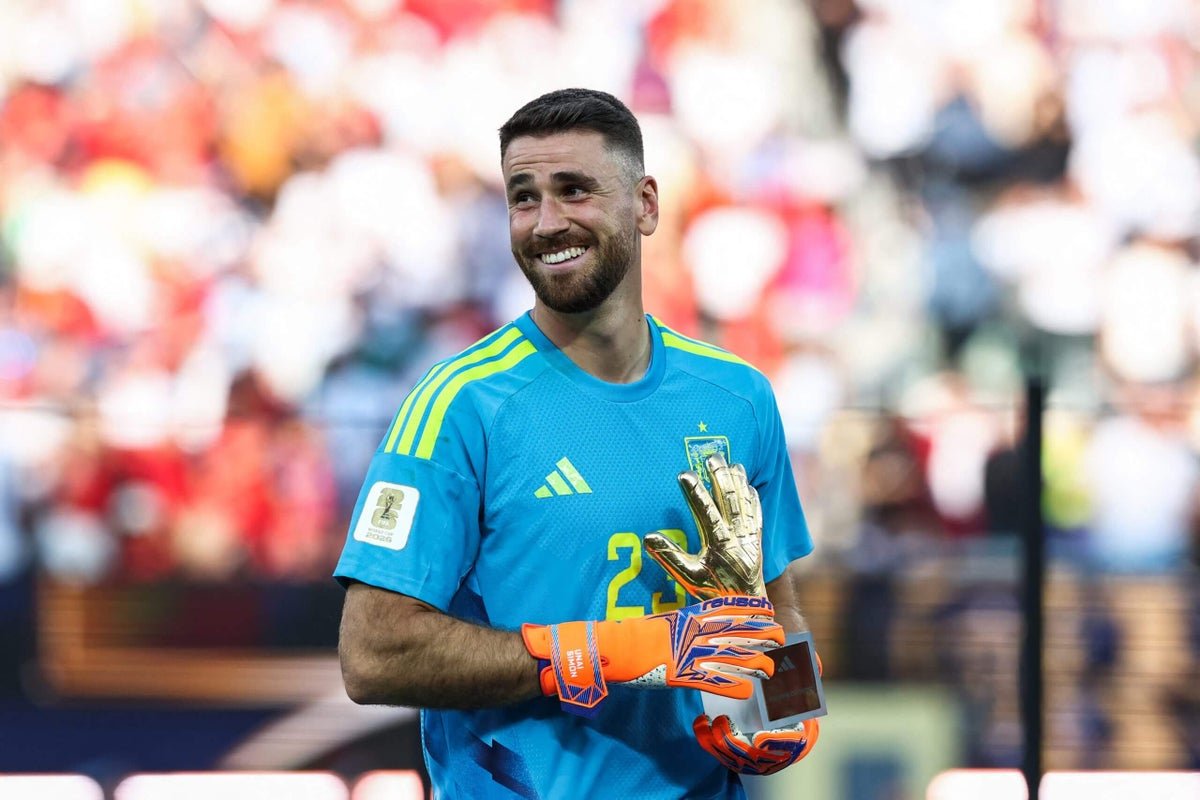
Simon won the World Cup award and the Golden Glove on Sunday after one of the standout goalkeeping performances of the summer.
His seven clean sheets in eight appearances for Spain set a new men’s World Cup record, and his save percentage of 91.7% was the best of any goalkeeper competing in the tournament.
The Spain international also recorded a World Cup-record streak of 650 consecutive minutes without conceding before Belgium finally ended the game in the quarter-finals, while exceeding expected goals by 0.7 throughout the tournament.
Spain’s one goal conceded in eight games is also the fewest of any team in their victorious World Cup campaign.
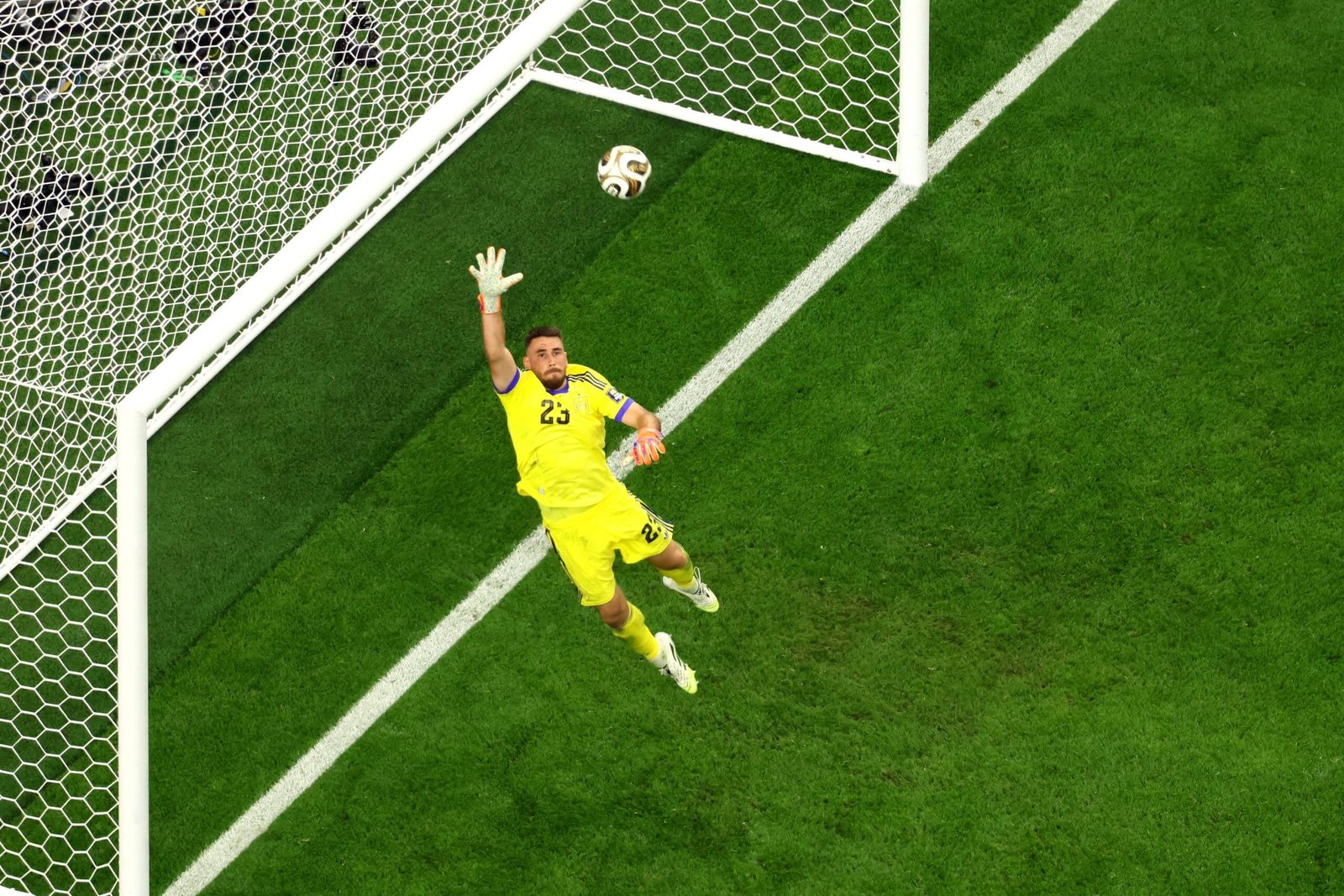
Simon makes a save against France (Odd Andersen/AFP via Getty Images)
These numbers tell only part of the story.
Simon’s greatest contribution wasn’t just the saves he made, but the situations he prevented from goal-scoring attempts in the first place.
This ability to anticipate rather than react underpins almost every aspect of his game. This allows him to eliminate danger before it arises and also determines how Spain will attack.
Throughout the World Cup, Spain repeatedly put Simon under pressure before exploiting the space it created elsewhere on the pitch.
This is a calculated strategy that requires complete trust in the player standing between the posts. Every time he receives the ball, he makes a series of quick decisions: Has the opposition allocated enough strength to play through the press? Is there a path to the center of the field? Has a weak side defender emerged or is the opponent pressing so aggressively that the best option would be to bypass him altogether?
Simon’s composure under pressure allows Spain to remain patient when many teams simply clear their lines. Just as importantly, it gives them another way to play. While Spain calmly build their play, Simon’s range of passing means opponents can never fully commit to the press. He understands when to keep the pressure on and when to exploit the space behind him, with the vision and technique to turn a seemingly innocuous phase of possession into a dangerous attack with a single pass.
This balance between patience and pragmatism is one of the reasons why De la Fuente remains so dedicated to him. Simon isn’t just building up Spain’s forces; he understands how to manage it.
This understanding took much longer to form than this tournament.
De la Fuente had known Simon for many years, coaching him throughout the Spanish youth system and then managing him at senior level. Together they won the European Under-19 and Under-21 Championships, the UEFA Nations League, and Euro 2024. and, after Sunday’s victory, the World Cup. Few international managers have worked with goalkeepers for so long and so successfully.
Earlier in the tournament, De la Fuente described their connection as “more of a family relationship than a coach-player relationship”, calling it “an honor and a source of pride” to coach Simon and insisting he remains “one of the best goalkeepers in the world”.
These comments express much more than simple admiration. They explain why Simon’s place was never truly threatened.
International football is different from the club game. Managers don’t just choose the goalkeeper who is in the best current form, but the one who best understands their playing pattern and has proven time and time again that they can perform under tournament pressure. This kind of trust is built over years, not weeks.
Simon’s influence extends to every aspect of his goalkeeping, but especially within his own penalty area.
He finished the tournament with eight attempts in the air, more than any other goalkeeper, highlighting his authority in delivering crosses and relieving pressure. These interventions may never get the same attention as spectacular saves, but they are just as important because they allow goalkeepers to eliminate danger before it becomes a shooting opportunity.
Instead of remaining tied to his goal line, Simon consistently stepped forward to attack the oncoming danger. He achieved high passes, stopped crosses before they reached attacking players and used stifling moves to win the ball at his opponent’s feet before shooting opportunities arose.
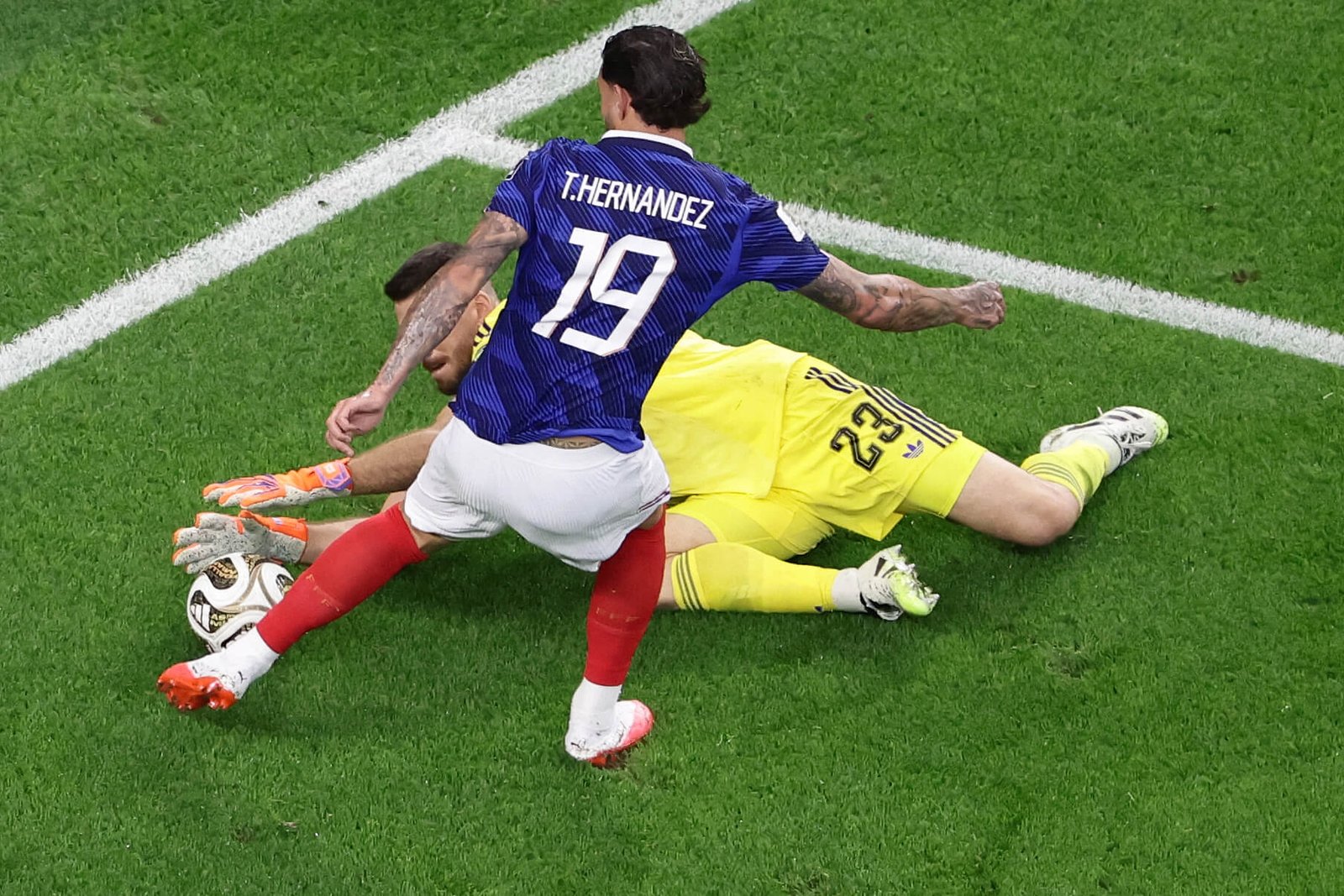
Simon chokes the ball from France’s Theo Hernandez (Aric Becker/AFP via Getty Images)
The best goalies don’t just react to danger. They eliminate him before everyone else in the stadium is fully aware of his existence.
The semi-final against France was perhaps the clearest illustration of why De la Fuente’s trust was so unwavering.
Playing against Kylian Mbappe changes the mindset of every goalkeeper. His pace naturally encourages opposing defenders to fall back while enticing goalkeepers to stay closer to their goal. However, Simon refused to become passive.
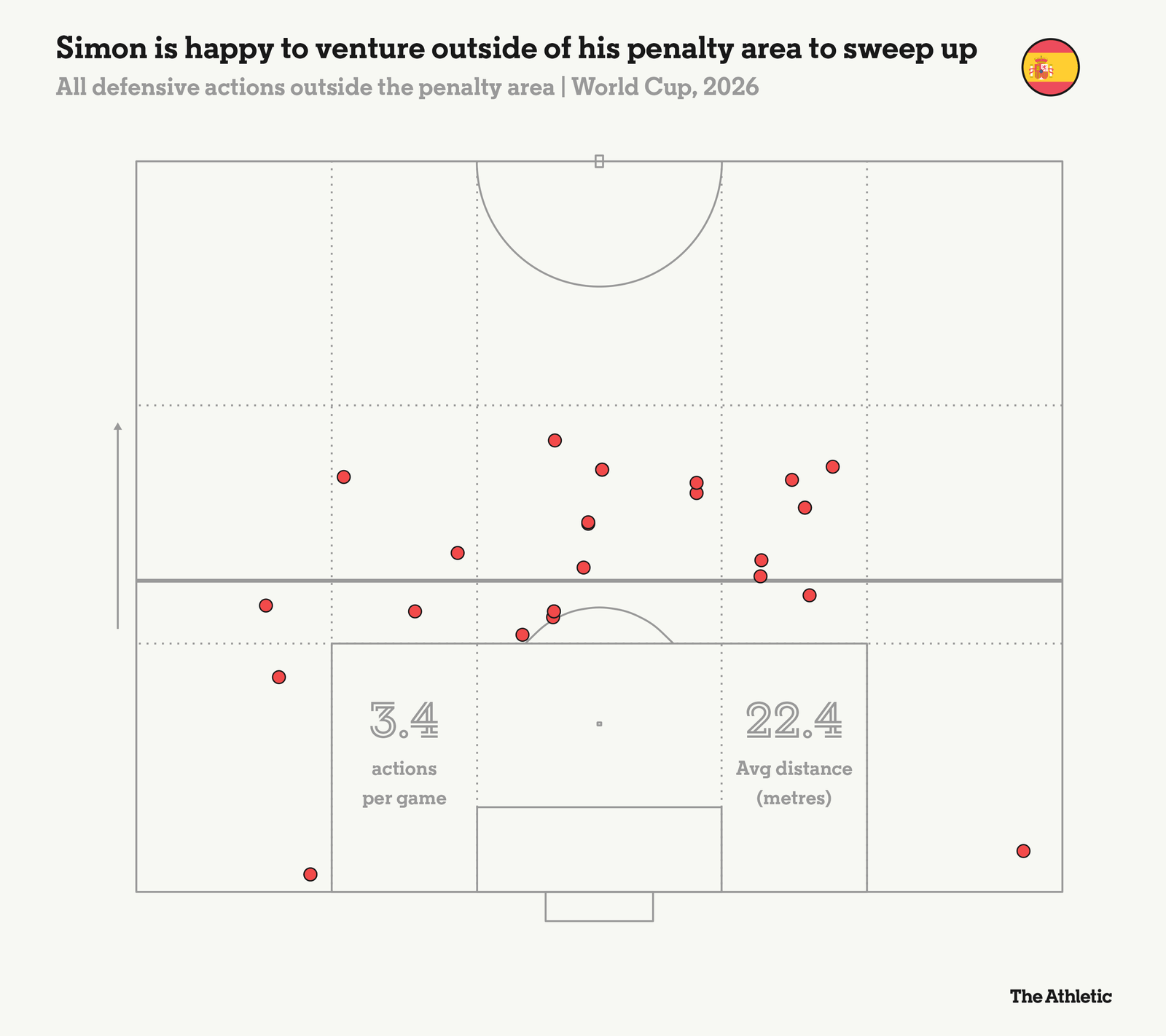
Throughout the tournament, Spain relied on him to protect vast spaces behind their aggressive defensive line. He finished the World Cup with 22 goals, more than any other goalkeeper in the competition, illustrating how often Spain trusted him to solve problems long before they became shots on goal.
Against France, this proactive approach was evident whether the danger was inside or outside his penalty area. Time and time again, Simon recognized the threat before anyone else, coming forward to stifle forwards, racing from his own goal to get past the Spanish defense and denying Mbappe any chance of breaking through on goal.
Sunday’s final against Argentina was another reminder that these interventions were not isolated moments but a defining feature of Spain’s tournament. Barely five minutes later, Simon had to run almost 40 yards from his own goal to intercept a through ball before striker Lionel Messi could reach it.
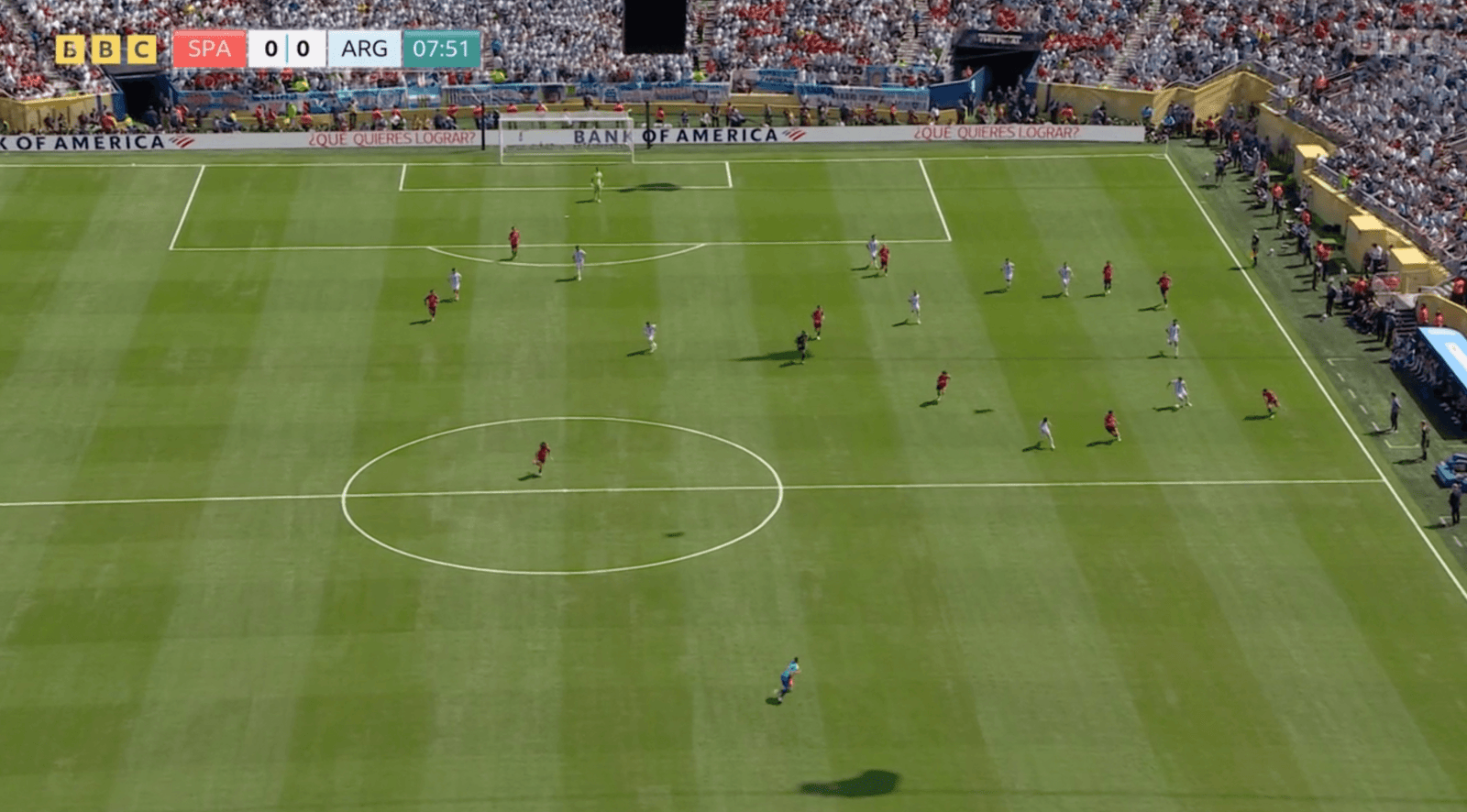
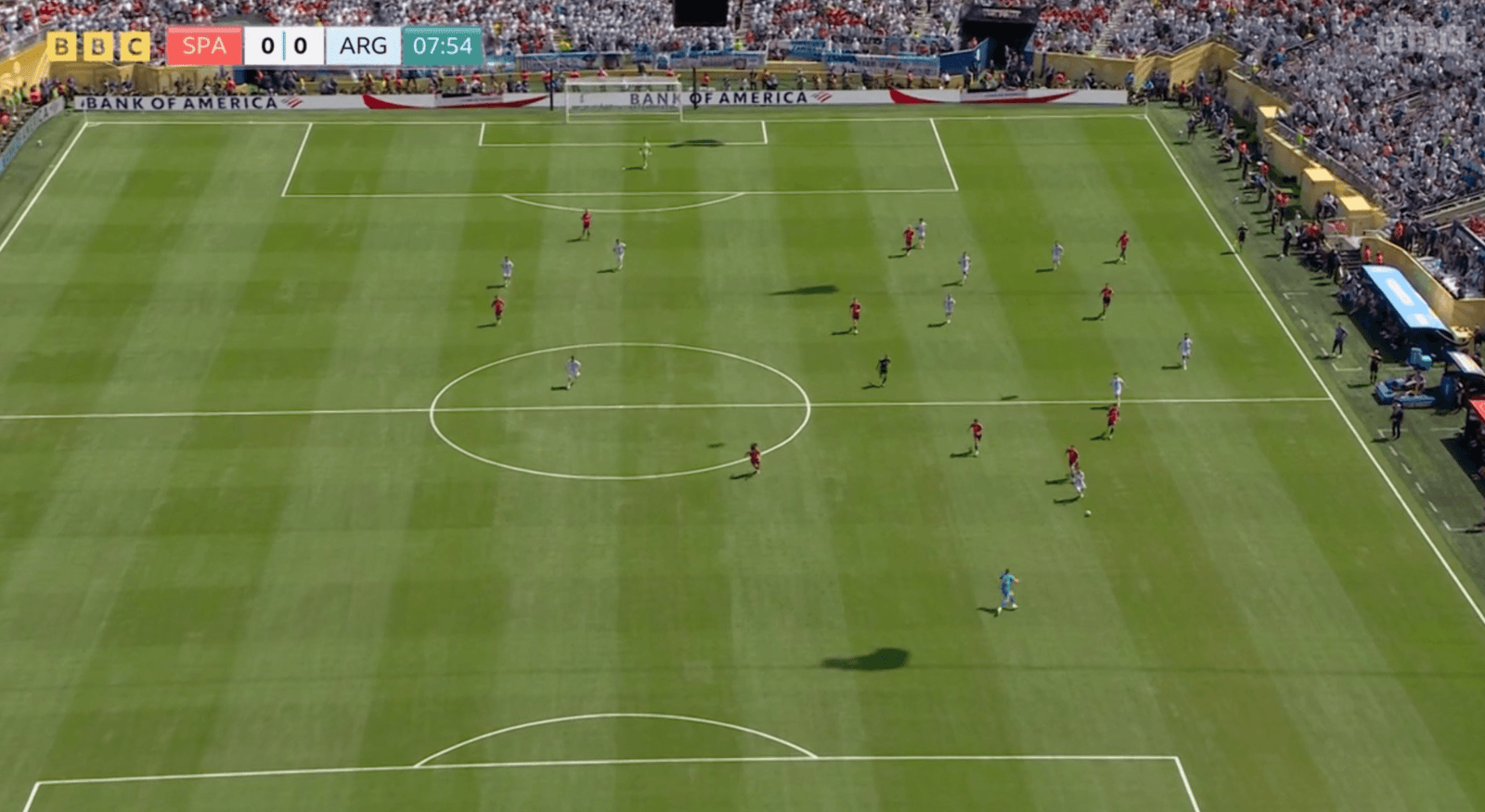
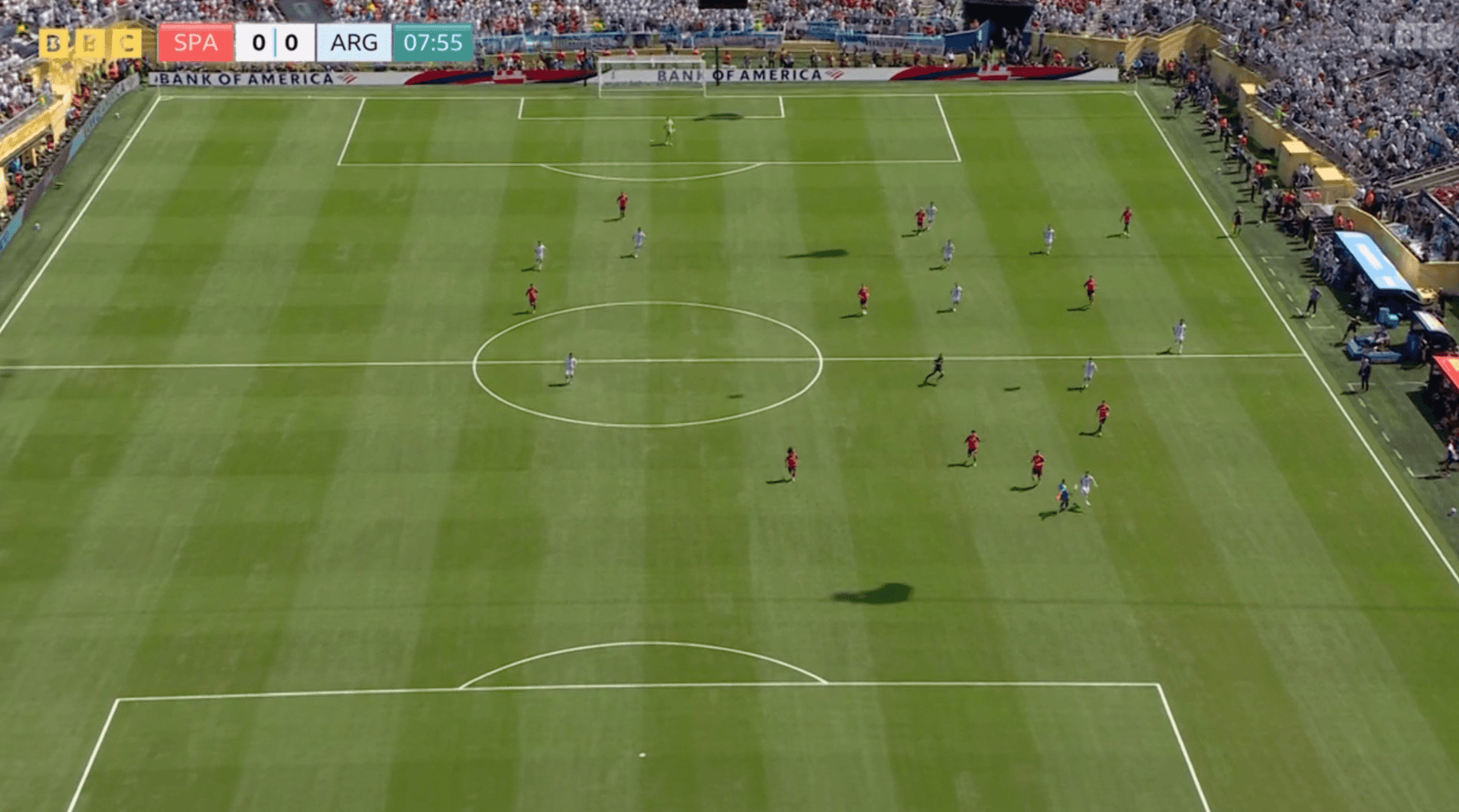
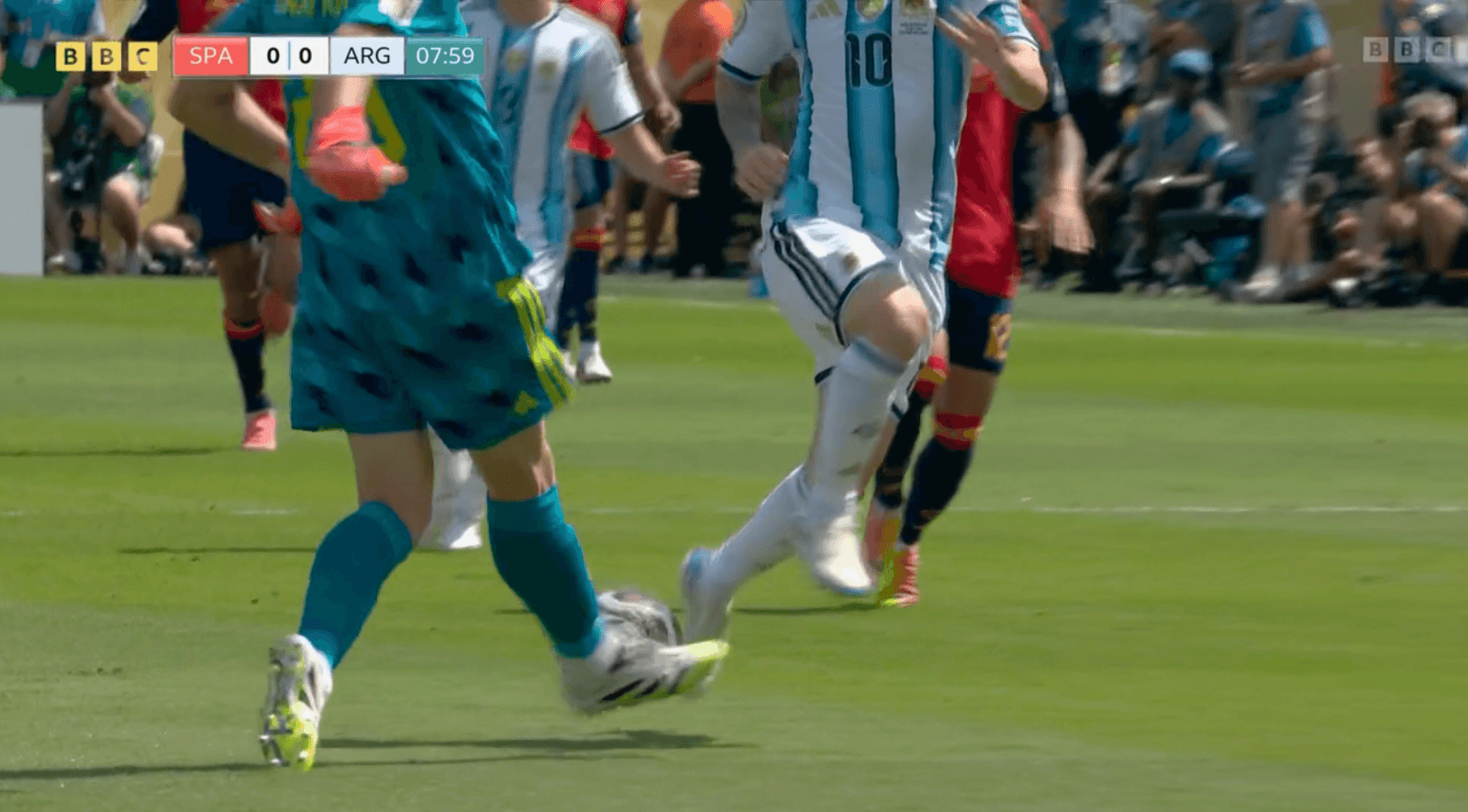
This was exactly the situation that Spain willingly accepted, defending high.
While many goalkeepers would instinctively retreat to their own penalty area when faced with one of the greatest strikers in football, Simon trusted his reading of the game, attacked the space decisively and cleared the danger before it had the chance to go truly one-on-one with Messi.
From a goalkeeper’s perspective, each of these interventions begins with the same process: how much pressure is applied to the ball? Will my defender be able to recover? Has the striker become the favorite to pass first?
Once the answer is clear, hesitation is no longer possible.
Against a player with Mbappe’s pace, half a second can be the difference between preventing a chance and going one-on-one. By the time most people in the stadium realized the danger of that semi-final, Simon was already moving.
At times it evoked memories of Manuel Neuer’s massive masterclass during Germany’s 2014 World Cup triumph, where anticipation and aggression repeatedly eliminated danger before it could strike.
Not every intervention is perfect, nor does it have to be. Simon’s shot against Mbappe in the 81st minute failed to result in a clear clearance, forcing him to quickly recover and make a crucial save from Désiré Douhet moments later.
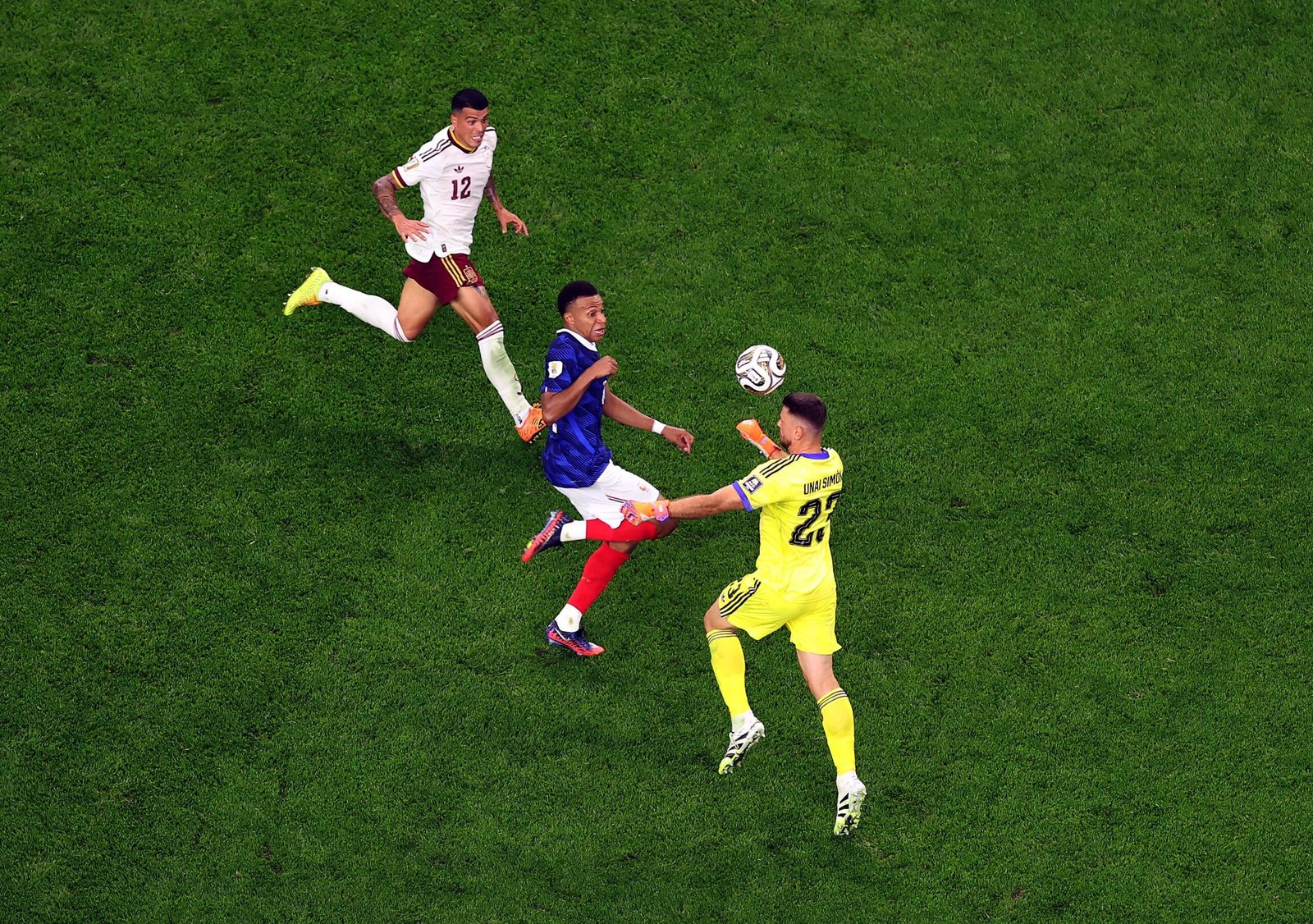
Simon broke free and headed the ball before Mbappe could get to him (Carl Recine/Getty Images)
However, from the goalkeeper’s point of view, the decision was absolutely correct.
Had Simon stayed on his line, Mbappe would almost certainly have reached the ball first and fired home, with Spain protecting their 2-0 lead. By acting aggressively, Simon eliminated the most dangerous outcome and gave his defenders a chance to recover. The execution may not have been flawless, but the decision gave Spain its greatest chance of averting its greatest danger.
This is what separates elite active goalkeepers from reactive ones. Each successful intervention reinforces Spain’s aggressive defensive approach. This gives the defenders the confidence to hold their line knowing that Simon will be attacking the space behind them. This trust changes the way the entire team defends itself.
It is impossible to estimate how many attacks never materialized because of this trust.
This has been one of the defining features of Spain’s defensive success at this World Cup.
Perhaps the biggest reason De la Fuente’s faith never wavered was the simplest of all: Simon never gave him a reason to change.
Every major tournament strengthens the relationship between a coach and his goalkeeper. Each successfully overcome moment of tension becomes another reason to trust him when the next tournament approaches. Simon has already helped Spain win the UEFA Nations League and Euro 2024. This summer he added a World Championship and a Golden Glove Award to his growing list of accomplishments.
These awards alone would make this tournament exceptional. However, as impressive as the statistics are, they only reflect part of Simon’s influence.
Spain demand much more from their goalkeeper than just saves.
Additional Contributor: Tom Harris