

Germany and Austria are committed to encouraging the voluntary return of Syrian asylum seekers and refugees.
Following a meeting with his Austrian counterpart Gerhard Karner, German Interior Minister Alexander Dobrindt said in Berlin today, Wednesday (15 July 2026), that voluntary returns should receive greater impetus, along with forced deportations and the provision of survival opportunities for Syrians who have integrated well into society.
Carner explained that his country has launched a temporary program that includes additional financial incentives for Syrians whose asylum claims are still pending to encourage them to return. He praised Dobrindt’s role at the European level, calling him a “driving force” in efforts to reduce illegal migration.
From ban to cautious deportation
Deportations from Germany to Syria have stopped since 2012 due to dangerous conditions during the civil war.
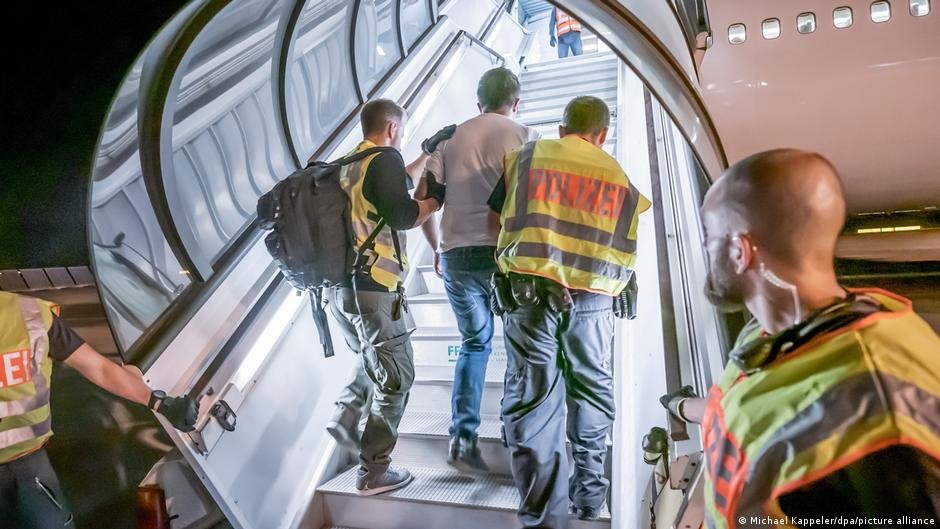
On December 23, 2025, German authorities deported a convicted Syrian from North Rhine-Westphalia to Damascus on a commercial flight for the first time, bringing the total number of deportations of Syrian convicts to their country to date to four.
In a similar context, on July 3 last year, Austria deported a Syrian citizen to his country, the first move of its kind in 15 years. The Austrian deportations were based on a joint visit by Austrian Interior Minister Gerhard Karner, a member of the Austrian People’s Party, and former German Interior Minister Nancy Wieser, a member of the Social Democratic Party, to Syria in April 2025.
German Chancellor Friedrich Merz invited Syria’s interim President Ahmed al-Sharaa to visit Germany last November to discuss issues including the deportation case. Meretz pledged Germany’s support to achieve stability in Syria, expressing hope that large numbers of Syrians would voluntarily return to their homeland.
A number of German interior ministers have welcomed the Federal Interior Ministry’s return to allowing the deportation of some Syrian prisoners to their country, but some have become somewhat impatient since no deportations have been carried out to Syria since January last year.
The dilemma of numbers and reconstruction conditions
On the other hand, many Syrians who came to Germany as refugees between 2013 and 2017 now meet the conditions for German citizenship, which include proficiency in German and the ability to earn their own living to cover living expenses. According to the federal government, 65,574 Syrians received German citizenship over the past year.
At the end of March, President Al-Sharaa met with Chancellor Meretz in Berlin. During a joint press conference, Meretz said that he intends to return 80% of the Syrians living in Germany, their number exceeding 900 thousand people, to their homeland over the next three years.
But later he explained: “It was the Syrian president who named the figure of 80% of repatriates in three years. We have taken note of this figure, but understand the scale of the challenge.”
On the other hand, Syrian President Al-Sharaa attributed this goal to Meretz and said: “The one who mentioned this was Mr. Chancellor, and this figure came up during a conversation between us. As for me, I said that the return of refugees is directly related to the reconstruction of Syria.”