

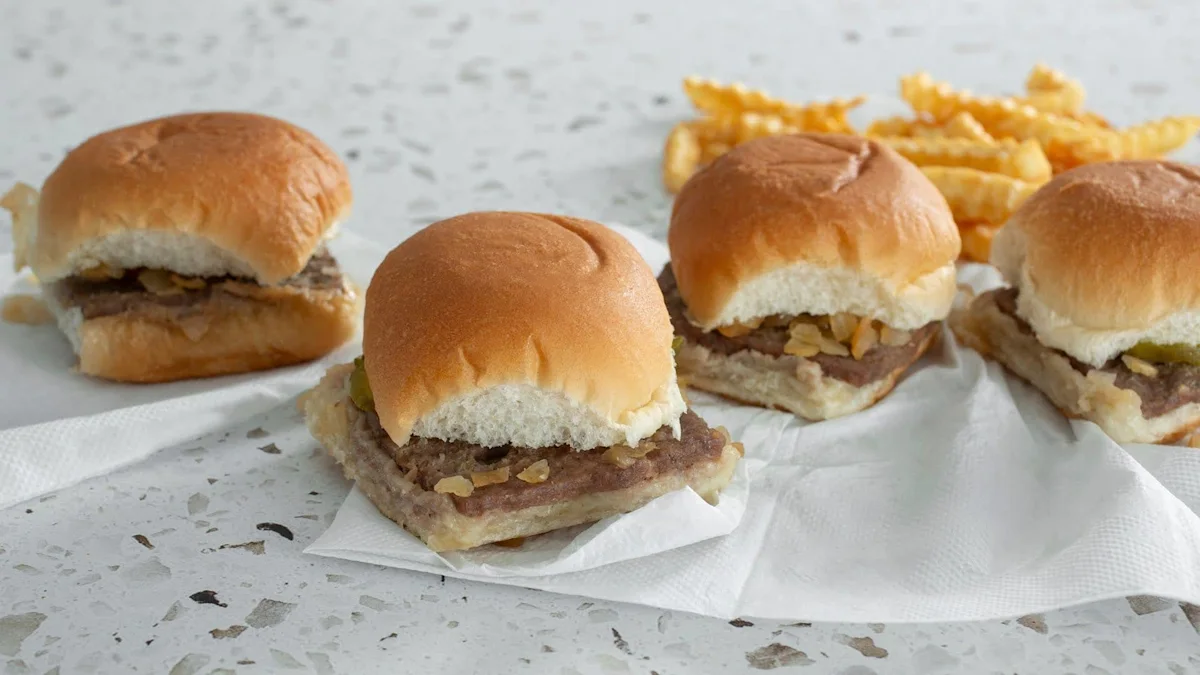
The historic fast-food chain that helped create the modern hamburger restaurant has closed one of its oldest locations, continuing a string of closures as operators increasingly weigh performance against the value of the real estate they own.
The latest closure ends nearly nine decades of business at a venue that has become an integral part of its community, highlighting a broader industry trend in which even longtime establishments are no longer immune to changing business priorities.
Known for its signature small square hamburgers, better known as sliders, White Castle was founded in 1921 in Wichita, Kansas. Widely known as the world’s first fast food chain to offer hamburgers, the company currently operates more than 300 restaurants throughout the United States.
White Castle closes 89-year-old restaurant
White Castle has permanently closed its restaurant at 1120 University Ave W in St. Paul, Minnesota, ending 89 years in the community.
White Castle sold the property for $2.1 million to SLSL Properties on June 30, 2026, according to a certificate of property value issued to the Minnesota Department of Revenue.
The document also notes that White Castle typically owns its restaurants rather than franchise them. The buyer did not disclose his plans for the property.
However, another former White Castle location at 100 Lake Street in Minneapolis, which was sold to SLSL Properties in 2024, has since been converted into a KFC.
Although the closure of the White Castle on University Avenue, which once housed three locations, has left no White Castle, the chain continues to operate nearby restaurants, including:
505 Rice Street, St. Paul
1601 White Bear Ave, St. Paul
4515 S. Robert Trail, Inver Grove Heights
The University Avenue restaurant, originally opened in 1937, was among the oldest continuously operating restaurants in White Castle and served generations of Twin Cities residents.
Previous White Castle Restaurant Closure
St. Paul’s closure follows several other White Castle closures in 2026.
Recent closures include:
Elmhurst: Closed June 24 at 89-03 57th Ave in Queens, New York, TheStreet reports.
Casino Royale (Las Vegas Strip): Closed March 30 at 3411 S Las Vegas Blvd, Las Vegas, Nevada, KLAS 8 News Now reports.
Henderson: Closed March 30 at 535 Marks St, Las Vegas, Nevada, KLAS 8 News Now reports.
Cypress Hills: Closed in January at 3101 Atlantic Ave, Brooklyn, New York, New York locals reported.
Despite the cuts, White Castle still operates about 14 restaurants on the Minneapolis-St. Gender of the metropolitan area, according to the location of the company’s stores.
The story continues
The closure of New York was largely caused by rising real estate values and redevelopment opportunities: residential buildings were planned to be built on the site of former restaurants.
In Nevada, the closures follow White Castle’s acquisition of restaurants previously operated by a local licensee. Following the completion of the transaction, the company retained three of its five locations that best aligned with its long-term operating strategy.
White Castle is not alone. Across the industry, operators are increasingly closing or selling aging properties as higher operating costs and valuable real estate change long-term investment strategies.
 White Castle is closing another longtime restaurant. Tim Boyle/Getty Images
The restaurant business faces constant pressure
White Castle’s latest closure comes as restaurant operators continue to face higher labor and food costs while consumers remain more cautious about discretionary spending.
According to a National Restaurant Association survey, 60% of restaurant operators reported a decline in traffic in December 2025, down from 51% in the previous month.
Meanwhile, prices for eating out rose 3.5% in the 12 months ending in May 2026, according to the U.S. Bureau of Labor Statistics.
Industry analysts say consumers have become more resistant to higher menu prices, making it harder for restaurants to recoup higher operating costs.
“In a strong economy, restaurant guests have historically been tolerant of rising prices,” food industry executive James O’Reilly told FSR Magazine. “Over the last few years it has become much more difficult. While fundamental economic indicators have improved and financial markets have strengthened, many restaurant consumers, especially in low- and middle-income groups, have not experienced the same relief.”
At the same time, food and labor costs have increased about 35% over the past five years, according to the National Restaurant Association.
For decades, established restaurant brands have relied on customer loyalty, recognizable locations and stable real estate to support long-term growth. Operators today are increasingly re-evaluating whether legacy restaurants continue to justify ongoing investments or whether the underlying real estate has become more valuable than the business itself.
“Sale leasebacks offer many benefits, including a very attractive source of capital that provides multiple arbitrage and an efficient cost of capital,” SLB Capital Advisors partner Matt Wrobleski wrote in QSR Magazine.
“Unlike the debt capital markets, the sale-leaseback market is always open and is a trusted resource for restaurant operators who own real estate.”
Here are some of my previous report restaurant closures:
While White Castle continues to invest in its broader business, the closure of its longtime restaurant on University Avenue reflects a broader shift in the restaurant industry, where operators are increasingly evaluating aging stores along with the value of the real estate underneath them. In today’s operating environment, longevity alone is no longer enough to guarantee a restaurant’s future unless it aligns with the company’s long-term strategy.
Related: Famous Seafood Chain Files Lawsuit After Bankruptcy
This story was originally published Street July 13, 2026, where he first appeared in Restaurants chapter. Add TheStreet as Preferred source by clicking here.