
I’ve always admired George Lazenby.
His story is amazing.
Simply put, it’s about blind luck.
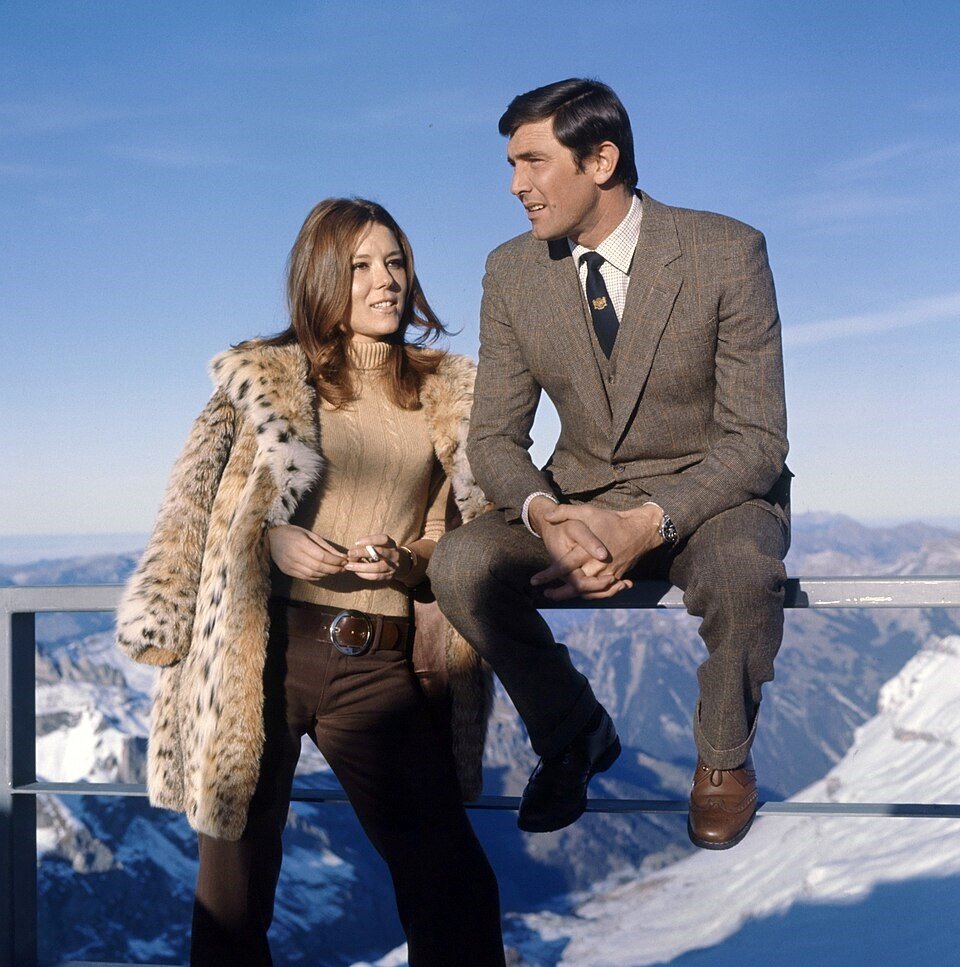
George Lazenby and Diana Rigg on the set of On Her Majesty’s Secret Service.
Source: ETH-Zurich Library / Wikimedia Commons
In 1968, Lazenby, an Australian car salesman turned model, settled in London, trying to build a career:
- That’s when he got lucky. One day he ran into legendary producer Albert R. Broccoli. Both men got their hair cut at the same barbershop.
- At the time, Broccoli was looking for a replacement for Sean Connery, who had just finished playing James Bond.
- Lazenby had never acted in a film before. He had no training. No resume. No connections. His only notable appearance was in a candy bar commercial. However, Lazenby liked Broccoli and invited him to screen test.
It was the opportunity of a lifetime, and Lazenby jumped at it:
- He came to the audition in a suit made by Connery’s tailor. It was a bold move. This signaled confidence.
- During the screen tests themselves, Lazenby accidentally hit the stunt coordinator in the face. His raw energy impressed the producers.
- They offered Lazenby US$80,500 to play James Bond. That’s about $770,000 today, adjusted for inflation. What luck. He had just landed the most coveted role in cinema, becoming Connery’s successor.
Lazenby continued to do On Her Majesty’s Secret Service, which was released in 1969:
- The film grossed over US$80 million worldwide (US$725 million in today’s money).
- So by that point Lazenby had it all. Glory. Money. Opportunity. He was offered a seven-film contract to play James Bond and a million-dollar bonus.
But here the story takes an unexpected dramatic turn:
- Ronan O’Rahilly, who was Lazenby’s manager, was not impressed with the contract. He told Lazenby to refuse. Why? Well, because they were entering a new decade: the 1970s. This was the era Easy Rider. Long hair. Flared trousers. Hippies chant about peace and free love.
- So, given the changing cultural landscape, will James Bond remain relevant? The image of the tuxedoed British patriot indulging in martinis and violence seemed an outdated institution. An heirloom that has fallen out of fashion.
- O’Rahilly believed Lazenby could find better opportunities elsewhere. Lazenby agreed and left Bond. Just like that.
- Unfortunately, this was a mistake. Lazenby’s acting career stalled and went nowhere. Meanwhile, the popularity of the Bond franchise continued to skyrocket, earning billions and continuing for more than half a century.
Looking back, Lazenby is still haunted by his decision:
- In 2015, he said: “We thought Bond was finished. We were wrong. Sometimes I wish I had made another one, just to shut up people who think I failed.”
- One bad move. I regret it all my life. Oh.
You might think Lazenby’s story is a terrible accident. How could someone so lucky become so unlucky so quickly?
- But here’s the thing. Lazenby’s experience is not at all unique. In fact, people make confident predictions all the time, but then turn out to be completely wrong.
- So, with that in mind, I want to take a look at a few other misfires from the past. These historical errors are so great that they boggle the mind…
Take, for example, the banker who made fun of the car.
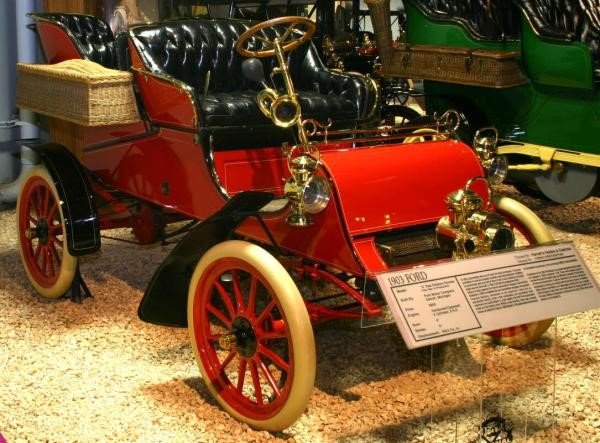
Source: Doug W./Wikimedia Commons.
In 1903, Horace Rackham was a lawyer and was considering investing in the Ford Motor Company:
- At the time, Ford was preparing to mass produce the new Ford Model A. Rackham knew little about production. However, he intuitively felt that this could be a turning point.
- So he turned to the president of the Michigan Savings Bank for financial advice. But the banker laughed at the idea, discouraging Rackham: “The horse is here to stay, but the car is just a novelty, a fad.”
- Fortunately, Rackham ignored this pessimism. He saved up US$5,000 and bought the Ford Motor Company anyway.
- This turned out to be a smart move. Later, in 1919, Edsel Ford (son of Henry Ford) bought the same shares from Rackham for US$12.5 million. That’s a cool $240 million in today’s money.
- The banker apparently kept his horse.
Let us remember the Nobel laureate who bet on the Soviet Union.

Source: Bernard Gottfried/Wikimedia Commons.
Paul Samuelson was the first American to win the Nobel Prize in Economics. His textbook Economics: Introductory Analysiswas wildly popular and studied in classrooms everywhere:
- In 1961, Samuelson made a prediction. He said that the Soviet economy would catch up and surpass the United States.
- The years rolled into decades. But he refused to budge. Even in 1989, he still stuck to his claim, insisting that the Soviet command system was proof that socialism could flourish.
- And then reality intervened. In 1991, the Soviet Union suddenly collapsed due to a self-inflicted heart attack. Its economy was in severe crisis: triple-digit inflation, huge food shortages and dwindling financial reserves.
- At this point, Samuelson was forced to remove the word “prosper” from the pages of his textbook, writing question marks in pencil next to the Soviet data.
- Here was the smartest economist in America. Fooled by communist propaganda. Imagine this.
Take, for example, the author who sold financial panic.
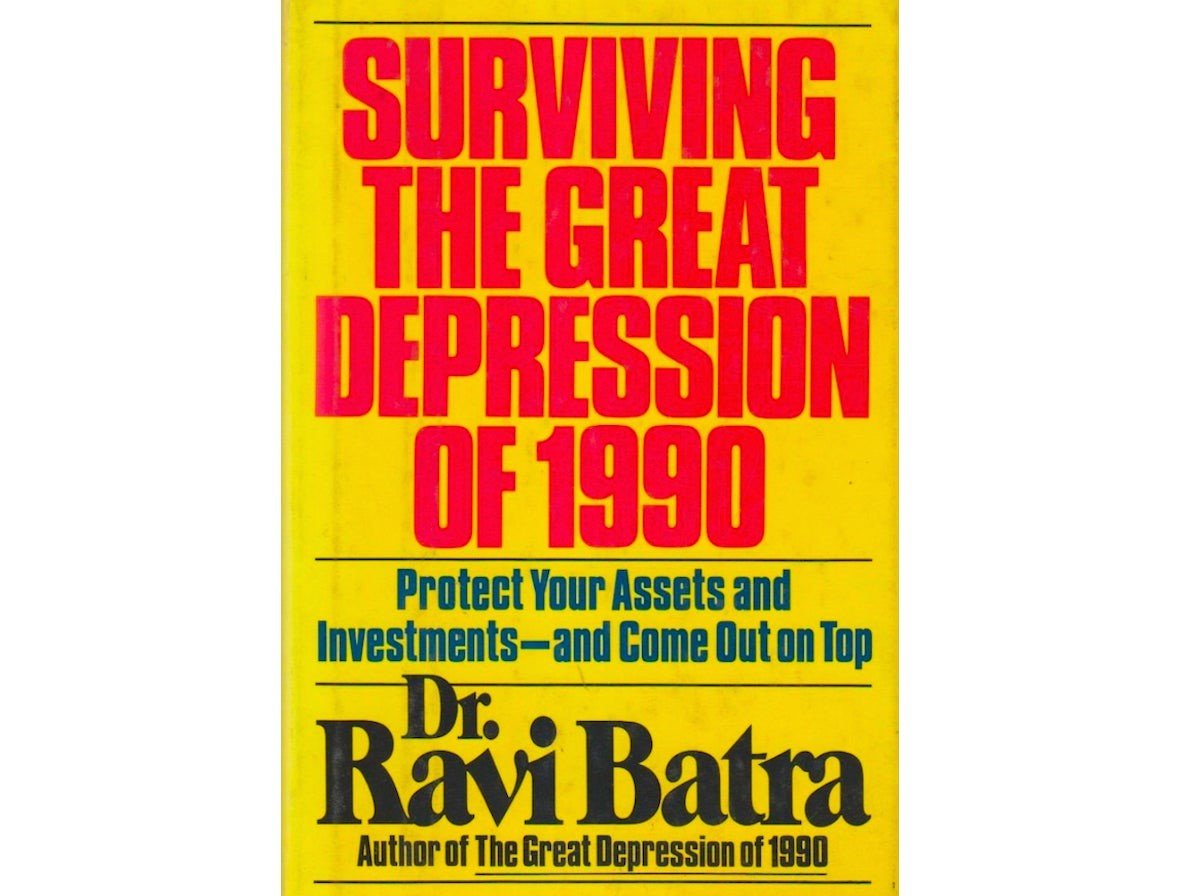
Source: Goodreads
In 1985, economist Ravi Batra published a book with an apocalyptic title: Great Depression of 1990. Then, shortly after, he released a sequel: How to Survive the Great Depression of 1990:
- These books became a runaway sensation, allowing Batra to achieve success. New York Times bestseller list.
- But – surprise, surprise “No depression ever set in.” In fact, the 1980s and 1990s gave us one of the largest economic expansions in modern history.
- The S&P 500 has delivered annual gains of nearly 18% for two straight decades. This is much higher than the historical average of 10%.
- It was an extraordinary period of prosperity for the world. In other words: Not only did Batra miss the target, he missed the target by a country mile.
Take for example the CEO who laughed at the iPhone.
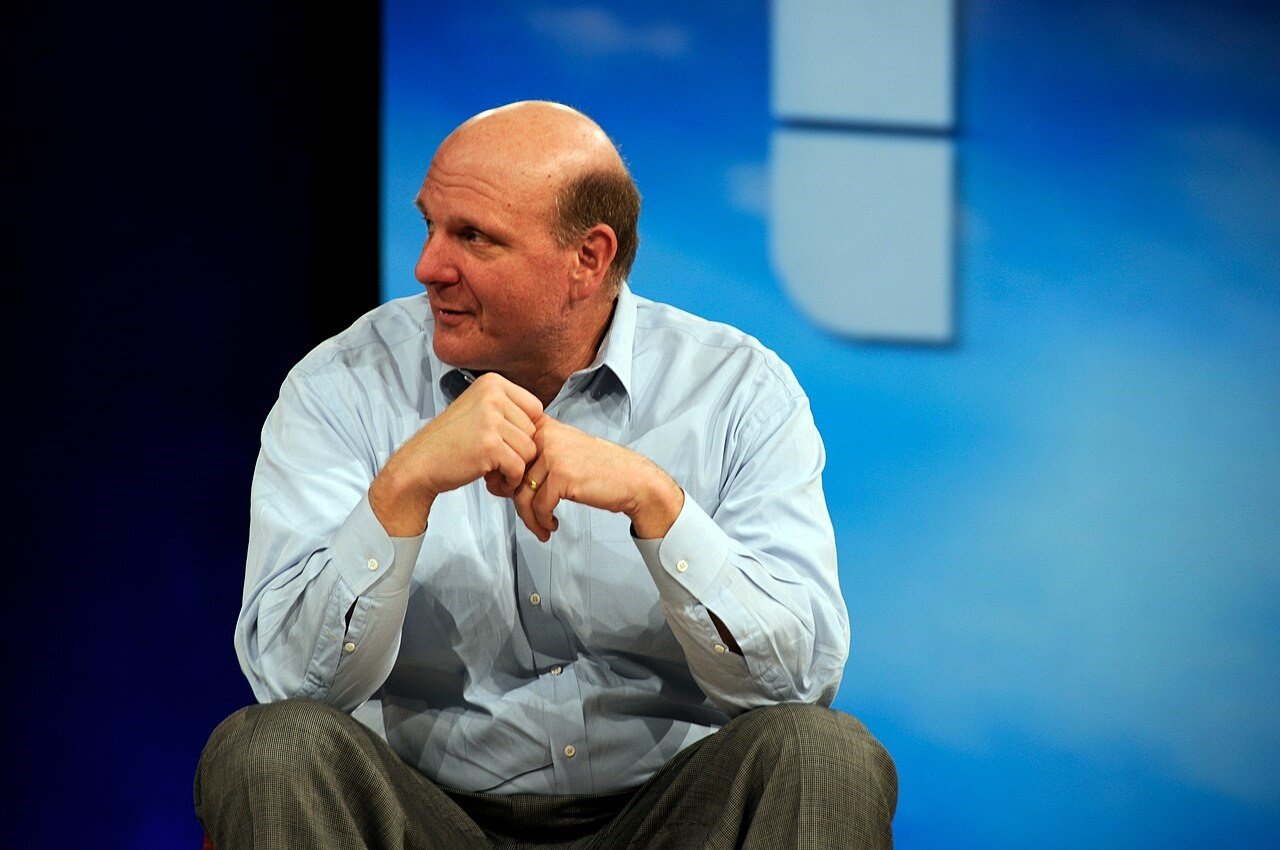
Source: Jesus Gorriti / Wikimedia Commons
In 2007, Steve Ballmer was the CEO of Microsoft. That’s when a reporter asked him what he thought of Apple’s recently released smartphone:
- Ballmer laughed: “There is no chance that the iPhone will get any significant market share. No chance.’
- In his opinion, the iPhone had a fatal flaw. It didn’t have a physical keyboard. Just a touch screen. Who would use something so useless?
- But, oh, how wrong Ballmer was. By August 2018, Apple was going from strength to strength. It became the first company in history to reach a market capitalization of US$1 trillion.
- The irony of it all? Well, Apple’s success was largely due to the very iPhone that Ballmer laughed at. Call it poetic justice if you like.
Bottom line
Yogi Berra once said, “It’s hard to make predictions, especially about the future.”
- I think there’s a lot to learn here. There is no crystal ball. Nobody knows the future. Not a banker. Not a Nobel laureate. Not a billionaire CEO.
- Everyone has prejudices. Everyone is just guessing. And sometimes they are wrong.
So, as investors, what can we realistically do to prepare for the future?
- Well, first of all, I believe that every bold prediction should be treated with healthy skepticism. History shows that it is often the most dangerous forecasts that are propagated most loudly. Those that sell books or generate clicks are rarely accurate.
- Also, I think it’s important to focus on process rather than prophecies. We cannot control what will happen to the economy next year. What we can control is how much we invest and how widely we diversify. These are the variables that have mattered most over the years.
- Finally, we must strive to cultivate evidence-based optimism. It is an acknowledgment that human resilience has surpassed much worse predictions than those we hear today. People who missed the great bull markets of the past were out of luck. They were simply listening to the wrong voices at the wrong times.
Just look at George Lazenby. Yes, he caught an extraordinary breakthrough. He became the first and only Australian to ever play James Bond. Then he gave it up. It was extremely sad:
- However, the rest of us have no control over the breaks we receive. We can only decide what to do with the opportunities before us. Right here. Right now.
- Here’s what I noticed. Most investors who have created lasting wealth do not rely on accurately predicting the future. Instead, they rely on a calm and steady process. They avoid the hype. They avoid sensationalism. Instead, they let the magic of compound interest do its silent work.
- I suspect that such sustainability may be the most reliable source of wealth in human history. Luck, if it plays any role at all, should certainly favor those who stay in the game long enough to let luck find them.
Does financial freedom matter to you? Are you looking for common sense? Well, I’d like to invite you to join us at our next live event. Here’s what we’ll look at:
- New Zealand’s property super cycle is coming to an end. It’s the end of an era. How can investors adapt to this historic shift?
- The National Party is pushing for an increase in KiwiSaver contributions. But isn’t it time to move beyond the nanny state? Is now the time to make better personal choices regarding growth and passive income?
- Economic problems and tax claims are now hitting Australia. Could this benefit New Zealand in the long term? We will discuss why New Zealand may be the best choice for investors.
- After the war with Iran, the world is hungry for energy. Does this create an opportunity to invest in expensive infrastructure?
- We look forward to interacting with you in person. And as always, your comments and questions.

Friday, August 7, 2026
from 11:00 to 12:00
Fields Cafe (function room)
4 Appian Way, Albany, Auckland
$37 per person / limited seating
Includes any menu item, coffee
(Special price for participants)
For managed account clients and Quantum Wealth subscribers
$27 per person / limited seating
Includes any menu item, coffee
Sincerely,
John Ling
Analyst, Morning of wealth
(This article represents solely the personal opinion and commentary of the author. It is of a general nature and should not be construed as financial or investment advice. Wealth Morning offers Managed Account Services for wholesale or eligible investors as defined in the Financial Markets Conduct Act 2013.)