

Controversial appealAre Raccoons a Danger or a Scapegoat?
July 12, 2026, 2:48 pm
Listen to the article(09:39 min)
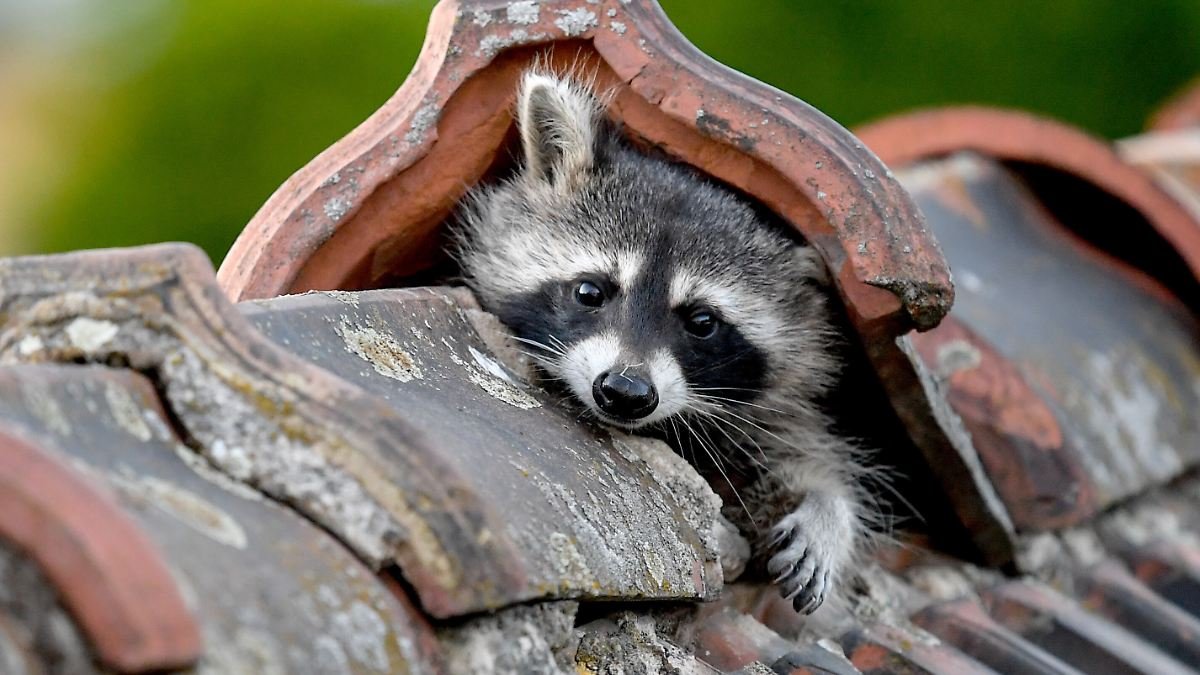
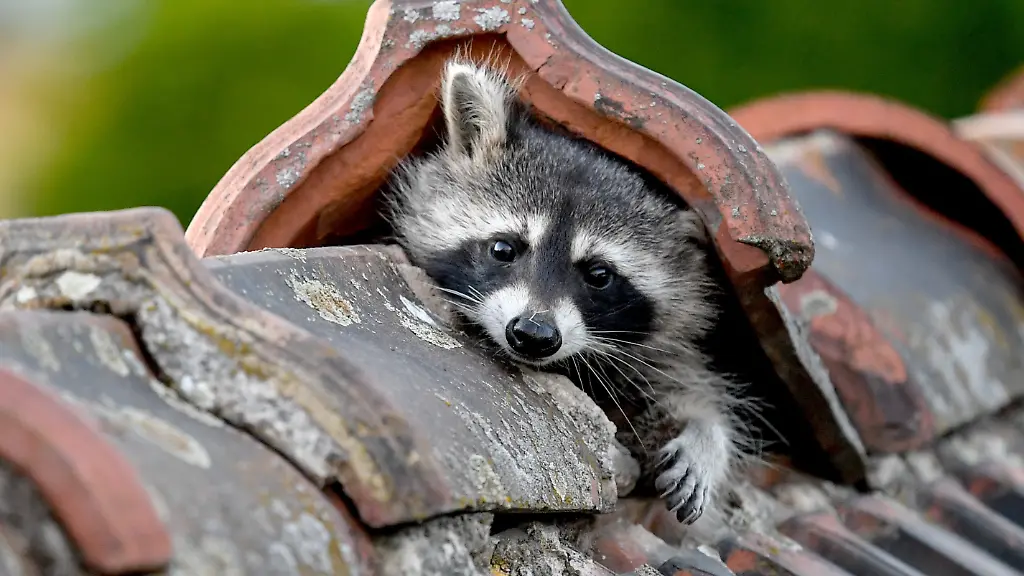 Unwanted Neighbor: The growing presence of raccoons in residential areas is increasingly causing resentment among residents. (Photo: Picture Alliance/dpa/dpa-Zentralbild)SplitFollow along:

The number of raccoons in Germany is constantly increasing, as is the number of animals being shot. There is also growing dissatisfaction with the damage caused by raccoons. However, intensive hunting for this species should not be carried out, some experts emphasize and explain the reasons.
For some, he is a cute guy with a dark mask over his eyes; for many others, he is an intruder threatening native species. raccoons (Procyon Lotor) have existed in Germany for almost 100 years and are now widespread throughout the country – with ever-increasing densities.
With an estimated number of more than two million individuals throughout the country, the animals, up to one meter long and weighing almost ten kilograms, are among the most common wild carnivorous mammals, according to Dorian Dörge from the research project Zowiac (Zoonotic and Ecological Impacts of Invasive Predators on Wildlife) at the University of Frankfurt. And with the further increase in reserves, the damage increased, he emphasizes.
“We can’t wait any longer,” says the biologist and calls for intensive hunting. “The raccoon must be eradicated to the point where it can no longer threaten endangered species. The longer you wait, the higher the price you will have to pay.”
“The scientifically reliable level of knowledge is very weak”
There is no consensus among experts on this requirement: there is a campaign against raccoons, says wildlife biologist Berit Michler from the Thünen Institute for Forest Ecosystems in Eberswalde. “There is a certain projection here of perceived problems that are extremely complex and have been growing for many years.” The raccoon became the scapegoat.
The positions are hardly compatible; both sides blame each other for a lack of science. Given the heated debate, it is initially surprising how sparse data is on the environmental impacts of raccoons. “The scientifically reliable level of knowledge is very weak,” says wildlife biologist Johannes Lang from the University of Giessen. “This would require very sophisticated research, and that hasn’t been done yet.”
Twilight and nocturnal species from the family of small bears (Procyonids) can be found in many places in this country: in the fields, in the forest, in plots and in the middle of big cities. “Raccoons are present everywhere, but in very different densities,” Lang says. Animal numbers are still low, especially in southern Bavaria and Baden-Württemberg.
Record raccoon hunt reported
There is an opinion that stocks in Germany are growing. “The spread is increasing quite slowly,” Lang says. First of all, the density in one place increases, so it takes a relatively long time before more distant areas are populated.
In the Kassel area, according to all experts, the maximum density has probably already been reached: there are approximately 0.4 individuals per hectare (10,000 square meters), says Dörge. In urban areas with a large supply of food, this figure is even 1.2. There are historical reasons for this: breeding pairs had already been released in Edersee in northern Hesse in April 1934.
Raccoon densities are only slightly lower in some parts of Brandenburg. At the end of World War II, a second main population of about two dozen animals escaped from a fur farm east of Berlin. Both regions remain hotspots for German raccoon populations, a team led by Zowiac employee Sarah Kunze recently reported in the trade journal Ecological Indicators after assessing hunting data from 398 German counties. “There are other founder populations in the Harz and Lusatia,” says Lang, citing genetic studies.
Animal hunting is also increasing: the German Hunting Association (DJV) recently reported record raccoon hunting: 284,220 raccoons were shot in the 2024/25 hunting year – from April to the end of March. That’s about double what it was ten years ago and ten times what it was 20 years ago.
“They brutally rob entire colonies”
Biologist Doerge stresses that raccoons pose a growing threat to native species, from birds to amphibians, reptiles to bats. Moreover, raccoons are excellent swimmers, skilled climbers and extremely smart.
Dörge lists: Animals robbed the nests of ground-nesting birds such as partridges, wandered through thickets of ponds in search of floating nests, climbed trees and buildings to reach, for example, the nests of white and black storks, and did not stop in tree hollows and birdhouses. Amphibians fare no better: raccoons strip the toxic skin off common toads before eating them, and also eat fire salamanders, yellow-bellied toads and pond turtles. “They brutally rob entire colonies,” he says.
Eberswalde biologist Michler defends a differentiated point of view. She explains that raccoons are food opportunists. “They eat what is plentiful and available.” Depending on the season, this may include scattered fruit, as well as beechnuts, acorns, insects, worms and mice, as well as young birds and amphibians.
Is the raccoon threat exaggerated?
However, invertebrates such as earthworms and snails make up about half of the annual diet on average, Michler and colleagues write in Evidence-Based Wildlife Management. Thus, plants provide about 30 percent of the annual diet, and vertebrates provide the remaining 20 percent. The animal’s daily food requirement ranges from 200 to 400 grams.
But what does this mean in practice? With evidence of skinned common toads in ponds and bitten off limbs of pond turtles in Brandenburg, it can be assumed that the damage was caused by raccoons, the Berlin Senate writes on its website.
Michler points out that amphibians have about 30 different predators, including specialized birds such as storks, herons and cranes, as well as other animals such as otters and rats. And bird nests are also robbed by many other species – martens, domestic cats and especially squirrels. The role of the raccoon is exaggerated. “There are no scientific studies that show the long-term impact of raccoons on native species,” she points out.
Demand for compensation payments for shot raccoons
However, Dörge makes a different argument: it is not only the behavior of raccoons that is decisive, but above all their growing numbers: “Raccoons, especially in large numbers, pose a danger to ecosystems,” he says. “We have to do something about this.” Animals will have to be hunted all year round. “Any raccoon that is no longer there can no longer reproduce.”
But the effort spent on hunting is significant and expensive. Animals are first captured – at least regularly – using live traps and then killed unless they are a nursing mother animal. Hunters will not receive any material benefit from this, says Dörge. That’s why he advocates compensation for effort. “This work should be properly rewarded.”
Hunting is legal, Michler says, but it should not be an end in itself. Ultimately, success needs to be monitored—that is, whether endangered species are actually protected as a result.
For Giessen biologist Lang, it is clear that raccoons can harm endangered species. But the demand for widespread destruction “misses the whole reality,” he emphasizes. “It’s too late, it’s completely hopeless.”
A positive example Bingenheimer Reid
Lang advocates protecting areas where endangered species live from raccoons. Collars made of metal or plastic can be attached to trees with black stork nests. “It looks ugly, but it works.” Many bodies of water with endangered amphibians could be fenced off. “It can be done on a small scale. Fences help.”
Lang cites the Bingenheimer Ried nature reserve in the Wetterau region of Hesse as an example of successful protection against raccoons and other predators such as foxes through fences. There, for various reasons, the number of ground-nesting birds, such as lapwings, has sharply declined. After the construction of protective fences, the number of not only lapwings, but also other birds and amphibians increased.
To protect species over large areas, Lang doesn’t want to rule out hunting altogether. “At the local level, intensive raccoon hunting may be the solution,” he says. “But to do that, you have to clearly define it as a problem up front.”