

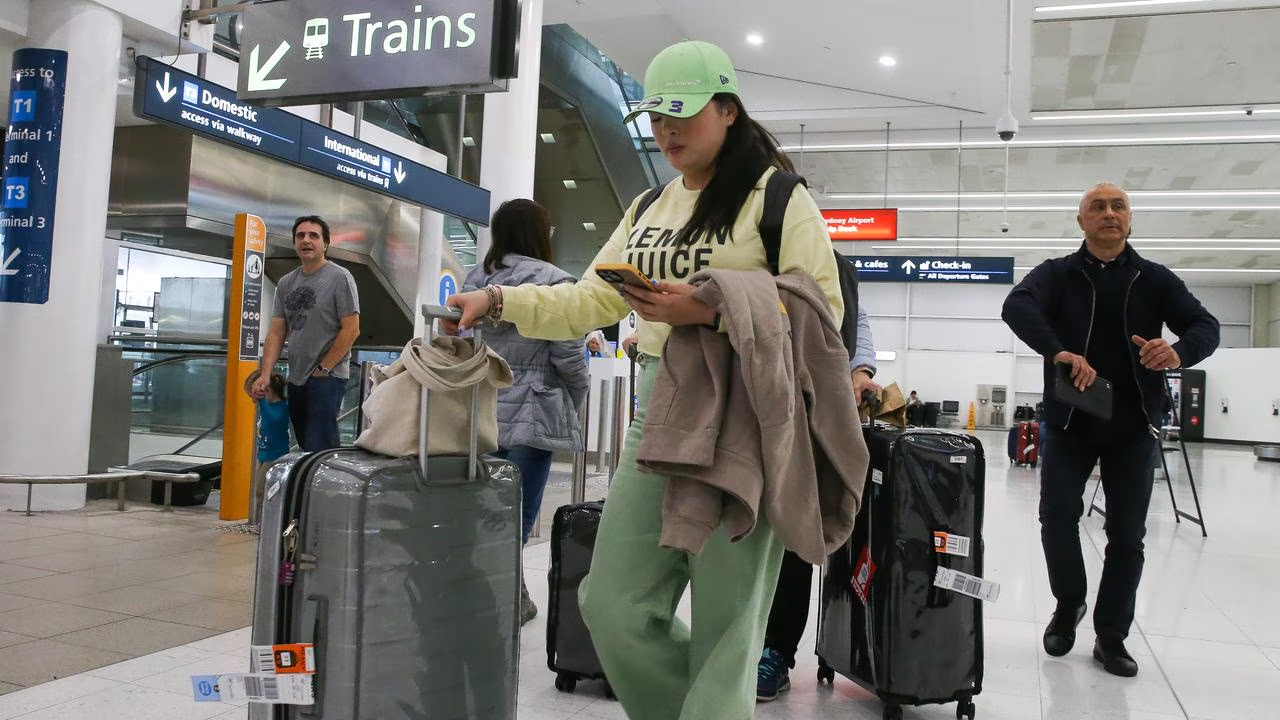
Australians and tourists arriving from overseas will ditch paper passenger cards in a bid to modernize the country’s bustling airports.
Instead, passengers arriving at Australian airports will complete digital cards, which are required for re-entry into Australia and include customs declarations and travel information.
Since October 2024, more than 450,000 passengers have already tried digital cards on Qantas flights to Sydney, Melbourne and Brisbane.
The program is expected to be extended to Qantas flights to Perth and Adelaide by the end of 2026, before being rolled out to all international airports and seaports over the next 12 to 18 months.
The form will initially be available via a web page, but is expected to be developed in conjunction with industry to provide in-app capabilities.
The government said the trial provided anecdotal evidence of “significant success.”
“Making arrivals easier and faster means visitors can spend less time filling out forms and more time enjoying all that Australia has to offer,” Tourism Minister Don Farrell said.
“This is a win for tourists and a win for our tourism operators and will help make Australia an even easier and more welcoming place to visit.”
The wider rollout of the scheme will be funded by an investment of US$56.1 million over four years.
This is expected to improve facilitation and reduce manual processing of passengers, enable early collection of digital information and improve the quality of data for risk assessment.
It will also allow information to be quickly updated and “manage global risks and events” such as biosecurity outbreaks, the government said.
Home Affairs Minister Tony Burke said the modernization was “essential to Australia’s prosperity and national security”.
“Visitors and Australian travelers alike will benefit from a seamless border experience that integrates into everyday digital life,” he said.
Agriculture Minister Julie Collins said the changes would also strengthen Australia’s biosecurity through better information, including before risks reach Australian shores.
“Our government will never compromise on biosecurity, with more than $2 billion in additional biosecurity resources being committed from 2022,” he said.
“Australia’s strong biosecurity system protects our farmers, environment, food security and economy, and modernizing our border is an important part of maintaining that protection.”
Funding for the program is also expected to support ongoing work to improve airport and cruise ship departure patterns, including the boom in travelers ahead of the Brisbane 2032 Olympic and Paralympic Games.