
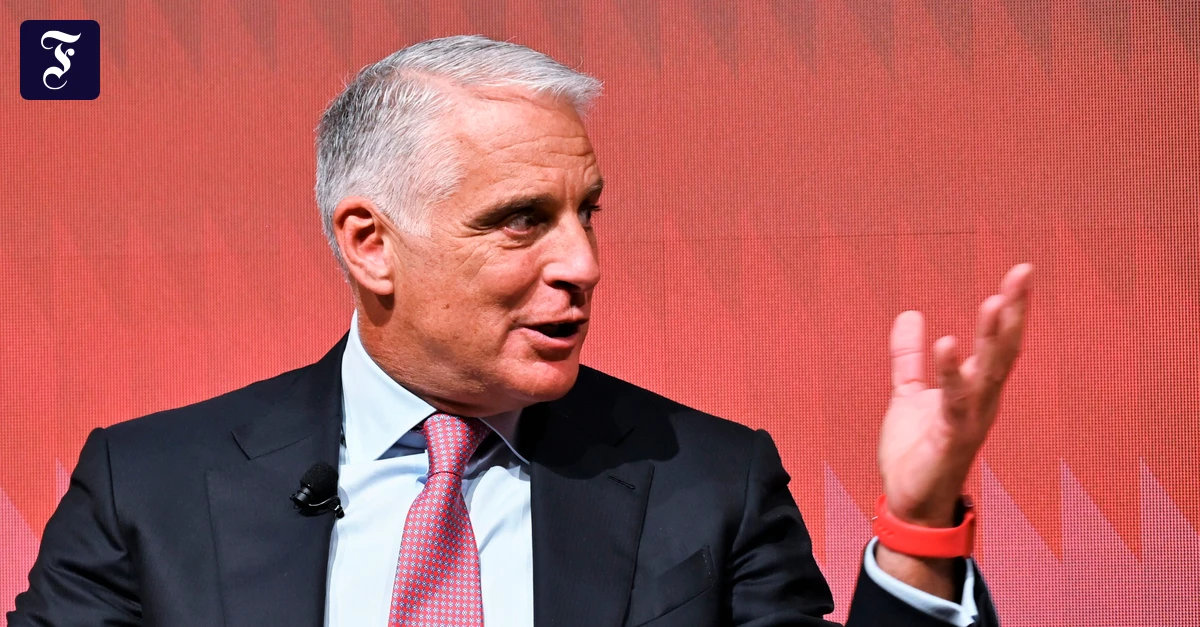
You probably won’t hear the word “Italy” at Commerzbank anymore. But it doesn’t help: the takeover battle between the traditional Frankfurt bank and Italy’s Unicredit, which lasted almost two years, was practically decided as of last Wednesday at the latest. It was then that Unicredit announced that it now owned about 45 percent of Commerzbank shares. Even if experts still argue about the exact numbers due to complex financial details, this can no longer distract from the main thing: Unicredit has won. Once regulators issue the necessary approvals in the next few months, the Milanese bank, led by its brash CEO Andrea Orcel, will be in the spotlight.
This is a bitter message for the management of Commerzbank, surrounded by Bettina Orlopp, and for tens of thousands of employees. During the dispute, they came to a common opinion and significantly moved the bank forward, setting new, ambitious goals for profitability. It is humanly understandable that they do not want to accept their defeat so easily.
Despite the understandable frustration of employees and their management, it is important to recognize that there are many more winners in the successful takeover of Commerzbank than meets the eye. This process is not nearly as threatening to the German banking system as stakeholders like to portray it to be.
First winner: taxpayers
The first winners will be taxpayers, that is, virtually all of us. The German state, which once bought Commerzbank during the financial crisis, currently still owns a stake of about twelve percent in the bank. For a long time this investment was unprofitable. However, Commerzbank’s share price now trades more than 40 percent above the average price at which the federal government once increased its stake. The federal government has not yet expressed its intention to monetize this share, but on the contrary, has demonstratively supported the management of Commerzbank. But in times of tight budgets, the pressure on Chancellor Merz and Finance Minister Klingbeil in this regard is likely to increase.
Second winner: shareholders
The second group of winners are the remaining shareholders. From the first days of the dispute in September 2024 to today, the share price of Commerzbank has approximately tripled. This is not just due to the prospect of a takeover premium, as Unicredit likes to portray. The rise in prices is also partly the result of real efforts by Commerzbank. Today shareholders own a bank that is run more leanly than a few years ago and that also has better control over its costs.
Third winner: Europe
The third winner is Europe. In a competitive environment, especially with American banks, the continent needs strong financial institutions that can compete at the highest level. Even if it might hurt the pride of some people in Germany: Unicredit boss Orcel is in the process of creating just such a financial institution. Commerzbank likes to maintain the opinion that only it can successfully support German medium-sized businesses in their financial transactions. But why shouldn’t it work even more efficiently in the future together with the German subsidiary Unicredit HVB? Unicredit can bring experience from 13 European markets to these businesses.
This text is taken from the Frankfurter Allgemeine Sonntagszeitung.
But the situation now requires special delicacy from the most obvious winner, Unicredit boss Orcel. Because it’s also true: trust is important in banking. The Italian should therefore rethink his previously rather rugged appearance and adopt a more rugged approach. Scaring future employees and the federal government with overly bold statements is the wrong approach.
Psychologically, this is still a blow to Germany and the traditional banking center of Frankfurt. But now you need to make the most of it.