

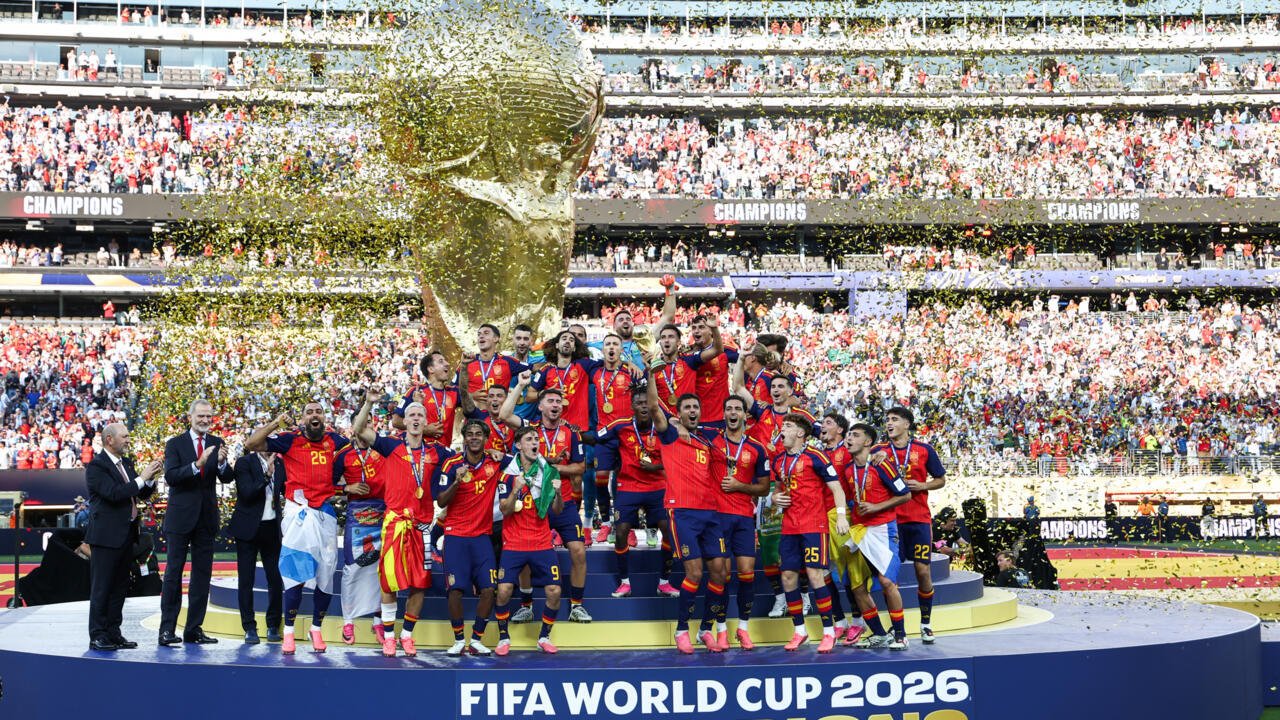
Some 6.8 million people attended 104 matches, watching 308 goals at 16 stadiums, most recently at MetLife near New York, where Spain needed an extra-time goal to deny Argentina their deserved title and win their second title since 2010.
The Spanish national team, led by Lamine Djamel, Rodri, Dani Olmo and their comrades, wrote a wonderful new page, and the Iberian state expanded its power over world football: Men’s World Cup, Women’s World Cup, European Cup and Olympic gold!
After the increase in the number of teams opened the door to criticism ahead of the tournament, FIFA felt it was morally necessary to give more teams a chance.
Standing out among the lesser-known teams was the archipelago side Cape Verde, which drew 0-0 with Spain in the first match and then forced Argentina to play two extra periods to beat them for the first time in the confirmed round of 16. Curacao, with a population of 185 thousand people, also played a goalless draw with Ecuador.
Egypt, with their veteran star Mohamed Salah, reached the qualifying round for the first time in their history and came very close to pulling off a stunning surprise against Argentina in the last eight, leading 2-0 with 11 minutes remaining before finally succumbing to Messi’s magic.
Morocco performed admirably early in the tournament before its path was halted in the quarter-finals against realistic France, less than four years after its historic achievement when it became the first African and Arab team to reach the semi-finals.
In addition to Messi and the Frenchman Kylian Mbappe, who became the all-time top scorer of the World Cup (22 goals), one goal ahead of the Mosquito, and the first player to win the title of top scorer twice, also at the expense of Messi (10-8), the Norwegian Erling Haaland (7) appeared to the rhythm of drums and Viking dances.
In the last campaign, France provided coach Didier Deschamps with a strong attacking game before Spain tamed it in the semi-finals, much like England were saddened by losing their lead over Argentina.
As for Brazil and Germany, winners of the title 5 and 4 times in a row, they had byes to the round of 16 and 1/16 with Norway and Paraguay respectively.
Iran and war
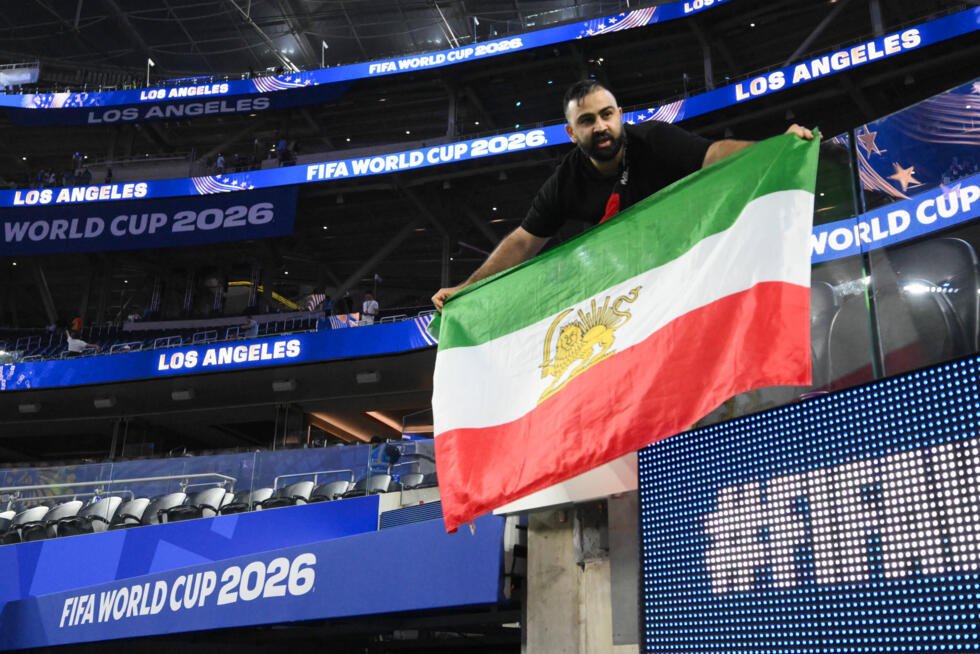
A fan carries an old Iranian flag in Los Angeles © Patrick T. Fallon / AFP
Political circumstances played a role in the tournament, especially the issue of Iran’s participation following the war in the Middle East between the United States and Tehran, as no World Cup host country has ever been in open conflict with a participating country.
Instead of setting up camp in Tucson, Arizona, the team moved at the last minute to the border city of Tijuana, Mexico.
The US has also denied entry visas to about a dozen members of the administration, including the head of the Iranian Federation, Mehdi Taj, a former member of the Revolutionary Guard, which Washington classifies as a terrorist organization.
Iran also criticized the reception conditions on American soil, where it played three matches, protesting in particular that its delegation was only allowed to arrive the day before the first two matches.
Coach Amir Kala Nooyi said Iran is “the most hunted team at the World Cup.”
The Ivorians and Senegalese were unable to accompany their teams due to an inability to obtain entry visas in light of Trump’s very strict immigration policies.
The issue even affected players involved in the game, such as Somali referee Omar Arten, who was denied entry despite having a regular visa. US officials attributed the ban to “concerns related to security checks.”
Ghana international Thomas Partey, who is facing trial in the UK on rape charges, has also been denied entry into Canada.
Weather conditions played a role: thunderstorms disrupted the start of some matches.
Pauses for drinking water were not agreed upon unanimously, and FIFA’s director of global football development, Frenchman Arsene Wenger, admitted that the latter would evaluate their implementation in the future after the end of the tournament.
Trump and me
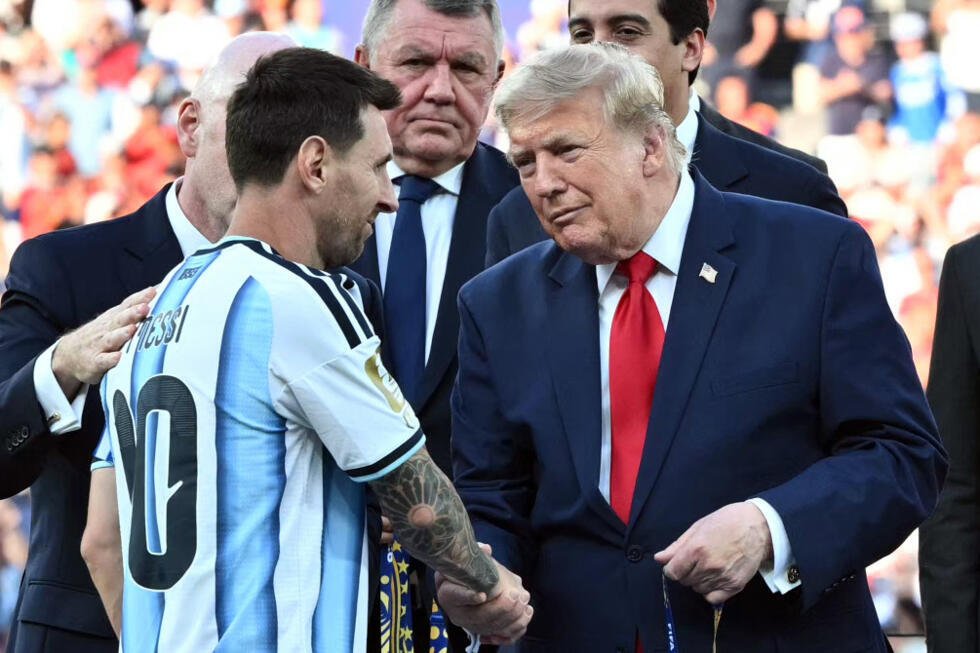
Trump shakes hands with Messi, who won a silver medal with Argentina and a silver ball as second best player at the 2026 World Cup © Mandel Ngan/AFP
As a result of the new laws, Paraguayan Miguel Almiron became the first player in the tournament’s history to be expelled for covering his mouth while talking to another player before the end of the first half of his country’s match with Turkey in San Francisco.
FIFA’s decision to adopt “dynamic pricing” to determine ticket prices has been heavily criticized by fans’ groups, who called it a “big betrayal” before the tournament began. But that didn’t stop fans from spending thousands of dollars to watch the event.
In the most controversial issue, it involved the host US after Trump personally intervened with FIFA President Gianni Infantino to delay the implementation of a one-match ban imposed on US forward Folarin Balogun ahead of their match against Belgium in the qualifying rounds.
This unprecedented challenge led to many neutrals turning against the American team, and there was joy when Belgium crushed their opponent 4–1.
However, Infantino is expected to build on the success of the tournament to push for further expansion, with the possibility of staging the 2030 World Cup finals, planned mainly for Spain, Morocco and Portugal with 64 teams, up for discussion.
© 2026 AFP