
As strikes between Ukraine and Russia intensify, Vladimir Zelensky has relied on personnel changes in ministers. The sacking of his popular defense minister caused political shock. When the appointment of a new Prime Minister is aimed at preparing for war this winter.
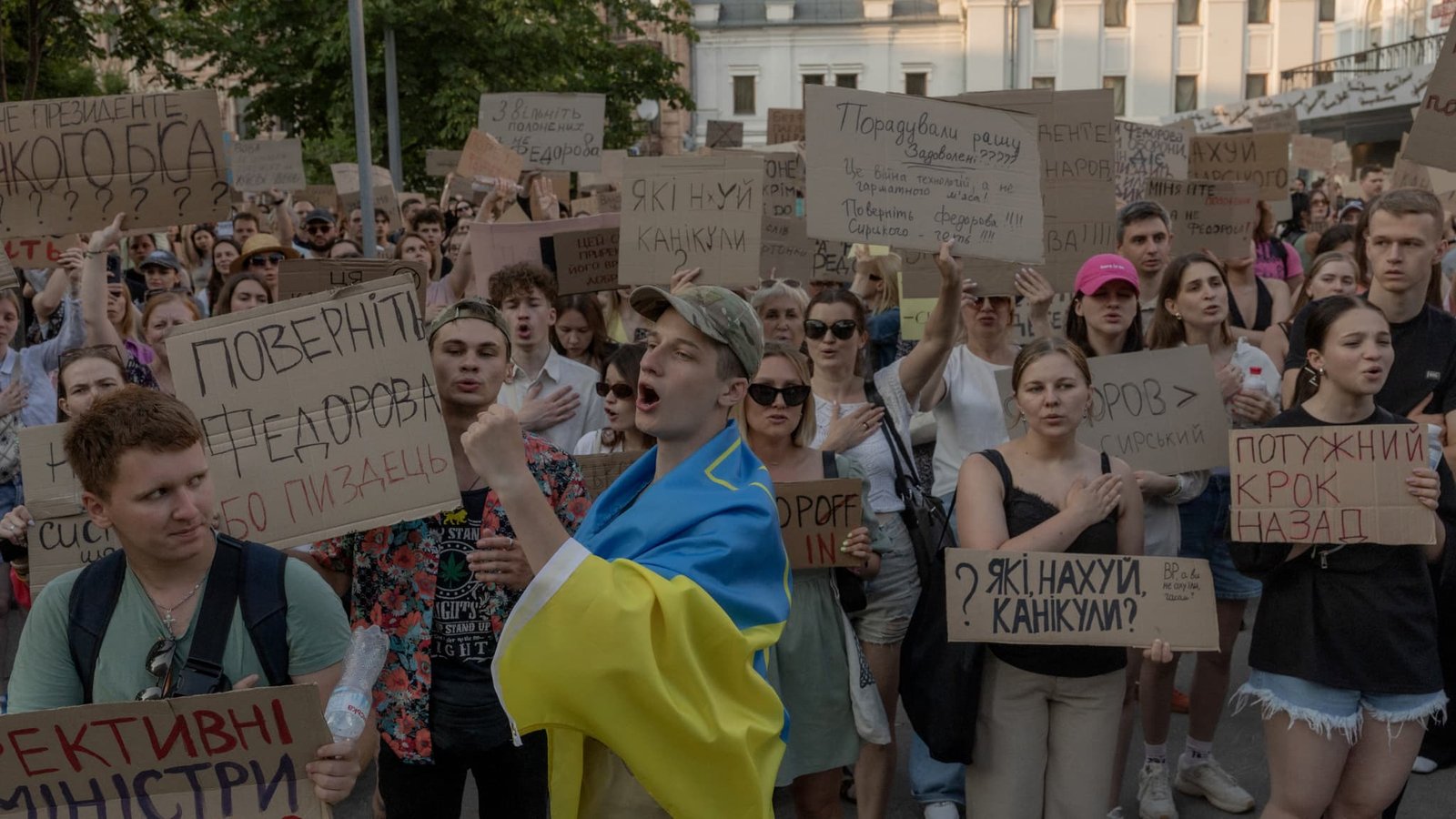
“Shame!”, “why?”, “we thought we were in a democracy, we are in an idiocracy”… Despite the threat of Russian missiles, hundreds of Ukrainians took to the streets of the country on Thursday, July 16 in the center of Kyiv, as well as in Odessa, Kharkov, Dnieper and even Lviv, to protest against the dismissal of Ukrainian Defense Minister Mikhail Fedorov.
The 35-year-old champion of high-tech battlefield technology was sacked on Wednesday after just six months in his post in a government shakeup wanted by President Volodymyr Zelensky. This unexpected reorganization, which came just a year after the largest government reorganization since the Russian invasion, also included a change in prime minister.
“Personnel changes will begin in Ukraine to ensure the implementation of a new political strategy,” the Ukrainian president said last Sunday in a press release broadcast on Interfax TV channel.
Faults in the military hierarchy
The departure of Defense Minister Mikhail Fedorov not only increases mistrust among the population, but also exposes fault lines within the military hierarchy.
During his surprise appointment in January, the career entrepreneur turned digital transformation politician and then the youngest defense minister in Ukraine’s history was presented as the face of Ukraine’s military renewal. The army was strained by more than four years of war and faced shortages of recruits and equipment, bureaucracy and corruption.
Thus, Mikhail Fedorov worked to bring new technologies to the battlefield. In particular, drones, which have become one of the most important components of war. He also increased military salaries and even fired controversial figures in his ministry. It was he who contacted billionaire Elon Musk in 2022 to obtain Starlink satellite communications for Ukrainian troops, which is now a critical element of their military organization. Or who contacted him again last February to deny Russian troops access to this technology.
Despite the obstacles, especially on the very sensitive issue of forced mobilization, the young minister’s popularity rating continued to rise. According to a survey published in June 2026 by the Kyiv International Institute of Sociology, Mikhail Fedorov is among the most respected public figures by Ukrainians. But the young reformer, whose style was reminiscent of Silicon Valley businessmen, came into conflict with high-ranking military officers. Starting with the commander-in-chief of the Ukrainian army, 60-year-old General Alexander Syrsky.
Speaking to the press this Thursday, Mikhail Fedorov confirmed that the reason for his departure was a conflict with the general. And he could not resist criticizing him. “Instead of looking for how to defeat Russia asymmetrically, which is the job of a commander in chief, he found a way to divide the country,” the tech ace said in his casual black T-shirt in front of a screen on which images of drones scrolled. At the same time, accusing his rival of pushing the Ukrainian president to choose between them.
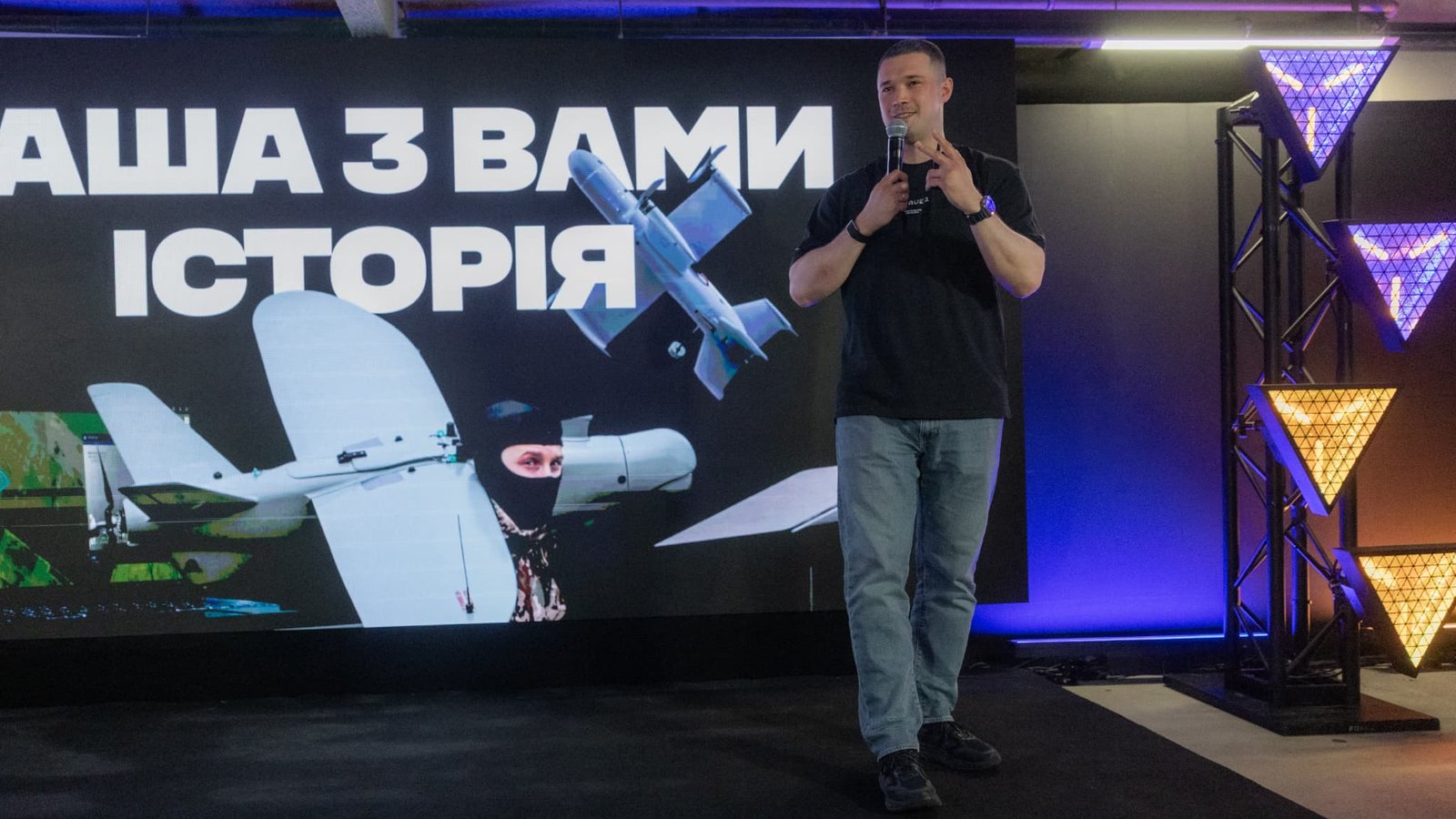 Ukrainian Defense Minister Mikhail Fedorov speaks to the media during a press conference after announcing his resignation in Kyiv, July 16, 2026, amid the Russian invasion of Ukraine. © ROMAN PILIPEY / AFP
“Vladimir Zelensky has been dealing with this problem of tension within his team for several weeks, several months. And you cannot, during a war, have a defense minister and a chief of staff who are in direct opposition and completely disagree with the strategy that should be followed,” emphasizes Ulrich Buna, specialist on Eastern Europe and researcher at Euro Créativ, contacted by BFM. “It was no longer tenable.”
On Thursday, the Ukrainian president admitted that the two men hardly communicate anymore and insisted that he made his decision in the name of “unity,” while regretting that both sides did not “find it.”
“Relatively unstable situation”
“Mikhail Fedorov is a young man who has always shown that he wants to fight corruption and enjoys an extremely positive image in society, unlike General Syrsky,” comments Ulrich Buna.
In his post since 2024, Alexander Syrsky is accused by his detractors of defending an overly traditional vision of military operations and caring little about the lives of soldiers.
“He has been criticized in the past for sacrificing people so as not to give up an inch of land. Civil society and some in the military criticize him for being too Soviet in his approach,” adds an expert on the war in Ukraine. In his view, the dispute between the two men reveals a “clash of generations” in the country, “between a young, flexible and dynamic country and a more conservative, more post-Soviet country.”
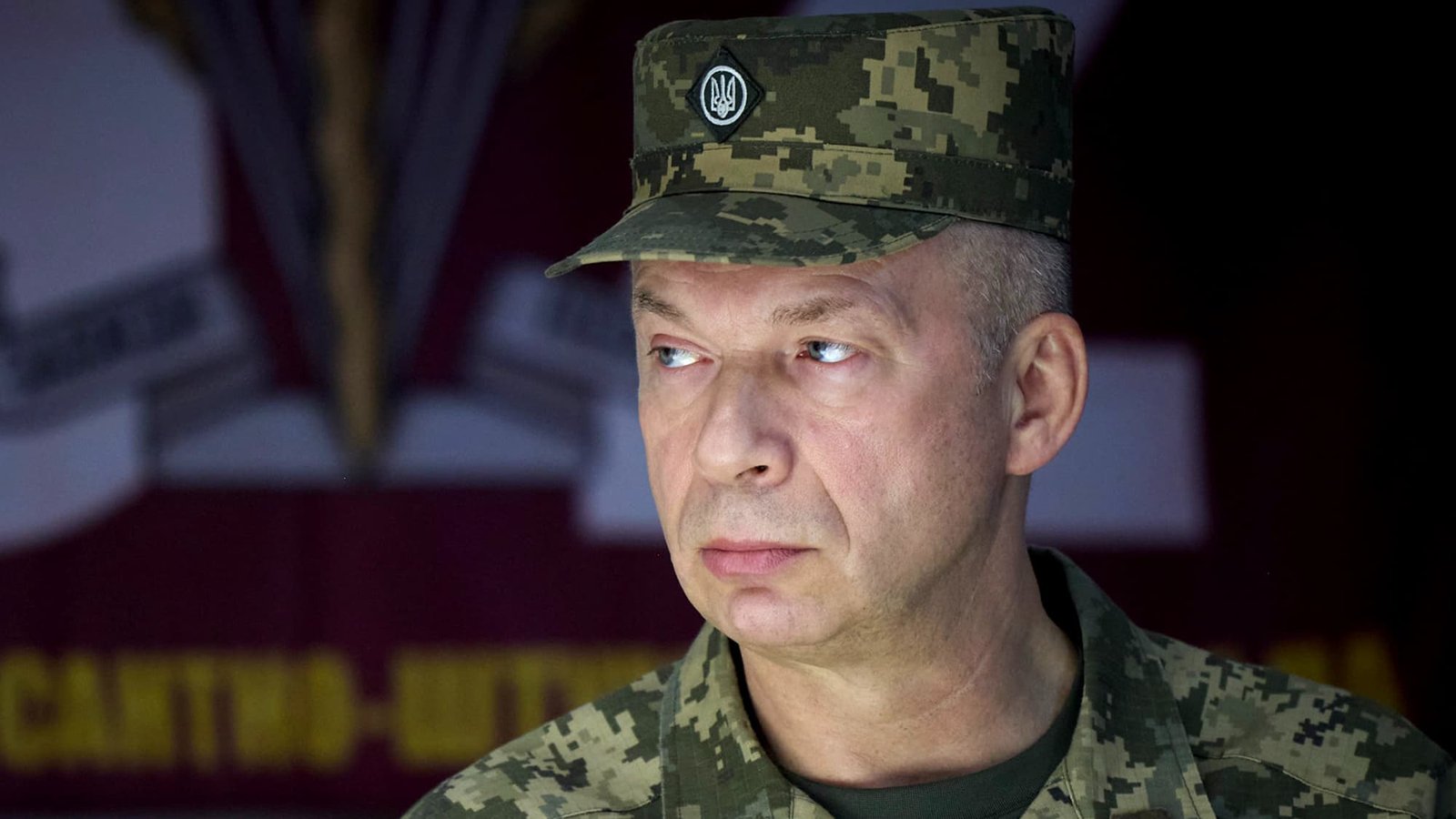 Commander-in-Chief of the Armed Forces of Ukraine Alexander Syrsky, October 4, 2024. © HANDOUT / PRESS SERVICE OF THE PRESIDENT OF UKRAINE / AFP
In addition to the desire to restore “unity,” some see in the dismissal of Mikhail Fedorov Vladimir Zelensky’s fear that this young minister will overshadow him. “Mikhail Fedorov was increasingly perceived as a new political star and as the most effective reformer of the current government,” political scientist Vladimir Fesenko analyzes AFP. This rise in popularity “may not have gone down well with Zelensky,” he suggests.
The departure of the defense minister has already led to others: the departure of Defense Ministry adviser Sergei Sternenko and the second commander of the Ukrainian Air Force and a leading figure in the field of combating drones, Pavel Elizarov.
Mikhail Fedorov is temporarily replaced by Yevgeny Khmara, a recognized military man with a career in the Ukrainian security services (SBU) but no political experience. His appointment is yet to be confirmed by parliament upon his return from summer recess on August 18.
“We are in a relatively unstable situation, when there will be no real defense minister or foreign minister until mid-August, this is not good for the country,” says Ulrich Buna.
If personnel changes do not affect the effectiveness of the front in the short term, it will destabilize the country and destroy the “image war” waged by Ukraine and Russia. “It is relatively harmful to see people on the streets of Ukraine opposing the president, even if it shows the vitality of Ukrainian democracy,” the specialist said.
In the latter case, “Vladimir Zelensky shot himself in the foot.” “He will have to drag this decision out like a ball and chain” “with a political comeback that risks becoming complicated” like last year, when demonstrations in support of anti-corruption bodies broke out during the same period.
New Prime Minister will ‘get ready for winter’
In addition to the delicate Ministry of Defense, this summer’s reshuffle also affects the highest level of the Ukrainian state: Prime Minister Yulia Sviridenko officially resigned on Tuesday with the consent of parliament. “Thank you everyone for your support. It was an honor to work for Ukraine,” she responded on social networks in a message accompanied by a photo of herself in parliament, making a heart with her hands.
Set cookies
Appointed last summer to the post of prime minister, she, however, was not relegated to the background: Vladimir Zelensky offered her a new role in “relations with a key partner.” According to our colleagues at Le Monde, she will replace the current ambassador in Washington, who is being investigated by the National Anti-Corruption Office.
As for her, she will be replaced by Sergei Koretsky, general director of the state energy group Naftogaz. Although the new prime minister has little political experience, his appointment, approved by parliament, is far from accidental: it anticipates a new winter influenced by Russian strikes.
“We need to prepare for a winter season that will be much more difficult, even harder than the previous season,” says Euro Créativ researcher Ulrich Buna.
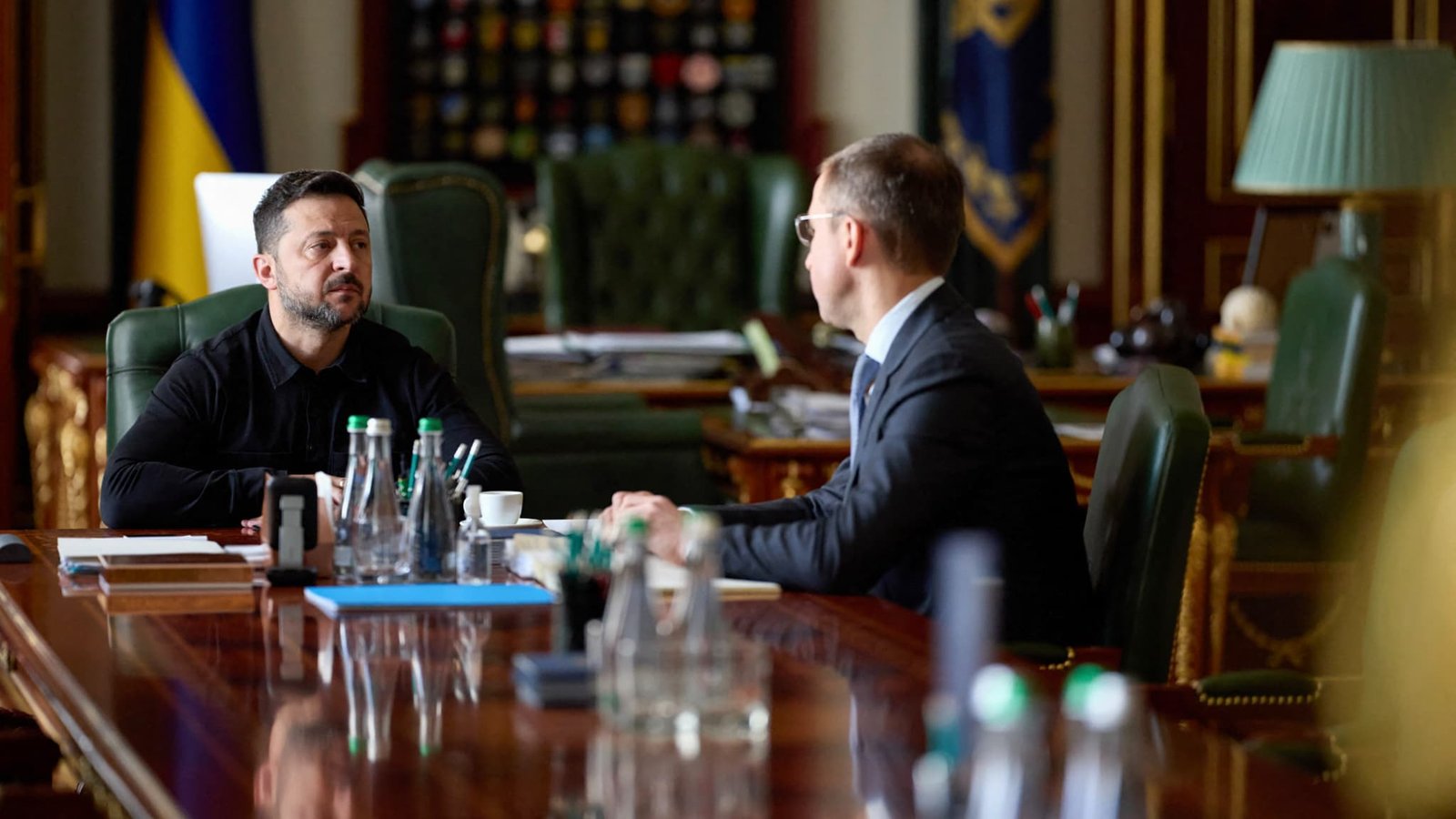 President of Ukraine Vladimir Zelensky and Prime Minister of Ukraine Sergei Koretsky during a meeting in Kyiv on July 17, 2026. © HANDOUT / PRESIDENTIAL SERIES OF THE PRESIDENT OF UKRAINE / AFP
Last winter, repeated Russian attacks on the country’s energy infrastructure caused the worst energy crisis since the large-scale invasion began in February 2022. Millions of people were left in the dark, without electricity or heat in temperatures down to -20°C. Russian strikes have caused $90 billion in damage to Ukraine’s energy sector since 2022, according to the World Bank.
The new 48-year-old prime minister managed to keep Ukraine’s largest state-owned gas company running while Russian strikes battered energy infrastructure. “That is why, after all the consultations, Sergei Koretsky is probably the most prepared person for the post of Prime Minister of Ukraine,” Volodymyr Zelensky said on Wednesday along with European Commission President Ursula von der Leyen in Kyiv.
Vladimir “Zelensky sees him as a crisis manager,” sums up political scientist Vladimir Fesenko.