


June 30, 2026 – 11:59
Save
You have reached the maximum number of items saved.
Remove items from the saved list to add new ones.
AAA
The US Supreme Court has, for now, preserved the independence of the Federal Reserve Board, but by the slimmest of margins.
In a 5-4 decision, the court majority ruled that Fed Chair Lisa Cook, whom Donald Trump intended to fire over allegations of mortgage fraud, can remain on the board until the allegations are reviewed and Cook has a chance to defend herself.
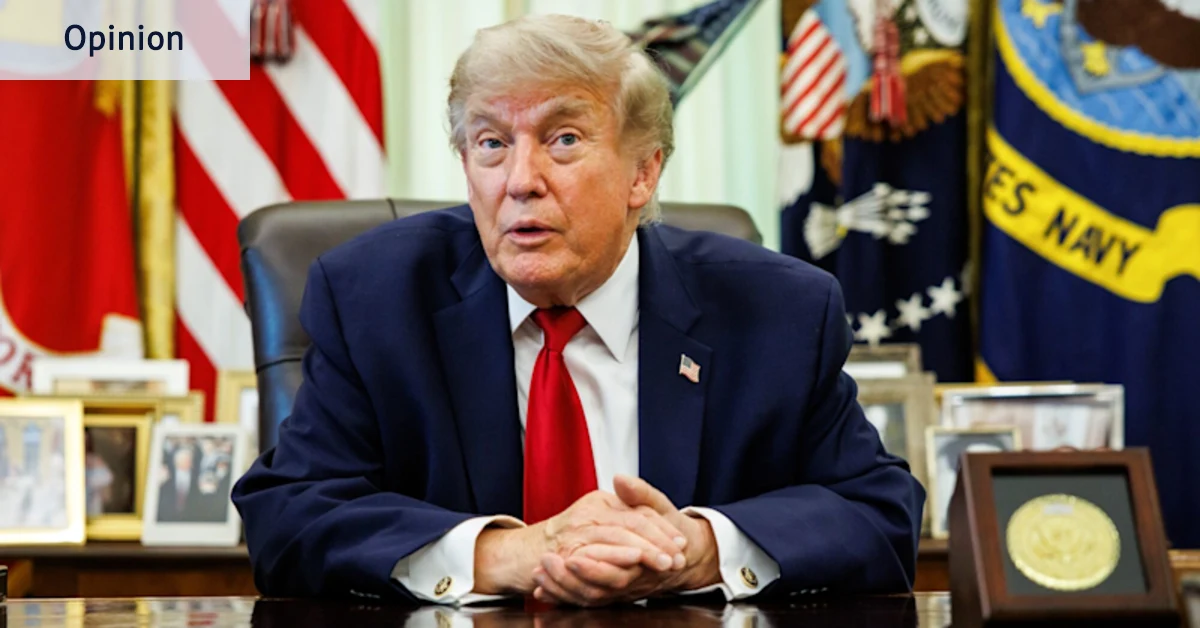
Donald Trump’s attempt to tighten control over the Federal Reserve has failed. Bloomberg
The decision—and the simultaneous ruling that the president has complete authority over all other government agencies—affirms the unique status of the U.S. central bank, which Chief Justice John Roberts has rightly called one of the most important financial institutions in America and the world.
It’s a setback for Trump, who tried to remove Cook (via a social media post) and former Fed Chairman Jerome Powell from the board based on allegations made by Trump loyalist Bill Pulte, the former director of the Federal Housing Finance Agency and now the acting director of national intelligence. Trump wanted to get rid of Cook and Powell to fill the seven-member Fed board with more accommodating appointees.
Related article

Undaunted, Trump vowed to continue pursuing Cook. He wrote on Truth Social that the “Cook lawsuit” had been “remanded” by the Supreme Court on “strictly procedural” grounds and that he would take immediate action to ensure that “whoever committed the wrongdoing will not be making vital decisions affecting the welfare of the United States of America!”
However, the Supreme Court majority found it unlikely that the administration’s efforts to remove Cook in the case would succeed.
The Supreme Court’s ruling addressed the process required to remove someone from the Fed’s board of directors—unlike the decision it made with respect to other agencies previously considered (for nearly a century) independent, where no reason now needs to be established and Trump can unilaterally fire anyone he wants.
Essentially, the majority ruled that Cook should be given an opportunity to respond to the allegations and that the administration would have to prove that the Federal Reserve Act’s “respect” threshold, which is generally held to include serious wrongdoing or malfeasance, had been met.
“At a minimum, Cook was entitled to some explanation of the evidence at issue, some opportunity to respond, and a deadline by which to provide a response,” Roberts, the chief justice, wrote.
Pulte accused Cook (in a social media post, naturally) of misleading her lender by claiming two separate properties as her primary residence in order to get a lower interest rate.
 Trump wanted Jerome Powell (left) and Lisa Cook removed from the Fed board so he could fill it with more accommodating appointees.AP
New York TimesHowever, Cook said her loan application clearly stated that one of the properties was a vacation home or second home, suggesting the lender knew or should have known that it was not her primary residence.
Pulte, who has leveled similar mortgage fraud allegations against others who antagonized Trump, provided Trump with an excuse to fire Cook and open a seat on the Fed’s board – as he did with an attempt to impeach Powell for his testimony to Congress about cost overruns on the Fed’s headquarters renovation.
Now the court has ruled that Trump does not have the right to fire Fed chairs on a whim or because they won’t do what he wants. They have the right to due process of law.
Related article

It’s a victory for the Fed and its governors, and even for Trump’s newly appointed chairman Kevin Warsh, who now knows Trump can’t kick him off the board unless he delivers the interest rate cuts Trump expects from him and which prompted Trump to try to get rid of Powell and Cook.
When the Fed was created in 1913, its structure was designed to make it independent of the executive branch, with rotating 14-year terms for governors (Cook’s term doesn’t end until 2038) and the ability of the president to remove a governor based on a threshold for “good cause.”
“The protections from removal enjoyed by the governors of the Federal Reserve are consistent with the Constitution,” the Chief Justice wrote.
“The Founders knew from experience what disasters could arise even when there was suspicion of political manipulation of monetary policy.”
The majority decision said that the president’s suspension of the governor while the trial was ongoing would substantially impede the independence of the Federal Reserve and would turn its defense of for cause into “employment at will.”
It said that Congress created the Fed to operate independently of the president.
“Any change to this arrangement must come from Congress. That is why we cannot accept the government’s assertions in this case. To do so would be to allow the President to remove a member of the Federal Reserve at any time, for any reason, without any prior notice and without any judicial review thereafter,” the majority of the justices wrote.
The Fed’s independence is fundamental to its credibility and the functioning of the U.S. bond market that underpins the global financial system, the U.S. dollar’s status as the world’s reserve currency, and the U.S. government’s ability to attract international investor support for its financing.
With the federal government in debt nearly US$40 trillion ($58.2 trillion), the Trump administration needs that kind of support, which could evaporate if investors – both domestic and foreign – believe the Fed will be guided by the political cycle rather than its beliefs about the economy’s long-term needs.
 Trump supporter Bill Pulte, formerly of the Federal Housing Finance Agency and now acting director of national intelligence, brought allegations against Cook.AP
Each of the living former Fed chairs, including Alan Greenspan, who died last week, submitted a “friend of the court” brief supporting Cook and the Fed’s continued independence, underscoring how important they believed the issues at stake were.
If Trump had his way – if he could seize control of the Fed as he can now control other government agencies – the Fed would lower US interest rates, even as US inflation continues to rise.
Related article
Control of the Fed and other government agencies was one of the goals of the conservative Heritage Foundation’s Project 2025 manifesto, which served as the basis for Trump’s second term. (Interestingly, Paul Winfrey, author of the Project 2025 chapter on the Fed, was appointed by Warsh to one of five task forces tasked with developing reforms to the bank’s operations.)
For now, that ambition has been eroded, and the Fed’s unique status—a status that was generally respected and protected by previous administrations—has been preserved.
The narrow margin with which the status quo was upheld, the court’s inability to determine where the threshold for good cause to remove a governor might lie, and the autocratic president’s determination to wrest control of all government agencies mean, however, that the threat to Cook and the Fed’s independence if Trump or his successor were able to oust the board has not been entirely eliminated.
The Business Briefing newsletter delivers insightful stories, exclusive content and expert insights. Sign up to receive it every weekday morning..
Save
You have reached the maximum number of items saved.
Remove items from the saved list to add new ones.