


Listen to this article
Approximately 5 minutes
The audio version of this article was created using artificial intelligence technology. Pronunciation errors may occur. We work with our partners to continually analyze and improve results.
US federal and state authorities are investigating cases of intestinal parasites.
Cyclospora is a microscopic parasite that infects food that comes into contact with human feces, such as when food is watered or washed with contaminated water.
Cyclosporiasis, an infection caused by this parasite, most often causes diarrhea, but some people may experience other gastrointestinal symptoms and dehydration. Doctors say symptoms usually appear within a week of ingesting the parasite.
The disease is not usually transmitted from person to person.
As of July 20, more than 30 states had reported illnesses, with nearly 100 hospitalizations and no deaths reported to date. The true number of infections is likely much higher, given that many people recover without seeking medical attention and there is a delay between the onset of symptoms and their reporting.
Public health officials say they are not currently investigating cyclospora outbreaks in Canada.
 According to nutritional scientists, the parasite can penetrate into the nooks and crannies of berries. (Frannann/Shutterstock)
Products imported into Canada associated with the Cyclospora parasite include:
- Basil.
- Cilantro.
- Raspberry.
- Blackberry.
- Mesclun salad.
- Snow and peas.
- Packaged salad mix.
Here’s how the current outbreak south of the border unfolded and how Canadian health officials responded.
May 13, 2026
The US Food and Drug Administration (FDA) reports that this is when the first diseases caused by the parasite Cyclospora began.
June 30
Michigan health officials say there are now more than 170 cases in several counties, compared with about 50 cases of cyclosporiasis typically a year.
July 8
The Public Health Agency of Canada says it is not investigating any cyclospora outbreaks in Canada and tells CBCNews the parasite is not typically found in food or in drinking water.
“The spring and summer typically see an increase in cyclospora infections associated with the consumption of fresh fruits and vegetables imported from other countries,” a PHAC spokesperson said in an email.
July 16
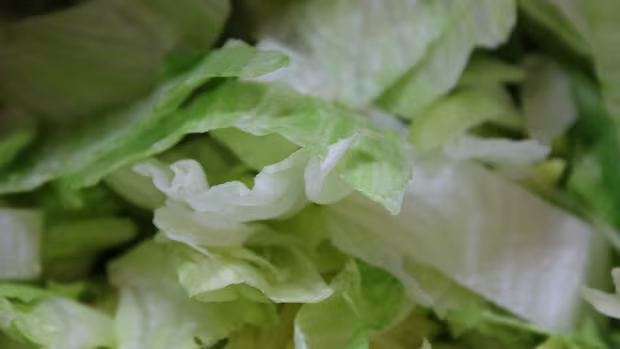
The FDA and the U.S. Centers for Disease Control and Prevention (CDC), in collaboration with state and local partners, are investigating a multi-state outbreak of cyclospora disease associated with shredded iceberg lettuce served at Taco Bell restaurants in Indiana, Kentucky, Michigan, Ohio and West Virginia.
WATCH | A nutritionist explains cyclospora: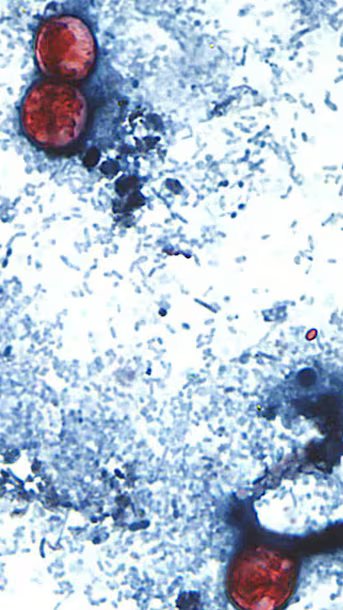
What is Cyclospora? Parasite that causes diarrhea
The parasite, which causes diarrhea, has led to a growing outbreak in the United States that has sickened more than 1,000 people and sent dozens to hospitals. As of Wednesday, cyclospora infections, which can cause watery diarrhea, bloating, fever and nausea, had been reported in many states. Although cases are common in the spring and summer, the current outbreak has resulted in an unusually high number of cases, making it one of the largest in the country’s history. No deaths were reported.
The illnesses began to occur between May 13, 2026 and July 13, 2026. Michigan is analyzing food exposure details from 190 cases of people who reported eating at Taco Bell and sharing those findings with the CDC.
The FDA says its traceback investigation to find the source was limited to one supplier of iceberg lettuce from Mexico that was used in Taco Bell restaurants where sick people ate before becoming ill.
Meanwhile, Alberta health officials say they are investigating an increase in cyclosporiasis cases. But the province said no link has been established between the Alberta illnesses and the American outbreak.
July 17
Taylor Farms de Mexico, which supplied shredded iceberg lettuce used in Taco Bell restaurants where sick people ate before falling ill, is flagged by the FDA as a supplier. The company announces it is voluntarily removing all iceberg lettuce produced in central Mexico from the U.S. market.
Quebec health officials say 85 cases of cyclosporiasis have been reported year-to-date, compared to 30 cases in 2025 during the same period (an average of 32 cases annually between 2022 and 2025).
“As in previous years, the majority of cases in Quebec are believed to be travel-related, primarily to Mexico,” a spokesperson for Quebec’s Ministry of Health and Social Services said in an email.
They said none of the cases in Quebec are linked to the outbreak in Michigan.
July 18
On July 17, the FDA announced that Guanajuato-based Taylor Farms de Mexico, also known as Taylor Fresh Foods, is announcing the voluntary removal from the U.S. market of all iceberg lettuce sourced from central Mexico.
The recall notice issued by Taylor Fresh Foods includes Marketside brand iceberg lettuce products available at Walmart in the United States.
July 19
The FDA points to the difficulty of detecting Cyclospora, saying its laboratory experts have concluded that a new sample of shredded lettuce from Taylor Farms de Mexico tested positive for Cyclospora during import inspection at the U.S.-Mexico border. It turned out to be a false positive, according to the FDA.
July 20
On social media, FDA officials explain that there is still “overwhelming epidemiological data” supporting Taylor Farms’ voluntary recall.
The Public Health Agency of Canada says it is not currently investigating any outbreaks of cyclospora in Canada.