
 Save
Save
You have reached the maximum number of items saved.
Remove items from the saved list to add new ones.
AAA
Australia is experiencing its longest period of below-par economic growth since the recession of the early 1990s, one of the country’s top forecasters has predicted, warning that long-term vulnerabilities are finally catching up with the country.
Deloitte Access Economics said this morning it expects the economy to slow sharply in the coming months, with GDP growth falling below 2 percent this financial year and next. These will be the first consecutive years of growth of less than 2 percent since the end of the 1990-91 recession.
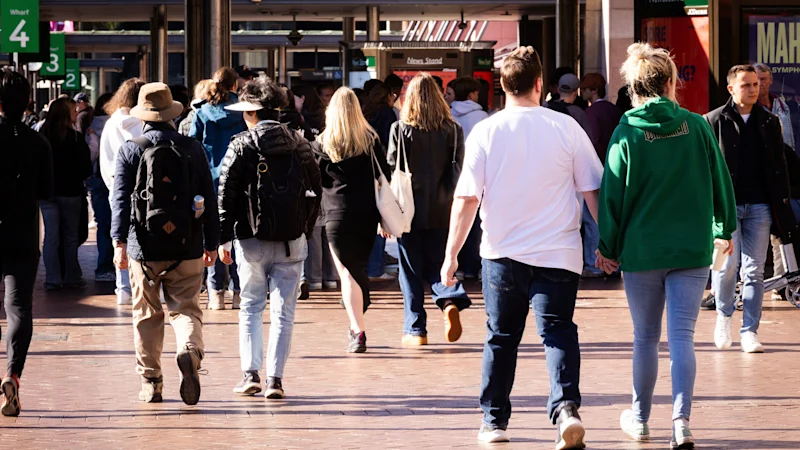
 Consumer spending is expected to slow this year and next, leading to the country’s worst economic growth outlook in decades.Rene Nowytarger
The slowdown in growth will be accompanied by continued inflation, which Deloitte expects to hover around 4 percent in 2026-27 before falling to 2.6 percent in 2027-28.
Real wage growth will reverse in 2026-27, while slower economic growth will mean unemployment, currently at 4.4 percent, is expected to average 4.9 percent in the next financial year before peaking at 5 percent the following year.
Deloitte partner Stephen Smith said the war against Iran and rising inflation this year exposed economic vulnerabilities that have emerged in recent years.
Related article
“Australia is now structurally vulnerable in a way that has become difficult to ignore. Rarely has Deloitte Access Economics taken such a pessimistic assessment of the short-term outlook,” he said.
“For too long, strong population growth has masked weak fundamentals of productivity and boosted aggregate growth while doing less to improve living standards.
“Years of underinvestment in housing, infrastructure, energy and the economy’s productive capacity have left the economy with supply struggling to keep pace with demand.”
Deloitte expects the Reserve Bank to raise official interest rates again this year, most likely at its August meeting. That would raise the cash rate to 4.6 percent.
However, financial markets believe it is much more likely that the Reserve’s next move will be a rate cut. On Monday, the price of a rate hike fell to its lowest level this year, with the likelihood of a hike now at 38 percent by February.
A rate cut by September next year is now fully priced in, with a 50% chance of a second cut by Christmas.
Western Australia, after being the country’s strongest economy for several years, is expected to be the slowest this financial year. Deloitte predicts WA’s growth rate will slow to 0.7 per cent, far behind the Northern Territory (5.9 per cent), New South Wales, South Australia and Victoria (all 1.3 per cent), Queensland (1.7 per cent), Tasmania (0.9 per cent) and the ACT (1.6 per cent).
Deloitte said the biggest impact on the economy was the war against Iran. Financial markets are also frothy and heavily dependent on expected returns from the AI sector.
He noted that there were some positive aspects. Rising data center and technology spending in Australia has indeed provided a chance for much-needed productivity growth. Business investment alone is forecast to grow 6.9 percent this year and 5 percent in 2027-28.
But Smith said cost-of-living pressures remain the biggest drag on the economy.
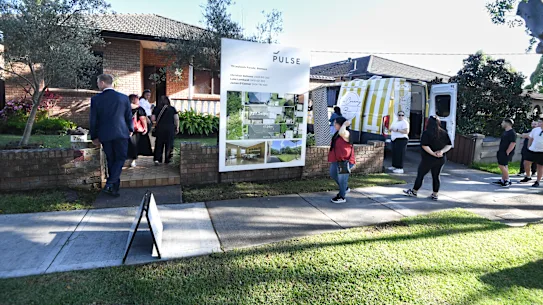
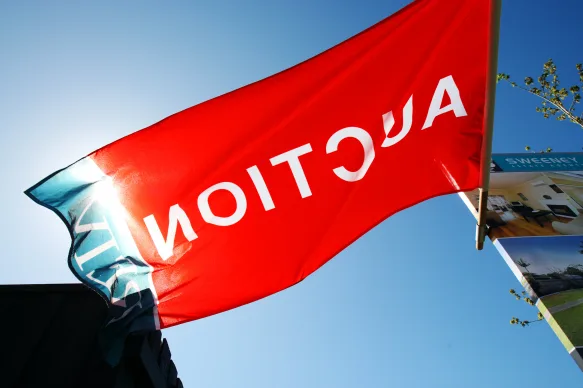 Mortgage payments, in addition to higher costs for everything from food to insurance, are weighing on the economy.Jessica Shapiro
He said mortgage repayments, which have risen by $350 a month on the average home loan due to three Reserve Bank interest rate hikes this year, as well as higher prices for rent, insurance, groceries and electricity, have all hit households.
“Households remain under pressure. Tax breaks, increases in nominal wages and increases in minimum and bonus wages from July will provide some support,” he said.
“However, these offsets are coming under scrutiny due to renewed inflation pressures, higher borrowing costs, volatile fuel and transport prices, and weak confidence.”
Related article
The lack of confidence was confirmed by today’s weekly ANZ-Roy Morgan sentiment indicator, which is down 1.2 points over the past 7 days.
Buyer confidence collapsed at the start of the war against Iran, falling to its lowest level ever. Despite the recent fall, it remains well above this level.
Treasurer Jim Chalmers said the report confirms the ongoing costs and consequences of the war against Iran, but noted that the country’s fundamental economic indicators remain stable.
“Under Labour, Australia has the lowest average unemployment rate of any government in half a century, smaller deficits and less debt than the Coalition left us with, a boom in business investment, tax cuts and wage rises that the right-wing parties oppose,” he said.
“We have a big economic program to grow Australia’s economy, boost productivity and fight inflation, while we are also helping first home buyers and introducing vital measures to reduce the cost of living, such as tax cuts, higher wages and better paid parental leave from this month.”
Cut through the noise of federal politics with news, opinion and expert analysis. Subscribers can sign up for our weekly Inside Politics newsletter.
Save
You have reached the maximum number of items saved.
Remove items from the saved list to add new ones.
 Shane Wright is senior economics correspondent for The Sydney Morning Herald and The Age.Connect via X or e-mail.