

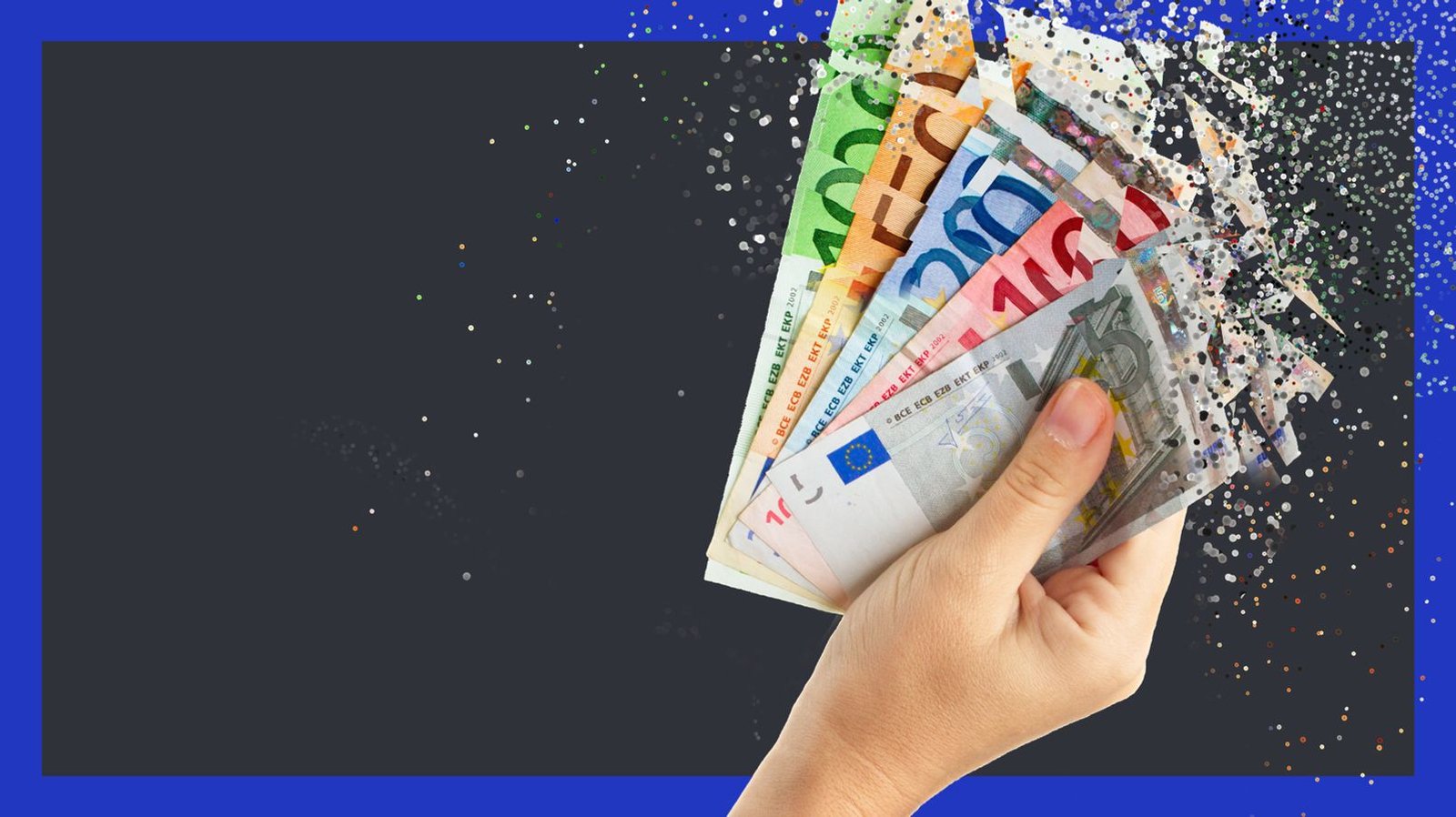
For the first time in 2025, Germans were more likely to pay by bank transfer than by cash. Financial expert Yorim Gerrard from the NGO Finanzwende makes it clear: “The truth is that cash is actually being used less and less.” At the same time, conspiracy stories about the planned abolition of cash are circulating, fueled by right-wing populists and dubious YouTube channels. The truth is more sober, but no less troubling, says business psychologist Julia Pitters in an interview with BR24’s Staff Explains.
Nobody cancels cash, but it still disappears
Neither the EU nor the ECB plans to cancel it. The European Central Bank is currently working on a new series of euros and an EU regulation that will require retailers to accept cash in the future. Matthias Kallen of the German Bundesbank reports that there is a cross-party political consensus: no election program wants to abolish cash. Quite the opposite: a central bank that abolishes cash would be “like a baker who abolishes bread,” says Gerrard.
Still, concerns are growing: ATMs and bank branches are disappearing, some stores no longer accept cash, and US companies such as PayPal are launching aggressive campaigns against paying with banknotes. In addition, there is targeted disinformation from actors who fundamentally agitate against state institutions. There is a simple calculation behind diffuse fear.
Costs money, but loss will cost more.
Cash is expensive: it is minted, printed, stored, transported. Costs are estimated to be around 20 billion euros per year, about 0.45 percent of GDP. In addition, there are tax losses due to undeclared work and money laundering amounting to approximately 16 billion euros.
But Julia Pitters of IU International University cautions against one-sided calculations: Cash also has measurable social benefits. Research shows that people with cash spend their money differently and often more consciously.
It’s inclusive: kids, digital rejects, and people without an account can pay with it. And it’s anonymous: According to Pitters, more than 500 companies benefit from payment data through a provider like PayPal when it comes to digital payments. “Data is not as secure with any payment method as it is with cash.”
Because digital payments also have their own price. Each card payment incurs a transaction fee, ranging from 0.2 percent for Girocard to 2.5 percent for credit cards. These costs are borne by retailers and ultimately by consumers. Without cash as an alternative, economists warn that these fees will continue to rise.