
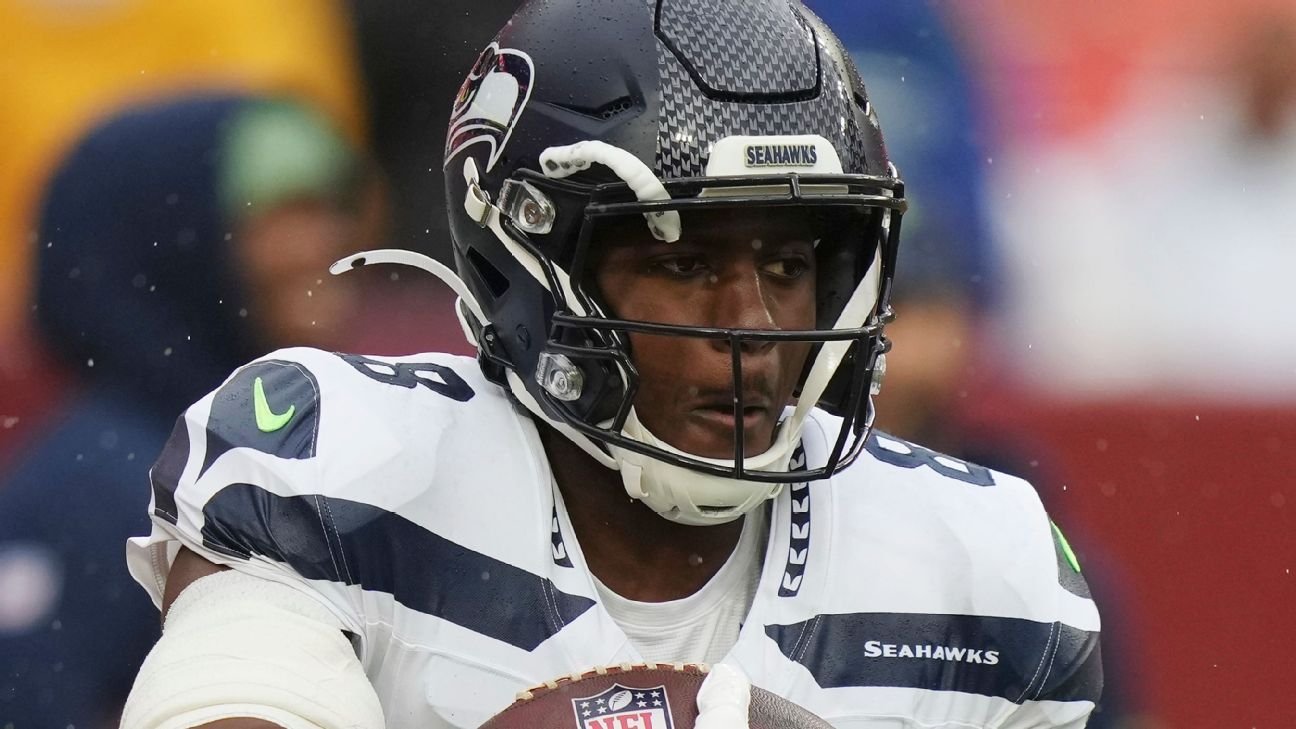
Seattle Seahawks RB Jadarian Price Placed on IR: Backfield Outlook and Roster Moves
The Seattle Seahawks are adjusting their offensive game plan on the fly. On Saturday, the team announced that starting running back Jadarian Price has been placed on injured reserve (IR) as he recovers from a chest injury. The move will sideline the rookie first-round draft pick for at least the next four games, prompting a shuffle in Seattle’s backfield. With Price out, the Seahawks are relying on the dynamic duo of Emanuel Wilson and George Holani, while eagerly awaiting the return of key player Zach Charbonnet to secure their ground game.
Jadarian Price’s Injury: Timeline and Coach’s Perspective
Price initially suffered the chest injury during Week 2 of the NFL season and had been playing through the discomfort. However, the issue worsened when he reaggravated the injury during practice on Wednesday. Head coach Mike Macdonald addressed the media, offering strong support for the young runner. Macdonald emphasized that the injury is an unfortunate aspect of the game and does not reflect Price’s dedication or work ethic.
“By no means is this JD’s fault or anything like that,” Macdonald said Friday. “This is just what happens in football. Unfortunately, injuries happen. He can’t control these things. He’s done everything we’ve asked him to do since he got here. He’s had a great attitude. He’s been a great teammate. He has a great future. He’s going to play great football for us when he comes back, whenever that is … It’s just unfortunate.”
The coaching staff ruled Price out for Sunday’s matchup against the Los Angeles Chargers. In the three games he started, Price rushed for 119 yards on 28 attempts and added 21 receiving yards on four catches. Although he experienced a brief benching against Washington following a couple of fumbles, his impact on the offense remains highly valued by the team, and his future with the organization is still very bright.
Emanuel Wilson and George Holani Step Into the Spotlight
With Price sidelined, the Seahawks’ offensive scheme will revolve around Emanuel Wilson and George Holani. Wilson has proven to be a reliable asset, racking up 109 scrimmage yards on 32 touches. Meanwhile, Holani has contributed 102 yards on 21 touches, displaying a physical running style that excels in short-yardage situations. Both players bring unique skillsets that complement Seattle’s offensive system, offering a blend of speed, power, and receiving capability.
Coach Macdonald expressed excitement about giving these players more opportunities to showcase their talents. “I’m excited to see these guys play. It’s unfortunate with JD. Hopefully this gives him an opportunity to get healthy, but we’ve got guys that are ready to go behind him that are preparing their tails off and are good players, so we feel like we have a good plan and we’ll go play a game.” The coaching staff is confident that the duo can keep the running game afloat while Price recovers and regains his peak physical condition.
Zach Charbonnet’s Return: A Major Boost for the Backfield
Another crucial factor in Seattle’s backfield planning is the imminent return of Zach Charbonnet. The team designated Charbonnet to return to practice on Thursday, marking a significant milestone in his recovery from February surgery to repair a torn ACL. Charbonnet, who was a co-starter for the Seahawks in 2025, has been on the physically unable to perform (PUP) list but has been practicing under limited conditions.
Although he must miss at least one more game before making his seasonal debut, his practice reps have impressed the coaching staff. “Zach looks fantastic,” Macdonald said. “There’s a process to get him physically and mentally ready to go. We understand that, and we’ll work with him and make sure he feels great when the time comes for him to come back.” Charbonnet’s eventual return will add a powerful dimension to Seattle’s offense, lightening the load on Wilson and Holani and providing a proven, high-volume rusher to stabilize the backfield.
Additional Roster Adjustments: Velus Jones Jr. and Defensive Elevations
To accommodate the shifting roster landscape, the Seahawks signed running back Velus Jones Jr. off their practice squad on Saturday. Jones will act as the team’s third-string running back for the upcoming game against the Chargers, providing emergency depth and special teams versatility. Additionally, the team elevated cornerback Trevon Diggs and safety Maxen Hook from the practice squad to provide crucial depth on defense. These moves demonstrate Seattle’s proactive approach to managing injuries and maintaining a competitive roster as the season unfolds and physical demands increase.
Running Back Performance Comparison
To understand the current landscape of the Seahawks’ backfield, here is a comparison of the primary running backs’ stats early in the season, illustrating the distribution of touches and production:
| Player | Status | Scrimmage Yards | Touches | Rushing Yards | Receiving Yards |
|---|---|---|---|---|---|
| Jadarian Price | Injured Reserve | 140 | 32 | 119 | 21 |
| Emanuel Wilson | Active | 109 | 32 | – | – |
| George Holani | Active | 102 | 21 | – | – |
As the Seahawks prepare to face the Los Angeles Chargers, the absence of Jadarian Price presents a challenge, but also an opportunity for Wilson and Holani to establish themselves as reliable starters. With Zach Charbonnet on the horizon and strategic roster moves in place, Seattle is well-equipped to navigate this injury setback and maintain a competitive edge in the NFL standings. The team’s depth and coaching preparation will be key to overcoming this temporary hurdle and securing success throughout the remainder of the season.
Sports, News, Health, People, NFL, Seattle Seahawks, American Football, Player Injuries, Roster Management, Running Backs

