
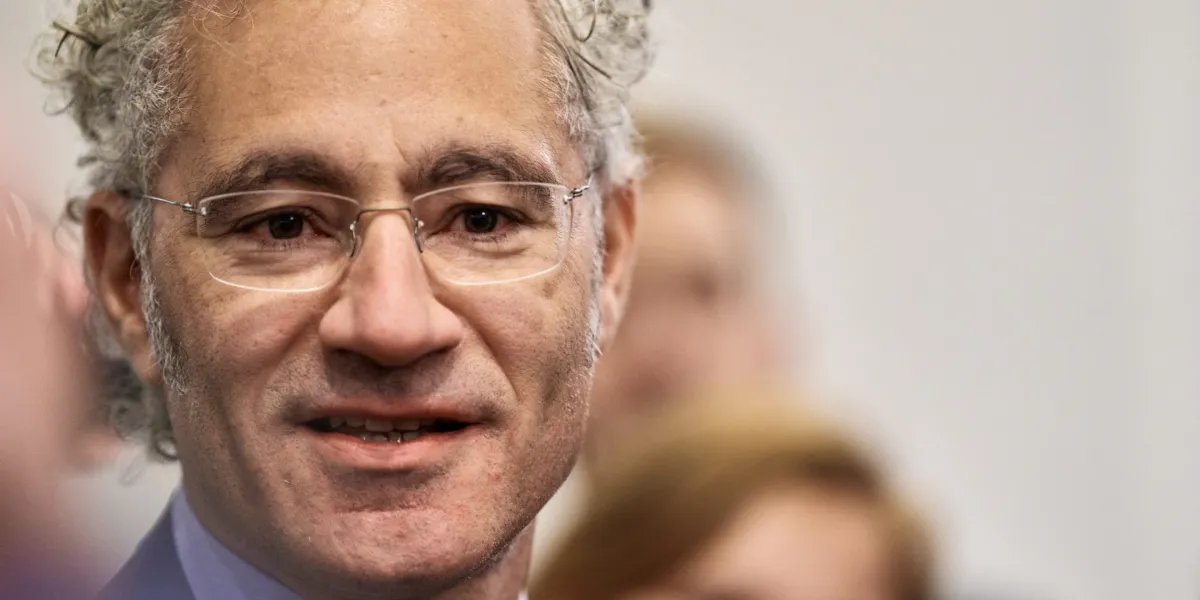
Palantir CEO Alex Karp’s Swedish Forest Purchase Disrupts Local Hunting Community
Palantir Technologies co-founder and CEO Alex Karp has made headlines in Sweden after acquiring roughly 15,000 hectares — about 37,000 acres — of forestland in the Härjedalen region, sparking backlash from local hunters whose access to the area has been eliminated. The transaction, first reported by Swedish newspaper Tidningen Härjedalen, was completed through Cladonia Skog AB, a newly registered company of which Karp is the beneficial owner, for roughly 235 million kronor (about $22 million).
A Massive Acquisition in Rural Sweden
The forest sits south of the quiet village of Storsjö Kapell, an area long known for hiking, fishing, and hunting. Hunters received mailed notifications informing them they could no longer lease the land for hunting purposes. Svenska Cellulosa Aktiebolaget (SCA), the paper manufacturer that previously owned the property, confirmed the sale, stating the land was suboptimal for forestry operations. The elimination of hunting rights was embedded in the terms of the sale.
“The transaction has already been completed, and terminating hunting agreements — whether for our own staff or external teams — linked to the land is a natural part of the sales process, as we can only grant hunting rights on land we own.” — SCA, in an email to Tidningen Härjedalen
SCA did not immediately respond to Fortune‘s request for comment on the deal.
Hunting Rights and Local Backlash
For communities in rural Härjedalen, access to forestland for hunting is both a tradition and an economic lifeline. The loss of leaseable hunting grounds has ruffled feathers far beyond the immediate transaction, raising questions about how private land acquisitions by foreign billionaires affect longstanding local practices. While Cladonia told Swedish media it intends to use the land for “forestry and other related activities,” the ban on hunting remains a point of contention among residents and outdoor enthusiasts.
Palantir’s Existing Swedish Defense Connections
Karp’s purchase adds another dimension to his existing ties with Sweden. Palantir has established a partnership with Swedish defense authorities, confirmed earlier this year by Palantir’s Sweden Country Manager Anders Fridén. The software giant expanded its European operations about a decade ago, but the EU’s continued reliance on Palantir’s platforms has fueled debate over Europe’s efforts to reduce dependence on U.S. technology and artificial intelligence systems.
The Broader Billionaire Land Rush
Karp’s Swedish forest acquisition fits a larger pattern. Farmland has grown into a roughly $4.3 trillion asset class in the United States alone, according to Steve Bruere, president of agricultural real estate firm Peoples Company. Land is a finite resource, and its value tends to rise over time, making it a popular hedge against inflation and market volatility. U.S. land costs increased 4.3% year-over-year in 2025, averaging about $4,350 per acre, according to USDA data.
The rise of carbon credits — certifications that allow landowners to offset greenhouse gas emissions and trade emission allowances — has further incentivized forest ownership among wealthy investors. At the same time, many billionaires are treating landownership as a lifestyle pursuit. Meta CEO Mark Zuckerberg raises wagyu cattle on his 4,000-acre Kauai ranch, and Reddit co-founder Alexis Ohanian has operated a family farm in Jupiter, Florida, for six years.
“A lot of people started to appreciate the nonfinancial benefits of farmland. You can hike it, you can walk on it, you can fish it, you can hunt it, you can grow food on it. That trend really emerged coming out of the COVID area, where people were stuck in their homes and apartments and started looking for alternative investments.” — Steve Bruere, previously told Fortune
Karp’s Other Land Investments
Sweden is not Karp’s first major land venture. He previously purchased a 3,700-acre monastery compound in Capitol Creek Valley, Colorado, for $120 million, according to The Wall Street Journal. That deal also included water rights to irrigate 1,500 acres of adjacent land, underscoring his interest in resource-rich rural properties.
Preservation Promises, Uncertain Outcomes
Jenny Lopes Da Silva, a Cladonia board member and sales manager at Scandinavian Trust — the brokerage that facilitated the deal — told Swedish outlets the new owner is “committed to the beauty of the land and its preservation.” She emphasized that the “vast, natural forest landscapes offer valuable habitats for plants and animals, while also serving as a place for recreation and restoration.” Scandinavian Trust did not respond to Fortune‘s request for comment but has reiterated the preservation commitment.
Whether these promises will hold in practice remains to be seen. For the hunters of Härjedalen, the immediate concern is not preservation rhetoric but the loss of access they once relied upon — a reminder that behind every headline about billionaire land deals, there are real communities whose traditions and livelihoods are directly affected.
Arts, Business, Finance, Real Estate, People, Society, News, Online, Controversial, Trends

