
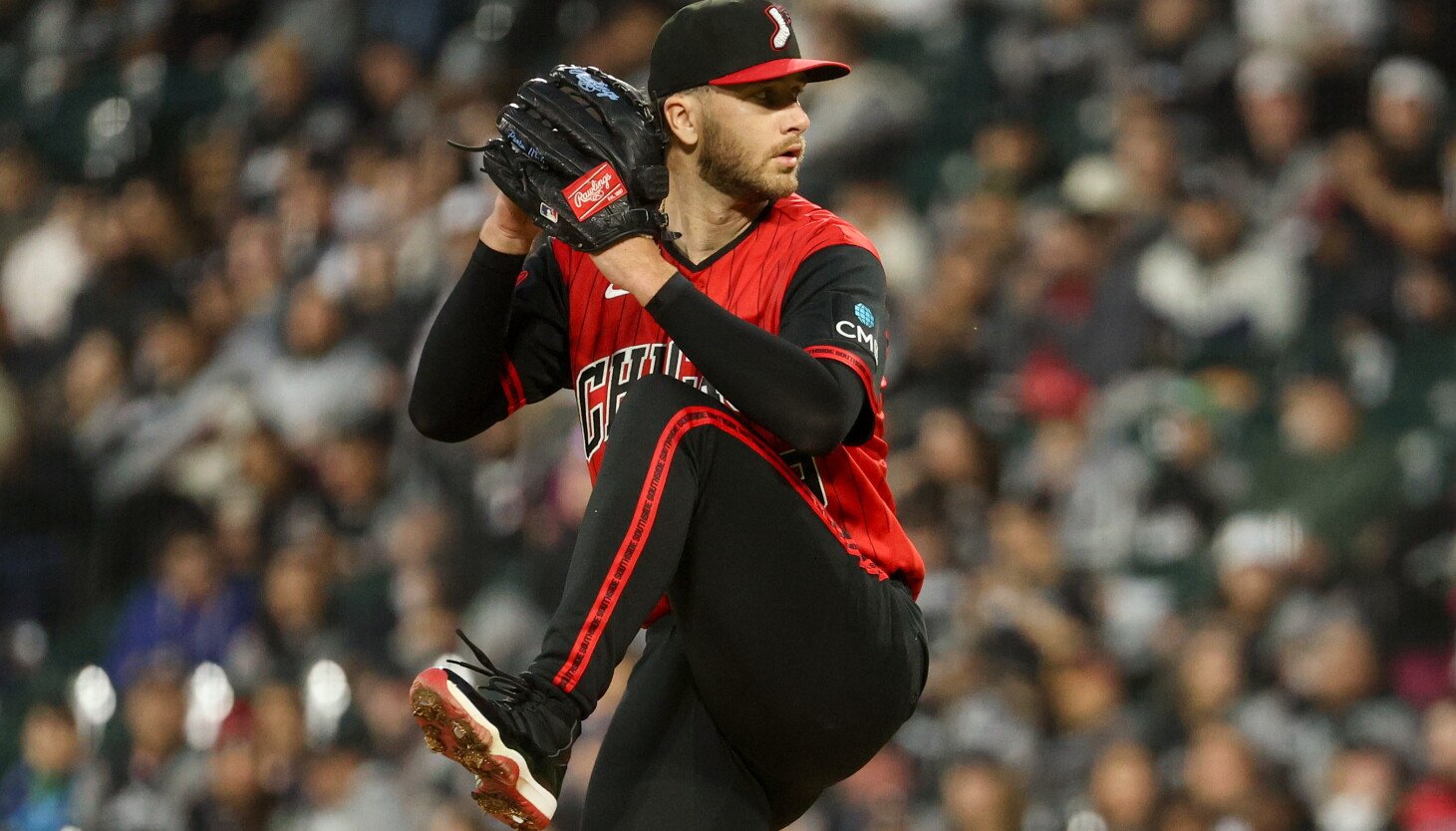
Sean Burke’s Playoff Start Represents a Triumph of Persistence for the White Sox
HOUSTON — Sean Burke pitched on Friday and wasn’t available to start Game 1 of the wild card series because the White Sox’ MLB-leading use of openers created a long wait for the right-hander. Now, tasked with closing out the White Sox’ first playoff series victory in 21 years, Burke is the team’s man in its biggest spot in years.
After posting a 3.34 ERA over a career-high 172⅓ innings in 2024, Burke has earned the rotation spot for Game 2. But the significance extends beyond the box score.
“This is my life,” Burke told the Sun-Times. “I don’t have family, no girl, no kids. This is all I do.”
The gratitude Burke expressed while leaning against the visitors dugout railing at Daikin Park reflected a journey marked by physical setbacks and mental resilience.
From Shoulder Struggles to Game 2 Starter: Burke’s Resilience
Burke’s path to this moment included a 7.61 ERA in limited Triple-A innings in 2023 when his shoulder barked and his velocity lagged. While 2024 brought a major-league debut that launched him into the White Sox rotation, it also saw a recurrence of shoulder discomfort.
“I knew I was good, it was more am I ever gonna get my arm feeling good enough to be myself and pitch how I know I can pitch again,” Burke said.
After two late-season control issues, the White Sox temporarily scrapped his long-toss routine to save bullets, but Burke re-introduced it, which alleviated his fastball cutting unexpectedly. He re-emphasized his cutter as a strike-grabbing pitch outside the fastball. While not infallible – he still reacts to every hard-hit ball in the air as if it will travel 500 feet – the approach has returned him to a place of trust with the team.
Hagen Smith’s Relief Role: Adjustments and Composure
Hagen Smith ran a 1.29 ERA across 28 innings in his debut bullpen season, but the second inning remained a challenge: his arm slot would dip, walks crept in, and he struggled to drive stuff to right locations.
“The arm was getting a little lower, kind of getting scoopier, not able to drive stuff to the right locations,” said pitching coach Zach Bove. “Part of it is just getting used to the role. Managing the adrenaline, and where you get up and then sit down and get back up.”
Against Houston on Tuesday, Smith looked settled, stringing together three walk-free, scoreless innings in the 6-3 victory. Most vitally, he induced two weak groundouts from Yordan Alvarez.
Strategic Baserunning: Obstruction Calls and Defensive Execution
The game also featured a controversial baserunning moment when Sam Antonacci ran in the path of Christian Walker‘s throw to second base, triggering a deflection that granted him an extra base. He later scored on a sacrifice fly.
The Antonacci Play and Its Impact on the Game
The Sox have taught this tactic, according to manager Will Venable, who defended it earlier in the month when Tristan Peters executed a similar maneuver in Cleveland.
“That’s a baserunning fundamental that these guys are aware of and implement when the time is appropriate,” Venable said.
Coaching Perspectives on the Tactic
Venable’s comments underscore a broader strategic emphasis within the organization on aggressive, intentional baserunning designed to disrupt defensive timing and create scoring opportunities.
For Burke, the outcome matters deeply. As he reflected, “[In 2023], this team was bad, I wasn’t even pitching. So there was no real vision of this. To have this be the result of that work for me is cool.”
Sports, News, People, MLB, Baseball, Playoffs, Chicago White Sox, Houston Astros, Athletes

