
This Weekend’s Streaming Lineup: Toy Story 5, SNL Season 52, VMAs, and More
This weekend delivers a packed slate of entertainment, from a new Pixar sequel hitting Disney+ to the premiere of Saturday Night Live‘s 52nd season and the return of the MTV Video Music Awards. Here’s your complete guide to what’s streaming and what’s airing.
Toy Story 5 Arrives on Disney+
Toy Story 5 is now streaming on Disney+, bringing Woody (Tom Hanks), Buzz Lightyear (Tim Allen), and the rest of the beloved toy cast back for another adventure. The sequel introduces Greta Lee as Lilypad, a tablet character caught in a clash between old-school toys and modern technology. Globe film critic Odie Henderson awarded the film three stars, praising the story’s emphasis on classic toy values and calling Conan O’Brien’s role as a potty training toy “just delightful here.” Available on Disney+.
Saturday Night Live Season 52 Premieres
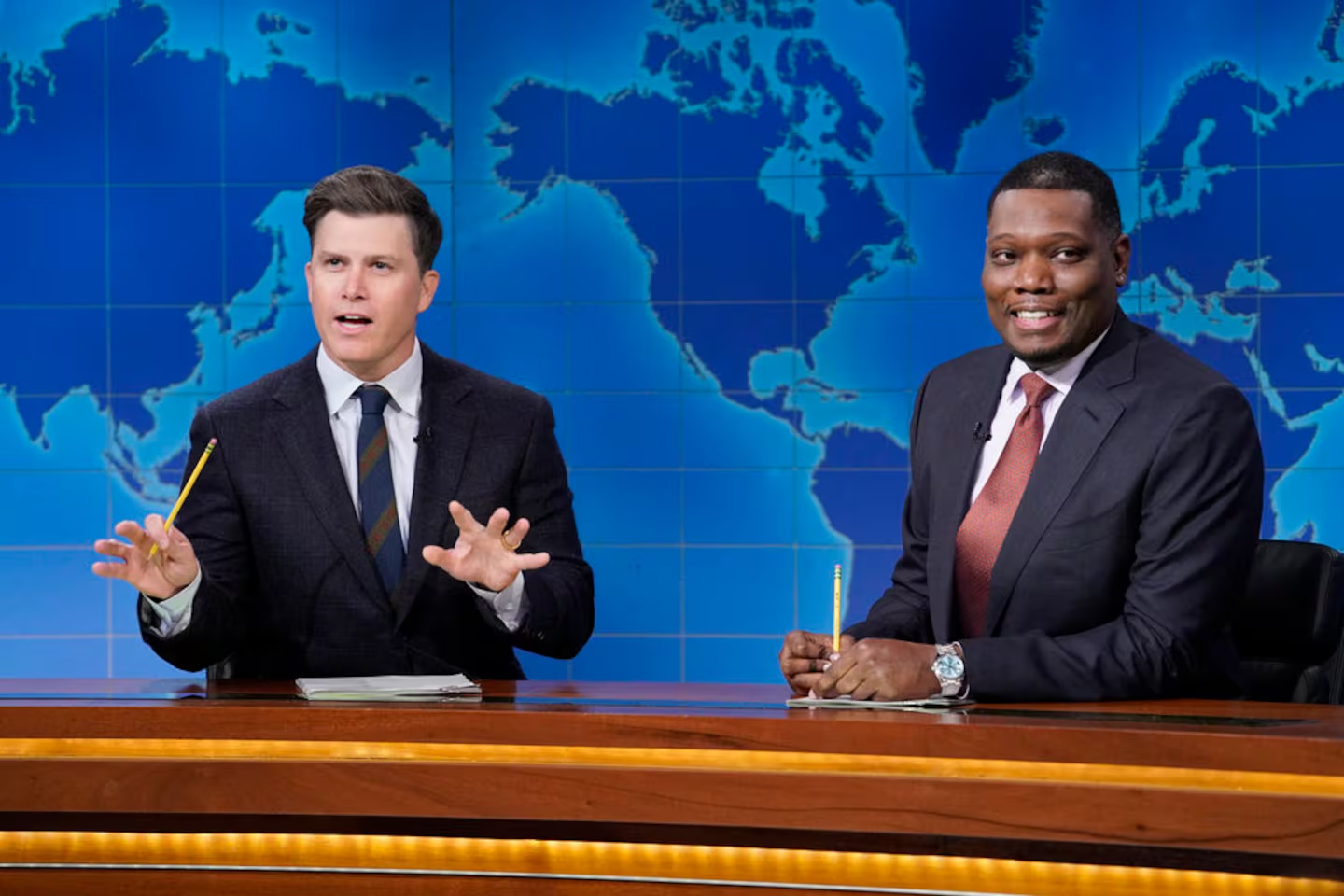
Saturday Night Live kicks off its landmark 52nd season Saturday at 11:30 p.m. on NBC, with a live simulcast on Peacock and availability the following day on both platforms. The season welcomes new cast members Grace Reiter and Saidah Belo-Osagie, joining fan favorites Kenan Thompson, Ashley Padilla, James Austin Johnson, Sarah Sherman, Mikey Day, Marcello Hernández, and Weekend Update anchors Colin Jost and Michael Che. NBA champion and Knicks guard Jalen Brunson hosts the premiere, with girl group Katseye performing as the musical guest.
2026 MTV Video Music Awards: Madonna Returns
The 2026 MTV Video Music Awards air Sunday night at 7:30 p.m. on CBS and MTV, with Snoop Dogg hosting. Premium Paramount+ subscribers can stream the show live, with on-demand availability the next day. Madonna makes a comeback performance — her first at the VMAs since the iconic 2003 opening with Britney Spears and Christina Aguilera — while Taylor Swift receives the ceremony’s first-ever artist director honor.
The Great British Baking Show: Season 14 on Netflix
The comforting streaming staple returns Friday on Netflix with season 14 of The Great British Baking Show. A fresh batch of 12 amateur bakers enters the tent to compete for baking glory, overseen by returning judges Noel Fielding and Alison Hammond. Available on Netflix.
Backrooms: The Year’s Surprise Horror Hit
Just in time for Halloween, the horror film Backrooms streams on HBO Max beginning Friday. Director Kane Parsons adapts his viral web series into a feature film in his directorial debut, starring Chiwetel Ejiofor and Renate Reinsve as a furniture store owner who discovers a supernatural doorway to a network of eerie interconnected rooms. The film has grossed over $400 million worldwide, making it the highest-grossing release in A24 studio history. Available on HBO Max.
Matt Juul can be reached at matthew.juul@globe.com.
Entertainment, Streaming, Disney+, Netflix, HBO Max, Toy Story 5, Saturday Night Live, MTV VMAs, The Great British Baking Show, Backrooms, Weekend Viewing Guide

