
Federal Judge Temporarily Restores White House Press Access for CNN, MS NOW and Politico
A federal judge has temporarily restored White House access to CNN, MS NOW and Politico, ordering the Trump administration to reinstate press badges after the outlets were barred from the complex. The 14-day emergency order returns reporters to the White House while the court considers whether the ban followed constitutionally required procedures. It is not a final decision on the underlying dispute.
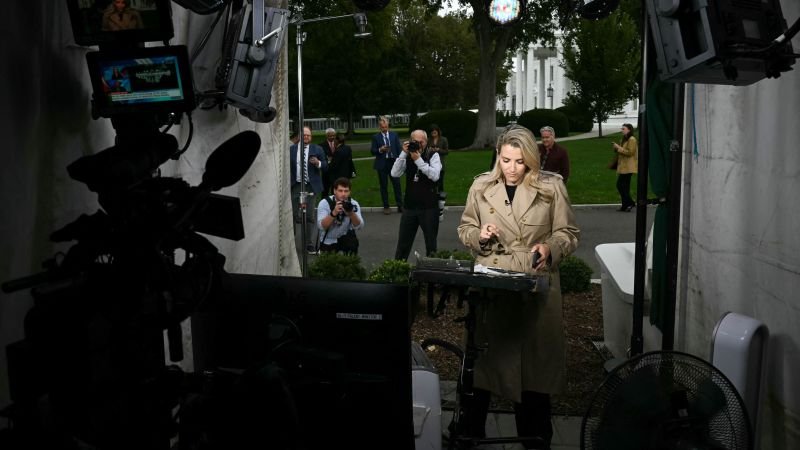
Current status: CNN senior White House reporter Betsy Klein and a photojournalist were readmitted on Thursday after initially being turned away. Other reporters from the three outlets also gained access, while the legal challenge remains active.
Emergency order restores press access while lawsuit continues
Judge Timothy Kelly issued the temporary restraining order early Thursday, directing the Justice Department to respond to the news organizations’ emergency request. The order effectively reverses President Donald Trump’s ban for the next two weeks and allows the affected outlets to resume reporting from the White House complex.
The timing carried immediate consequences. The ruling came hours before a scheduled White House welcome for Chinese leader Xi Jinping, an event that depended on access by the television pool covering the president. Kelly also set a noon response deadline for the administration, later extending it to 12:30 p.m. Eastern.
| Development | Details |
|---|---|
| Early Thursday | Kelly ordered the administration to restore access to CNN, MS NOW and Politico. |
| 9 a.m. ET | Klein and a CNN photojournalist were initially denied entry. |
| Noon ET | Klein and the photojournalist were admitted, and a reporter from MS NOW also gained access. |
| Next 14 days | The court will hear further arguments and consider additional evidence before deciding whether the temporary order should remain in place. |
Judge questions the administration’s national security claim
The administration argued that the outlets’ reporting created national security risks and that the president has broad authority to determine who may access the White House. Trump initially announced the ban by calling the organizations “fake news,” emphasizing what he described as inaccurate and negative coverage.
Kelly found that the government had not supported its national security explanation with a persuasive record. He noted that the materials predating the lawsuit did not suggest security concerns were the original reason for revoking the reporters’ credentials. Later letters were also ambiguous because they referred both to reporting that allegedly threatened national security and to reporting the administration characterized as false.
“Nothing in the record that predates this suit suggests that the revocation of Plaintiffs’ hard passes was motivated by national security concerns.”
The court also questioned the standards used to justify the ban. Kelly said the administration had not identified clear rules that were formally established before the reporting at issue. One reference to conduct violating expectations of “professionalism and decorum” was so vague, he wrote, that it did not provide a meaningful basis for removing the press badges.
Reporters experienced delayed entry despite the ruling
Even after Kelly’s order, the restored access was not implemented immediately. Klein and the CNN photojournalist reached the White House grounds at 9 a.m. ET but were refused entry. They were admitted around noon.
One CNN producer had been able to enter after 6 a.m. using a valid pass, although it was not immediately clear why that person received access while others were turned away. Reporters from MS NOW and Politico also reported being blocked early Thursday before gaining entry later in the day.
The inconsistent enforcement highlighted the practical disruption caused by the ban. CNN had sought comment from the Justice Department and White House, but no response was included in the latest account of the ruling.
Due process is the core of Judge Kelly’s order
Kelly’s emergency decision focused primarily on due process, rather than deciding whether the challenged reporting was accurate or harmful. He found that the outlets were unlikely to succeed if the administration continued relying on its current explanation and procedures.
The journalists’ hard passes were confiscated before the organizations received notice of the decision or a meaningful opportunity to appeal. Kelly relied on the established principle that people must receive notice and a chance to be heard before the government deprives them of a constitutionally protected interest.
The court also found a lack of clear standards. The administration’s letters identifying allegedly objectionable reporting arrived after the ban and after the outlets filed suit. One CNN story cited as a national security concern had been published months before Klein’s pass was renewed that summer, further complicating the government’s timing.
Kelly has previously handled a similar dispute involving Trump and former CNN correspondent Jim Acosta. In that 2018 case, the court also treated due process as a central issue. The judge indicated that this established precedent should guide the present ruling.
The court schedules a two-week legal process
CNN, MS NOW and Politico sued after the ban, asking the court to pause or permanently block it. They argued that the action punished them for their coverage and contradicted earlier decisions protecting journalistic access. The administration responded that the outlets had been offered an appeals process through letters sent after their badges were revoked.
Kelly’s temporary order leaves both sides an opportunity to develop the record. Over the next two weeks, the outlets and the government will continue presenting arguments and evidence. The judge had not yet set specific filing deadlines or scheduled additional hearings when the order was issued, although a more detailed ruling is expected.
Ted Boutrous, the lawyers representing the outlets, welcomed the decision. “This is a strong ruling vindicating freedom of the press, due process and the rule of law,” he told CNN.
Television networks stand with CNN and rival outlets
CNN is one of five major networks participating in the White House television pool, a longstanding arrangement in which the organizations rotate coverage duties and share footage. Local television stations, newspapers, digital outlets and international media organizations rely on that pool coverage.
After Trump barred CNN from performing its assigned pool duties on Monday, ABC, CBS, CNN, Fox News and NBC paused their coverage of the president’s speeches and appearances. In a rare joint statement, the networks said the public needed accurate and independent information and that no administration should restrict a news organization because it objected to the outlet’s reporting.
Nearly 50 additional news organizations signed a friend-of-the-court brief supporting the outlets. The White House Correspondents’ Association said the filing underscored that the government cannot remove journalists from the White House because it dislikes their coverage, describing the ban as viewpoint discrimination and a potential First Amendment violation.
The television pool organizers had not issued updated guidance when the outlets were readmitted. CNN’s return therefore creates the possibility of resumed presidential coverage, but the networks must first coordinate their pool arrangements.
Why the White House access ruling matters
White House credentials are more than workplace passes. They determine whether reporters can attend briefings, observe presidential events and gather information independently. A prolonged ban can force coverage to rely on pooled footage, official statements or reporting from other outlets, limiting the diversity and immediacy of public information.
Kelly’s order preserves the previous access arrangement while the court examines whether the government provided adequate notice, evidence and an opportunity to respond. It does not finally decide whether the ban would ever be lawful under a stronger record or clearer process.
The immediate developments to watch are the administration’s response, any additional filings, the television pool’s coverage plan and whether access continues when the 14-day order expires. For now, the court has kept CNN, MS NOW and Politico inside the White House reporting system while the broader legal dispute moves forward.
News, Government, Law, Society, United States Politics, Press Freedom, First Amendment, Due Process, White House Press Access, Federal Courts, Journalism, Media, CNN, MS NOW, Politico, Donald Trump, Timothy Kelly, Television Pool System, Washington, D.C., Controversial

