
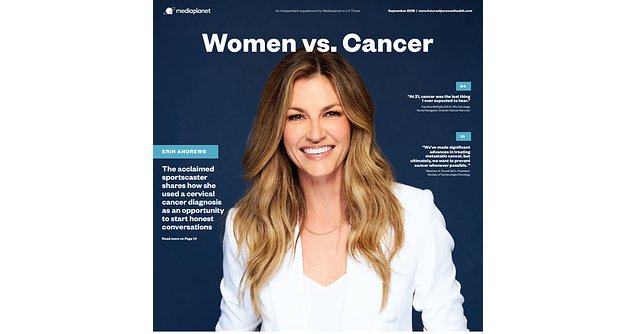
Mediaplanet Launches ‘Women vs. Cancer’ Campaign Featuring Erin Andrews
On September 20, 2026, Mediaplanet will release the national Women vs. Cancer campaign in the Los Angeles Times, spotlighting ESPN broadcaster and cervical cancer survivor Erin Andrews as its cover feature. The initiative, developed in partnership with leading women’s cancer organizations, aims to raise awareness about symptoms, early detection, treatment advances, and the importance of self‑advocacy for women’s health.
Erin Andrews Shares Her Cervical Cancer Journey
Andrews, who publicly disclosed her cervical cancer diagnosis in 2016, uses the platform to recount her personal experience, emphasizing the value of listening to one’s body, adhering to recommended screening schedules, and speaking up when something feels off. Her narrative underscores how early intervention and informed conversations with healthcare providers can dramatically influence outcomes.
Beyond her broadcast career, Andrews has become a visible advocate for gynecologic cancer awareness, participating in fundraising events, speaking at medical conferences, and supporting patient‑education initiatives. Her involvement in the Women vs. Cancer campaign continues that trajectory, aiming to inspire other women to prioritize preventive care.
Partners and Community Outreach Amplify Message
The campaign brings together a coalition of respected organizations, including the Society of Gynecologic Oncology, Foundation for Women’s Cancers, Milken Institute Women’s Health Network, National Comprehensive Cancer Network (NCCN), and the National Ovarian Cancer Coalition. These groups contribute expert insights on prevention strategies, diagnostic innovations, precision medicine, and survivorship support.
To extend the reach beyond the newspaper’s circulation, Mediaplanet plans to distribute more than 2,500 additional copies through community events. The National Ovarian Cancer Coalition will hand out copies at its Together in TEAL Run/Walks throughout the fall, while the Foundation for Women’s Cancer will provide them at its Race to End Women’s Cancer and Patient & Advocate Education Forum in Washington, D.C., scheduled for September 20, 2026.
Key Focus Areas: Early Detection, Precision Care, Survivorship
The Women vs. Cancer editorial package examines how evolving screening guidelines and molecular‑based diagnostics are shifting the paradigm toward earlier identification of cervical, ovarian, uterine, vaginal, and vulvar cancers. It also highlights the growing role of targeted therapies and immunotherapy in personalizing treatment plans, reducing side effects, and improving quality of life.
Survivorship resources form another pillar of the campaign, addressing long‑term physical and emotional challenges, fertility preservation options, and the importance of follow‑up care. By combining patient stories, expert commentary, and actionable guidance, the initiative seeks to empower women to become active participants in their health journey.
As the campaign prepares for its launch, organizers reiterate that informed awareness and proactive healthcare engagement remain essential tools in reducing the burden of women’s cancers across the United States.
Health, News, Sports, Entertainment, People, Society, Women’s Health, Cancer Awareness, Media Campaign, Nonprofit Advocacy

