
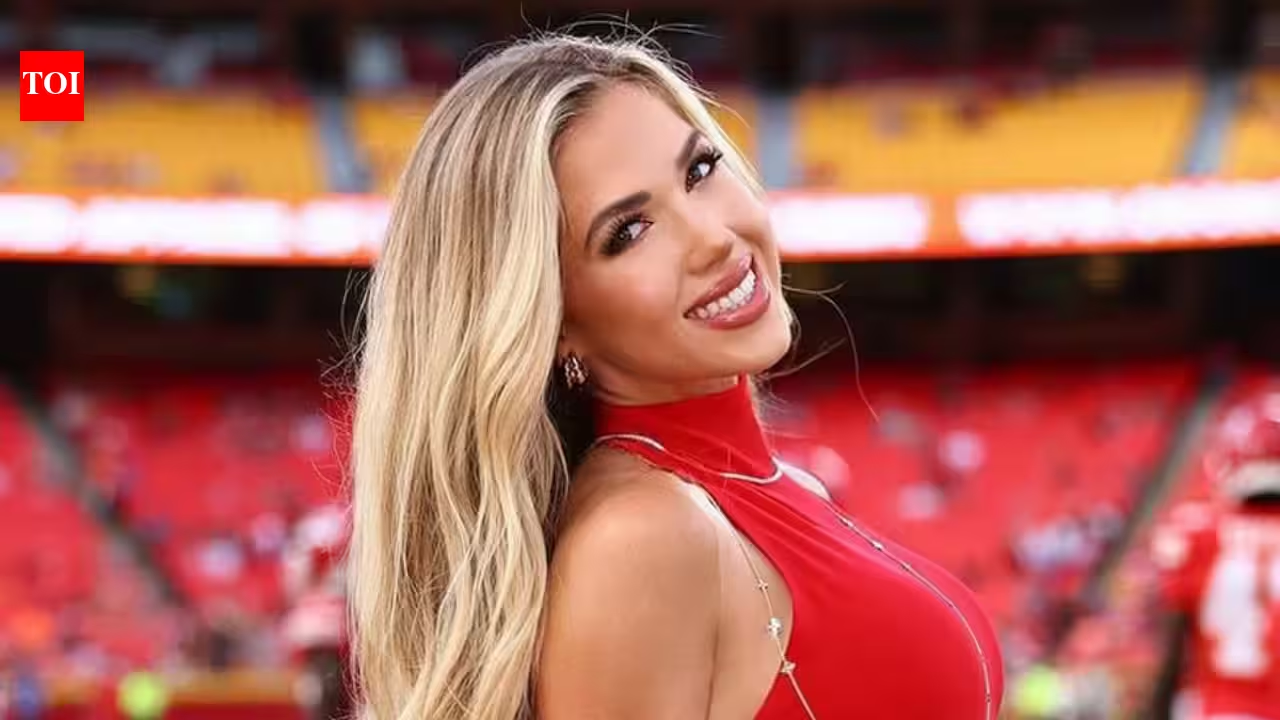
Gracie Hunt’s Game-Week Style Sparks Preseason Buzz for Chiefs’ 2026 Campaign
Kansas City Chiefs fans have a new reason to feel enthusiastic about the team’s 2026 season, as billionaire heiress Gracie Hunt captured their attention with her striking appearance at the club’s preseason kickoff event. The daughter of Chiefs owner Clark Hunt shared Instagram photos from the team’s traditional luncheon, an annual gathering that unites organization leaders before the campaign begins. Her bold fashion choices and energetic posts quickly trended among supporters, signaling optimism for what many hope will be a rebound year for Patrick Mahomes and the franchise.
Hunt’s Role in Chiefs Kingdom: Bridging Ownership and Fan Culture
Gracie Hunt has long been an active presence in the Chiefs’ community, leveraging social media to share behind-the-scenes glimpses of team life while reinforcing the franchise’s cultural identity. Her Week 1 looks, often highlighted in vibrant colors that mirror the team’s signature red and gold, reflect a deliberate intertwining of personal style with organizational pride. During the 2026 kickoff, she wore a sleek black dress accented with golden accessories, evoking both elegance and team spirit. In her Instagram caption, she wrote:
“Let’s get down to business The Chiefs Kickoff Luncheon is always a special opportunity to come together, celebrate the team, and officially set the tone for the season ahead. The road starts here—let’s get to work, Chiefs Kingdom! ”
Fans reacted enthusiastically, flooding the comments section with messages like “Wow,” “Stunning,” and “Perfection,” underscoring the emotional connection between Hunt and the team’s loyal supporters.
Chiefs Enter 2026 with High Stakes and Renewed Purpose
The Chiefs’ season opener against the Denver Broncos in Monday Night Football carries added weight following their 2025 disappearance from the playoffs. Kansas City’s return to relevance hinges on several factors:
- Patrick Mahomes’ Health: The quarterback, who missed games in 2025 due to injury, is now expected to return fully healthy, providing the team with its most dynamic playmaker.
- Offseason Adjustments: New offensive schemes and defensive additions aim to address lapses that cost the Chiefs last season.
- AFC West Competition: The Broncos, AFC Champion losers in the previous playoffs, the Chargers led by Justin Herbert, and the Raiders’ rookie sensation Fernando Mendoza make the division one of the NFL’s toughest.
Mahomes himself has set ambitious goals:
“We’re gonna be a new version of the Chiefs that goes out there and dominates the same way the old one did.”
His confidence, paired with Hunt’s public display of team unity, has injected fresh momentum into the franchise as it seeks to reassert its dominance in the AFC.
Broader Implications: Social Influence and Franchise Evolution
Gracie Hunt’s visibility extends beyond fashion, highlighting how modern sports ownership engages with fan culture. Her initiatives, from charity events to social media storytelling, have helped sustain the Chiefs’ status as one of the NFL’s most popular franchises. This year, her message of “business” and “work” resonates deeply in a locker room seeking validation after a disappointing 8-8 record in 2025.
The Chiefs’ preseason activities, including joint practices and community appearances, reflect a strategic focus on building chemistry and accountability. With Mahomes entering his ninth NFL season, questions loom over whether this will be his final campaign before a potential retirement. Hunt’s public support of the team’s journey hints at what fans can expect: sustained grit, strategic evolution, and a renewed fight for the Lombardi Trophy.
As the clock ticks down to kickoff, the energy generated by Hunt’s Style—and the team’s collective resolve—suggests that the 2026 Chiefs will be one to watch. Whether they can deliver on the promise of “dominating like the old one did” remains to be seen, but for now, Kansas City’s heartbeat is louder than ever.
Sports, Entertainment, People, News, Business, People, Kansas City Chiefs, NFL, Patrick Mahomes, Denver Broncos, Gracie Hunt, Clark Hunt, AFC West, Monday Night Football, NFL 2026 Season, Sports Fashion, Fan Engagement, NFL Preseason, Sports Ownership, Chiefs Kingdom

