
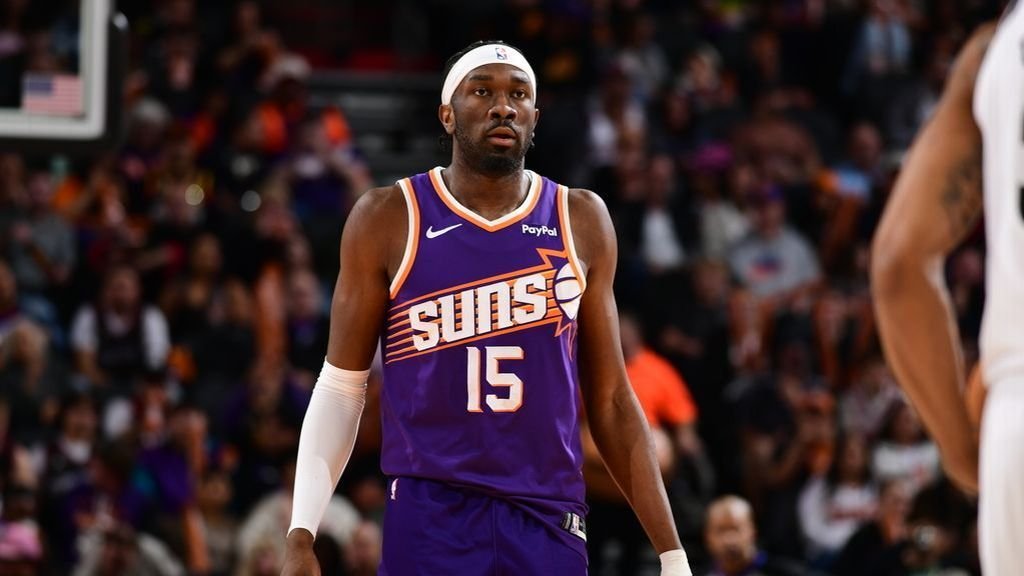
Mark Williams Undergoes Surgery for Torn Left Shoulder Labrum, Out indefinitely from Phoenix Suns
Phoenix Suns center Mark Williams has undergone surgery to repair a torn labrum in his left shoulder, casting a significant shadow over what was expected to be a breakthrough season for the 24-year-old big man. The procedure took place Thursday, with sources close to the situation confirming the development to ESPN’s Shams Charania.The injury was sustained during an offseason workout, derailing a trajectory that had shown steady upward progress across Williams’ four-year NBA career. The Suns now face an extended period without their starting center, and the timeline for his return remains uncertain.
Understanding the Injury and Recovery Timeline
A torn labrum in the shoulder is among the more serious injuries a basketball player can face. The labrum is a ring of cartilage that deepens the shoulder socket and helps stabilize the joint — a critical structure for a center who relies on physical play in the paint. For Williams, whose game is built around rim protection, rebounding, and interior scoring, the injury directly threatens the skills that made him valuable to Phoenix’s rotation.
While specific recovery windows for labrum repair surgeries can vary, most NBA players face a timeline of four to six months before returning to full competitive play, depending on the severity of the tear and the individual’s healing response. That would suggest Williams could be limited to available action until the midpoint of the 2026–27 season at the earliest, though more complex repairs can extend recovery further.
A Setback Just as Williams Was Poised to Break Through
The timing of this injury is particularly unfortunate for Williams, who had just signed a fully guaranteed three-year, $38 million contract to remain in Phoenix. The investment signaled the organization’s belief in his long-term potential, and the 2025–26 season appeared to validate that faith.
Williams appeared in 60 games the previous season — a personal best that surpassed his prior high of 44 — and posted averages of 11.7 points, 8.0 rebounds, and 0.9 blocks over 23.6 minutes per game. Those numbers represented a clear step forward from his earlier seasons and suggested he was settling into a meaningful role within the Suns’ system.
Williams arrived in Phoenix through a 2025 draft night trade with Charlotte, after the Hornets’ initial attempt to move him at the trade deadline was rescinded. He eventually earned the starting center role and played a key part in helping Phoenix exceed preseason expectations by securing a playoff berth.
His career averages of 12 points, 8.5 rebounds, and 1 block per game demonstrate a player whose contributions have been consistent if not spectacular. The leap to 60 appearances, however, showed real durability and a growing comfort level at the NBA level. This injury erases much of the momentum he had built.
Implications for the Phoenix Suns’ Roster and Season
Losing Williams for an extended stretch creates a significant logistical challenge for Phoenix. As the starting center, his absence will force the Suns to redistribute minutes among their remaining big men, likely pushing younger or less experienced players into larger roles sooner than planned.
The financial dimension adds another layer of complexity. Williams’ contract is fully guaranteed, meaning the Suns will pay his salary while he is on the injured reserve — a standard NBA provision, but one that limits roster flexibility. General manager decisions around potential additions to fill the center void will be closely watched in the coming weeks.
Phoenix’s ability to remain competitive during Williams’ absence will depend heavily on the depth of their frontcourt and the readiness of backup players to contribute at an NBA level. Teams that lose a key player to a significant injury often see their win projection decline, and the Suns will need their supporting cast to step up in ways they may not have anticipated at the start of the season.
Williams’ Career Trajectory and What Recovery Could Mean
At 24, Mark Williams has time on his side despite the frustration of this setback. His path to the NBA has been unconventional — traded to Charlotte, briefly moved in a deal that fell through at the deadline, and eventually landing in Phoenix where he found a role that suited his abilities.
The 2025–26 season was shaping up to be his most impactful yet. Playing over 48 percent of possible games while contributing double-digit scoring and strong rebounding numbers, he was developing into the kind of reliable interior presence that winning teams need. A full recovery from this surgery could see him return to that form, though shoulder injuries can sometimes alter a player’s mechanics or willingness to play with physicality.
Historically, centers who undergo labrum repair have returned to their previous level of production, but the process demands patience during rehab. Williams’ willingness to trust the recovery process — rather than rushing back — will likely determine whether he can maintain the upward trend that defined his pre-injury development.
The Broader Context of NBA Injury Risk
Williams’ situation underscores the physical toll that professional basketball places on players’ bodies, particularly in the frontcourt. Centers and power forwards account for a disproportionate share of lower-body and joint injuries across the league, and shoulder issues are not uncommon for players who regularly engage in physical post play and rebounding battles.
Teams have increasingly invested in sports science, load management, and preventive medical screening to reduce the frequency and severity of such injuries. Despite these efforts, the reality of NBA competition means that even well-conditioned players remain vulnerable to setbacks like Williams’ — especially when injuries occur during non-game activity such as offseason workouts, where competitive conditioning may differ from the controlled environment of team facilities.
As the Suns and their fans await Williams’ return, the broader NBA community will be watching to see how one of the league’s younger centers navigates what is now a significant test of resilience — on and off the court.
Sports, News, People, NBA, Basketball, Phoenix Suns, Charlotte Hornets, NBA Injuries, Shoulder Injuries, NBA Free Agency, NBA Playoffs

