


July 27, 2026 – 11:38
Save
You have reached the maximum number of items saved.
Remove items from the saved list to add new ones.
AAA
London: Police claim progress in tackling mobile phone thefts across the capital after years of worsening headlines about thieves brazenly stealing devices from residents and tourists on the street.
A stronger police presence has been cited as a key factor in halving the number of phone thefts in the West End over the past year – and many city center visitors appear more relaxed about the risks.
But new data shows there are still thousands of thefts by individuals across the city every week, despite years of concern about gangs sending stolen phones en masse to markets in countries ranging from Algeria to China.
“The numbers are clear: London is safe and getting safer every year,” said Metropolitan Police Commissioner Mark Rowley.
Related article
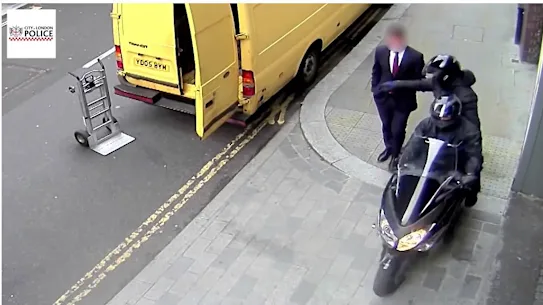
“Neighborhood policing is at the heart of our work and neighborhood crime rates have fallen by 14 per cent across the capital.”
The tougher measures meant that 35,000 fewer offenses were recorded across a range of local crimes, including mobile phone theft, in the year to the end of June.
This means that the number of offenses annually has fallen from 250,000 to 215,000.
The biggest drop in crime in the area – 36 per cent – was recorded in Westminster, an area that includes tourist attractions such as Big Ben, major theatres, Piccadilly Circus and Buckingham Palace.
London has become notorious for mobile phone thefts over the past few years after videos of young men in black balaclavas, often on e-bikes, snatching phones from victims on the street went viral on social media.
In one case, a victim tracked his stolen iPhone using Find My iPhone and found the device in a warehouse near Heathrow Airport. When police entered the warehouse looking for the stolen property, they found it in a box with 894 more phones that were supposed to be shipped to China.
This led to the arrest of Amir Muhammad Khadikhel and Ismat Miakhel in north-east London in September last year on suspicion of being in possession of around 2,000 stolen phones. The two men, along with an accomplice, pleaded guilty in April. Police said their network transported up to 40,000 stolen phones to China over two years.
In another case, Algerian national Adel Kerari was found guilty of six counts of robbery after he and other gang members robbed, assaulted and stabbed victims at London Underground stations. He targeted lonely passengers to steal their phones and wallets.
Kerari was sentenced last month to three years and nine months in prison after prosecutors appealed the lighter sentence he received last year.
Related article
The consequences for victims can be much greater than losing the device. In November 2024, four men with links to Algeria were convicted of smuggling stolen phones from the UK. They were also found to have used the phones to gain access to bank and cryptocurrency accounts, stealing £5.1 million ($9.7 million).
Police are promoting their new methods to combat thieves, such as facial recognition cameras and drones that can track criminals on their bikes.
“We have momentum that we are not going to give up,” Rowley told the BBC last week when the full-year figures were published.
When Sunday Times investigating the theft of mobile phones in March last year, it is estimated that 28 percent of the devices were sent to Algeria, 20 percent to China and 7 percent to Hong Kong.
The phone, which was reported stolen in the UK, could still be used in China on networks that are not subscribed to global blocking agreements, and could have higher value as it could be used to bypass Chinese government network controls.
London Mayor Sadiq Khan has taken credit for some of the improvements, citing a City Hall-funded decision to create a “command cell” in the West End to identify thieves and prevent robberies.
“In the West End alone we have seen phone thefts halve and local crime incidents fall by 14,000 after doubling the number of officers patrolling the capital’s city centre,” he said.
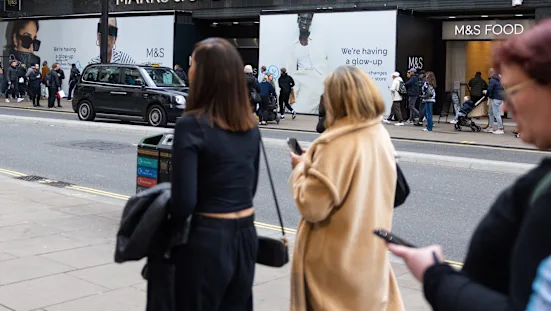
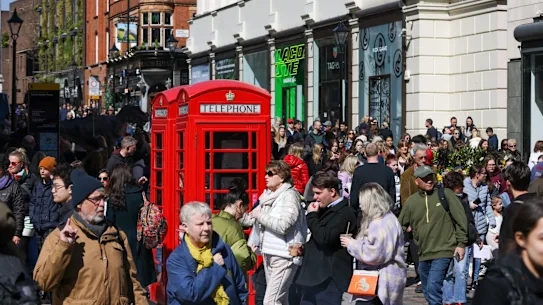
Travelers and locals appear to be relaxed about the risk of thefts on the streets, with many walking around looking at their phones in areas known for thefts such as Oxford Street, Chelsea and Westminster.
 Pedestrians continue to browse Oxford Street, London’s worst site for mobile phone theft.Bloomberg
Headlines about phone thefts have not changed the behavior of some pedestrians on London’s streets, with many holding up their phones to check the road or take selfies, even when they are close to passing bicycles.
Crime rates in England and Wales have fallen over the past decade in categories such as murder, gun crime and violence against others.
Shopkeepers in London are, however, concerned about a long-term rise in shoplifting and an increase in threats against retail workers.
Under pressure from retailers, the government introduced a new separate criminal offense for assaulting a retail worker, and also removed the £200 threshold for “petty theft” – a rule that was accused of making it too easy for shoplifters to get away with multiple thefts as long as each theft was below the threshold.
Related article

Police recorded 1.6 million thefts in England and Wales in the year to March, a fall of 8 per cent.
“Following a period of increased shoplifting, the number of offenses fell by 4 per cent to 507,086,” the Office for National Statistics said when it published new figures last Thursday.
Receive a note directly from our overseas correspondents about what makes headlines around the world. Sign up for our weekly What in the World newsletter.
Save
You have reached the maximum number of items saved.
Remove items from the saved list to add new ones.
 David Crowe is Europe correspondent for The Sydney Morning Herald and The Age.Connect via X or e-mail.