

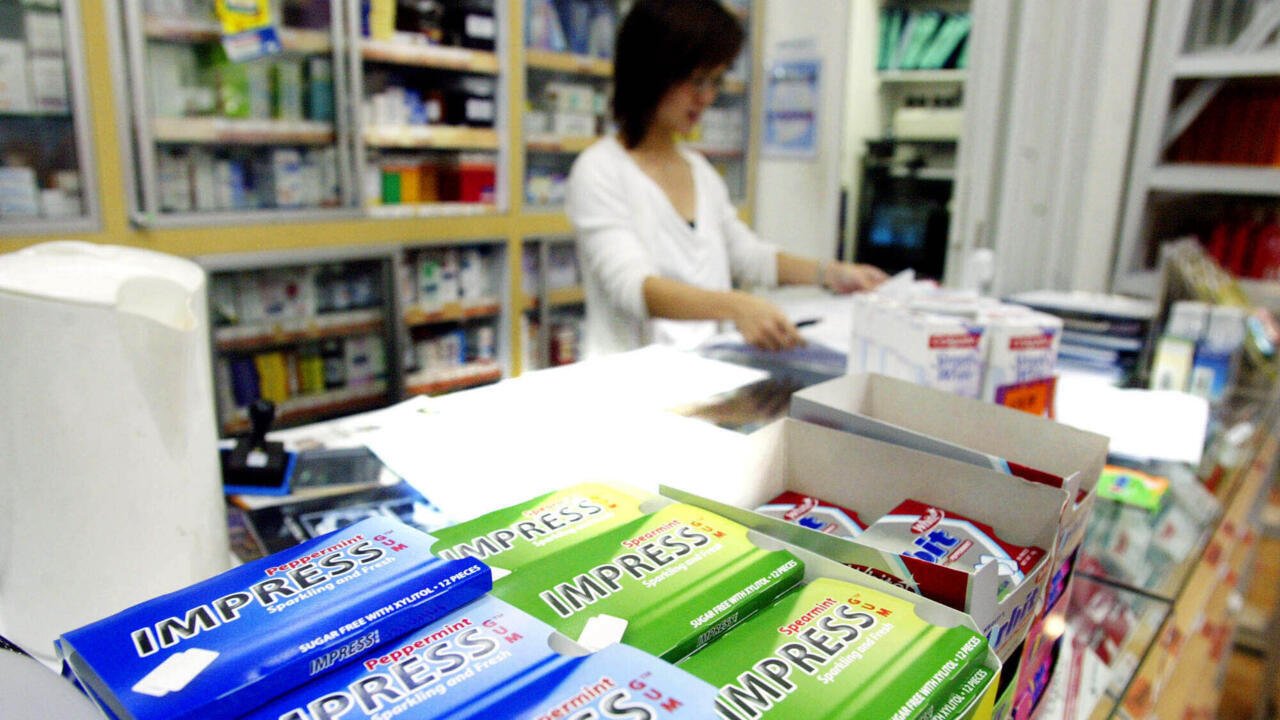
Singapore is known for its immaculate streets, efficient public transport and extremely strict enforcement of laws. Many of them relate to hygiene and cleanliness, the most famous of which is the almost complete ban on chewing gum.
Published: 07/22/2026 – 07:10Modified: 07/22/2026 – 12:38
8 min Reading time
When it comes to chewing gum, Singaporean law doesn’t mince words. THAT Food Sales Law indicates that ” the sale or advertising of the sale of any chewing gum is prohibited ” And Import and Export Regulation Law reminds that ” The import of chewing gum into Singapore is prohibited. “. The offense can cost you dearly, with a fine of $2,000 (€1,300) for illegal sales. As well as a fine of up to $100,000 (about 70,000 euros) and two years in prison for the first import violation. The sentences are cumulative.
The Singapore authorities’ extreme strictures on this seemingly harmless product resulted in a lot of ink being spilled when the law was promulgated in 1992. Lawmakers in the Asian city-state explained at the time that the insidious chewing gum left on the road and stuck to sidewalks, stairs and public benches was causing significant cleanup costs and damage to maintenance equipment. One of the key arguments was malfunctions in the subway – breakdowns and delays caused by chewing gum sticking to door sensors.
The 1992 ban effectively ended a long conflict in the country’s history that began in the 1970s. Singapore’s tech agencies have long considered chewing gum to be the bane of a range of technologies; from elevators to payphones, ATMs and even mailboxes– explains historian and professor Gregory Clancy from the National University of Singapore. in a study on hygiene policy archipelago. In the minds of local engineers and designers, this matter was associated not only with the lack of cleanliness and the high cost of cleaning, but also with minor sabotage. »
” Low-level Luddism »
Committed to a massive modernization project, the young Singaporean state led by Lee Kuan Yew began ambitious reforms in the 1960s and 1970s aimed at transforming this small, impoverished port city into a competitive industrial and financial center. This strategy is accompanied by carefully planned urban planning policies that aim to make Singapore a modern, clean and efficient city. In this context, many kampungs and slums have been demolished and the population has been displaced into social housing complexes. by using Housing and Development Board (HDB) programmes. These forced moves to new structures not only make people happy. And the first victims of this anger are elevators, the buttons of which are blocked by rubber.
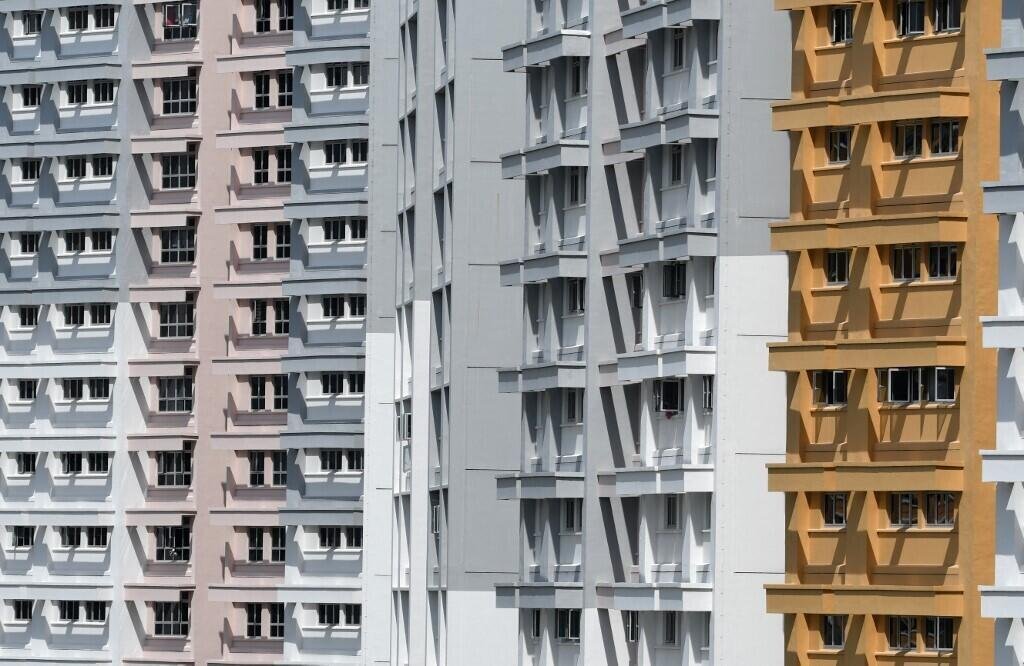
Review of Housing Development Board (HDB) social apartments in Singapore, 5 March 2018. AFP – ROZLAN RAHMAN
L’« The ubiquity of this routine sabotage suggests that some members of this disgruntled minority were taking revenge on their owners by using chewing gum as a weapon in a form of low-level Luddism. “, analyzes researcher Gregory Clancy. Thus, HDB elevators become spaces where “ to enter was to enter a closed space of anger, disorder and dirt at the very heart of a world that was otherwise becoming increasingly clean and orderly. “, So ” rooms whose doors close automatically (…) turned into voting booths for an angry minority of physically displaced people “. Sabotage is seen as a form of revenge against the state owner (“ lessor state “), which reorganizes their life and their space.
Elevators aren’t the only victims of dough chewing. ATM slots introduced in the mid-1970s regularly became blocked, and pay phones introduced at the same time suffered a similar fate until the 1990s. It was then estimated that every month about 700 phones are vandalized with chewing gum. The state views this as a sign of criminal youth. ” Government administrations viewed chewing gum not only as an expensive nuisance requiring cleanup, but also as a kind of “plastic” easily accessible, used by the young, anonymous and gangster population “,” the professor emphasizes.
Utopia and social discipline
A domestic political weapon of protest or an instrument of crime, chewing gum is quickly becoming the target of forces that want to push society forward. The urban modernization project involves a policy of social discipline, and in this context, chewing gum becomes an issue. In his book Giants of Asia: Conversations with Lee Kuan Yew, American writer Tom Plate connects this ban with real political thought. “ As a guest columnist, I pondered the chewing gum mystery myself, but eventually realized that the trend of sticking chewing gum residue everywhere was seen by the authorities as a clear attack on Singapore’s desire to be perfect. »
” In other words, it was contrary to utopia, Tom Plate continues. This slowed down the process. For Lee Kuan Yew and his team, this once common bad habit became a serious obstacle to progress. The solution to moving towards utopia was simple: simply ban chewing gum. » The first proposal for a complete ban appeared in 1983. The government said HDB was spending $150,000 a year to remove gum stuck in the blocks. However, the project was shelved due to fears of unpopularity. It took ten years for this regulation to emerge, which was widely reported in the Western press to the point of irritating the founder of modern Singapore.
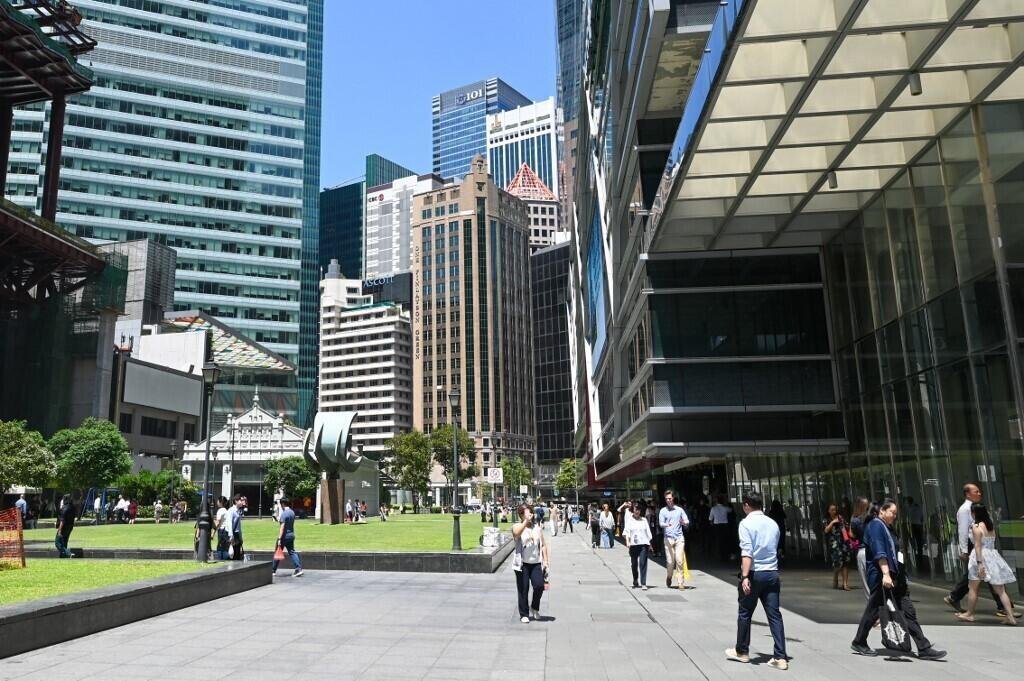
Passersby stroll during lunch in the Raffles Place financial district, Singapore, May 19, 2026. AFP – ROZLAN RAHMAN
But in an interview with the BBC in 2000, Lee Kuan Yew fully supported this radical approach. ” As a result, we behave better today and live in nicer places than we did 30 years ago.. “Upset by a journalist’s remark about the much-hated chewing paste, the former Singaporean leader retorted: “ WithSticking gum on subway doors to prevent them from opening is not creativity. I call it doing stupid things Before breaking into the now famous expression: “ If you can’t think because you can’t chew, try a banana. »
Cleanliness on all floors
The ban is one of the most famous aspects of life in Singapore, but it is part of a host of strict cleanliness laws that sometimes come as a surprise to visitors. In the city, which its inhabitants nicknamed ” beautiful city ” – playing on the double meaning of the English word ” Great ” (“beautiful” or “good”) – it is strictly forbidden to throw garbage on the ground, draw graffiti, cross the road outside of pedestrian crossings, spit on the ground, throw out “nasal mucus” and urinate anywhere except toilets. And when using public toilets, be sure to flush the toilet after using it. All this, like the sale and import of chewing gum, is written in black and white in the law.
This obsession with cleanliness can be explained by a combination of health restrictions, economic goals and political projects. In tropical climates where waste can quickly cause epidemics and pest infestations, cleanliness was first seen as a public health measure and then as an asset to attract tourists and investors, projecting an image of a modern and disciplined national city conducive to business development. Thus, since the 1960s, the state has made hygiene the basis of the national ideology: large-scale sanitation plans, the relocation of street vendors to controlled centers, mass campaigns calling for collective responsibility, strict legislation… For experts, the fight against dirt has become inseparable from the establishment of a social order in which public space must remain under complete control.
Since the easing of restrictions in 2004, chewing gums that are properly registered as health, therapeutic or oral hygiene products and meet precise compositional and prescription criteria have been spared this strict regulation. Plus, its consumption has always been legal, contrary to what some urban legends would have us believe, and carrying small amounts in suitcases for personal use is almost never punished. On the other hand, it’s best not to spit out your chewing gum on the ground. This will be considered littering and therefore an offence. But on clean streets Singapore, you don’t have to be careful when you chew.
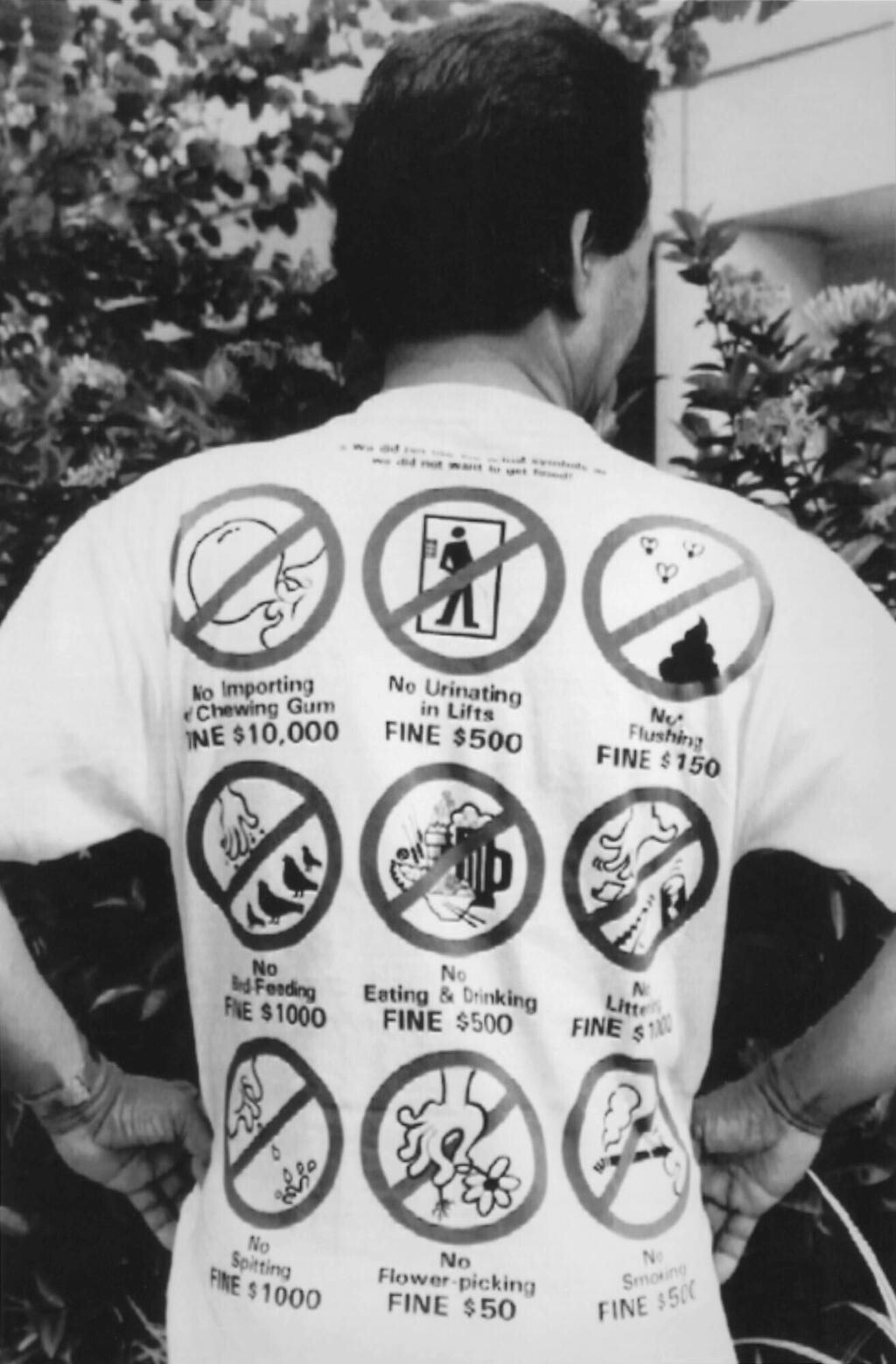
The T-shirt designer describes in an informative and humorous way how Singapore uses fines to reward good behavior. THE ASSOCIATED PRESS – TAN A SOON