

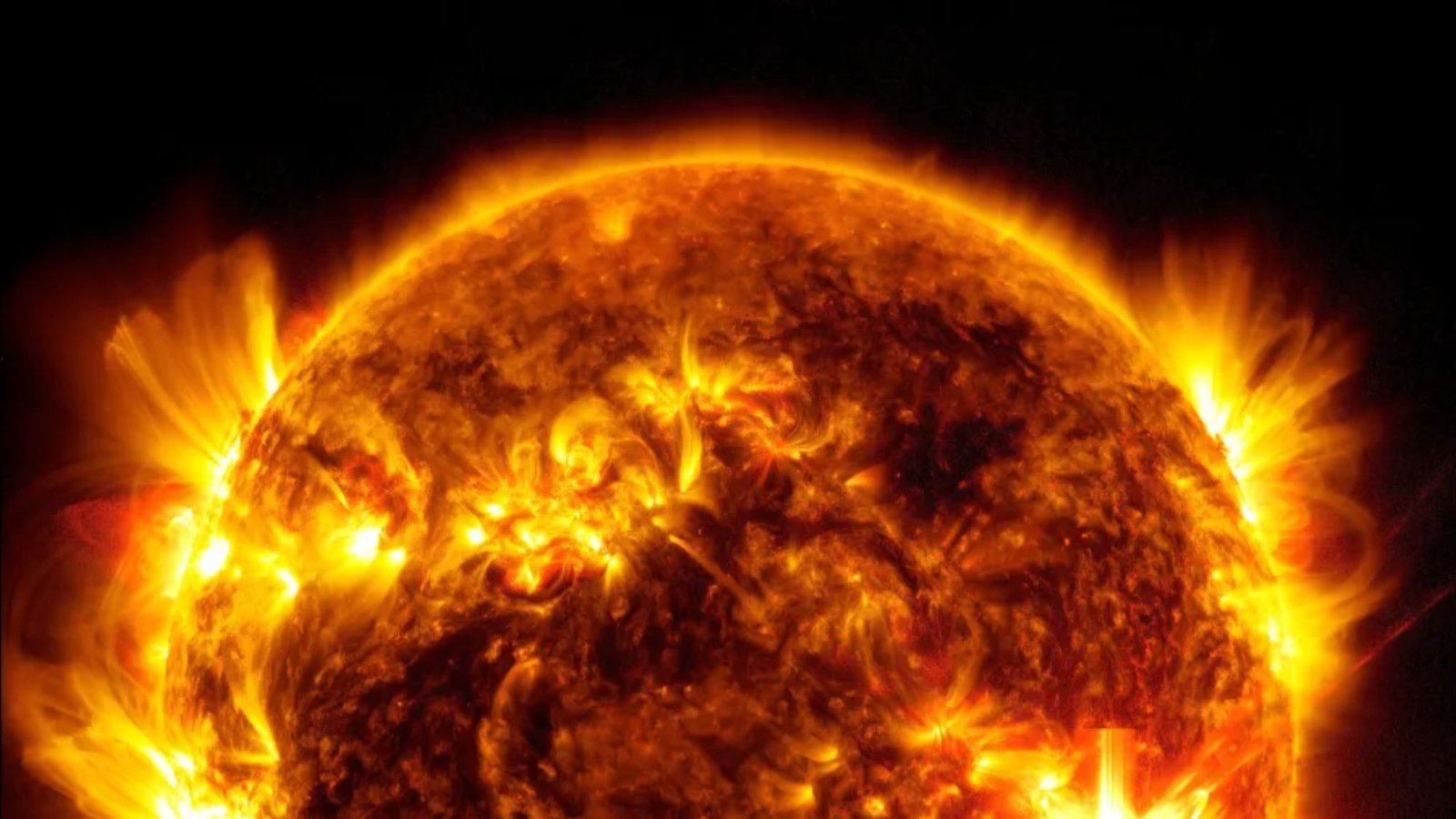
The most powerful solar storms to hit Earth could cause more damage than scientists thought, according to a new study that suggests the effects of extreme space weather have been underestimated.
Researchers have found evidence that the apparent upper limit on Earth’s response to the strongest solar storms may be a result of how the solar wind was measured, rather than a true physical ceiling. If the results are confirmed, rare geomagnetic storms that occur “once in a thousand years” could have a greater impact on modern technology than current estimates indicate, according to the statement.
“Our planet’s magnetic field does a really good job of protecting us from many of the effects of space weather, so they often show up simply as glitches or beautiful aurora,” Maria Walach, co-author of the study from Lancaster University, said in a statement. “However, there are edge cases.”
Solar storms occur when solar eruptions such as coronal mass ejections and solar flares send clouds of charged particles hurtling toward Earth. While they can create spectacular auroras, they can also disrupt satellites, GPS, radio communications and power grids.
History has shown the damage even less powerful storms can cause. The 1859 Carrington Event, the most powerful geomagnetic storm on record, disrupted telegraph systems around the world and pushed auroras from their normal high latitudes near the Arctic and Antarctic to places as southern as the tropics. Another powerful storm in 1989 destroyed Quebec’s power grid, leaving millions without electricity, and the “Halloween Storms” of 2003 disrupted satellites, GPS and radio communications.
You may like
While the study does not suggest that an unprecedented solar storm is imminent, it does argue that scientists may have to rethink how they assess the severity of the rarest events—an increasingly important issue as modern society becomes increasingly dependent on satellites and other vulnerable technologies.
The researchers traced the apparent upper limit to where most solar wind measurements are collected. Many observations of extreme events come from spacecraft located near the Lagrange 1 (L1) point of the Sun and Earth, about 1 million miles (1.5 million kilometers) upstream from Earth. Because the strongest solar wind tends to weaken somewhat before reaching Earth, comparing L1 measurements with conditions on our planet may give the impression that Earth’s upper atmosphere is becoming unresponsive to the increasingly intense solar wind, even if this is not the case.

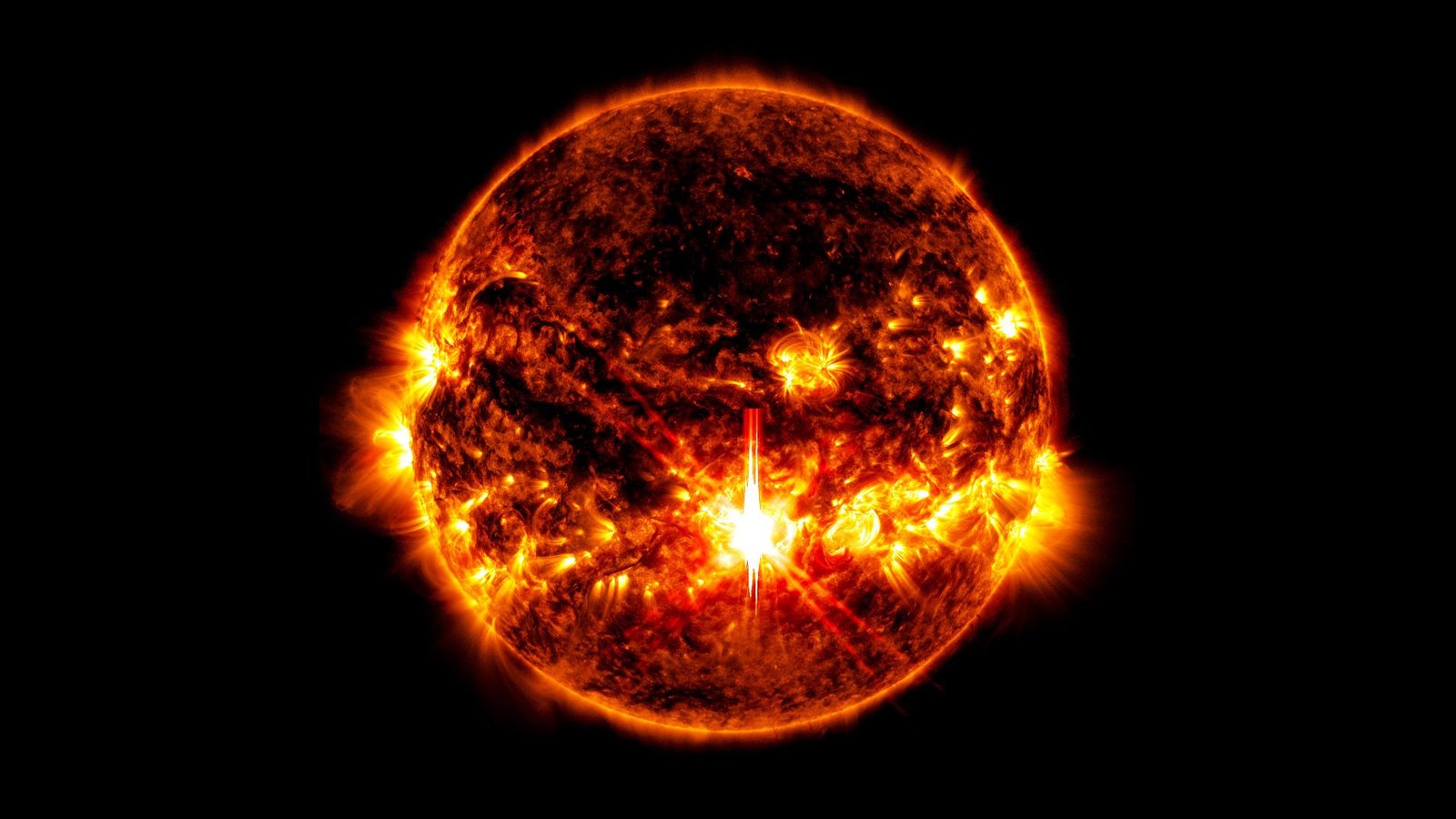
Close-up of a solar flare on the Sun. (Image credit: NASA/SDO)
To test this idea, the team analyzed more than a million solar wind measurements collected by NASA spacecraft orbiting much closer to Earth, where the solar wind interacts directly with our planet’s magnetic field. These observations showed that the electrical currents passing through Earth’s upper atmosphere continued to increase along with the stronger solar wind, with no sign of the previously hypothesized upper limit. The results show that exceptionally powerful solar storms could cause stronger geomagnetic disturbances and greater impacts on satellites, communications systems and power grids than previously predicted.
“Fortunately, such extreme cases are rare, but this also means we have limited data to work with and only time will tell what happens in the event of such an extreme once-in-a-thousand-year event,” Walach said in a statement.
The study comes as the Sun remains near the peak of its roughly 11-year solar cycle, known as solar maximum, when sunspots, solar flares and coronal mass ejections become more frequent. During the current cycle, strong geomagnetic storms have repeatedly sent auroras far beyond the normal polar sky.
In May 2024, the worst geomagnetic storm in more than two decades lit up the skies over much of the United States and Europe, causing intermittent disruptions to high-frequency radio communications, GPS-guided equipment, and some satellite operations. While significant, the event was far less powerful than the Carrington event—or even the rarer storms that the new study suggests may be possible.
The results were published July 15 in the journal Nature.