
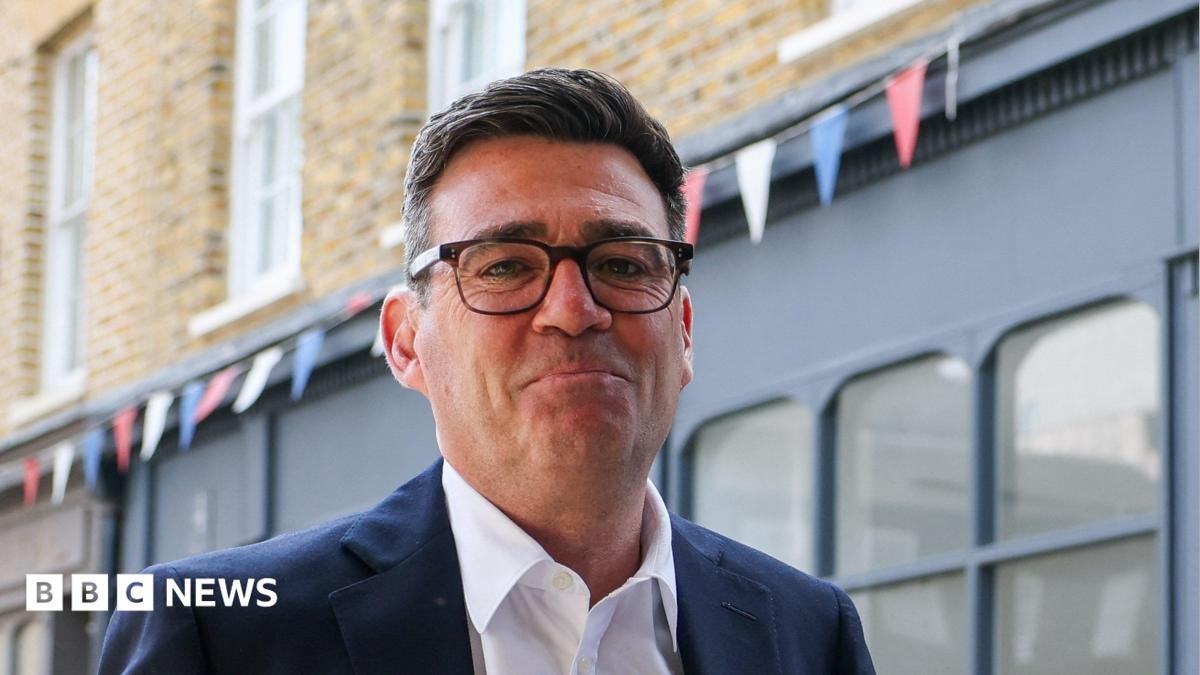
Andy Burnham will announce plans for new oil and gas drilling in the North Sea when he becomes Prime Minister on Monday, the BBC has reported.
Labour’s 2024 manifesto, which the new leader said he would follow, promised not to issue new licenses but to honor existing ones.
At the center of the debate are two oil and gas fields in Scotland – Rosebank and Jackdaw – which regulators approved in 2022 and 2023 under the then Conservative government but were scrapped in 2025 after a legal challenge.
The announcement will be part of a series of measures by Burnham, including plans to bring water and energy companies under public control, as well as a new council housing program.
He is also expected to outline new measures that will give “people breathing room on the cost of living” and intends to make a “dynamic start… focused on making tangible changes to people’s lives as quickly as possible.”
While details of the new oil and gas plans are unclear, the North Sea row has been ongoing for a long time, with Sir Keir Starmer facing criticism for his opposition to drilling.
He argued that the new licenses would not lead to cheaper bills for consumers and said it was more important to switch to renewable energy for a secure energy supply in the future.
Britain’s Tory and Reform Party has pressured the outgoing prime minister to approve further drilling and said it was “reckless” that the country was not tapping its own resources at a time when the war with Iran had driven up energy prices.
Sir Keir’s approach has also been snubbed by US President Donald Trump, who has repeatedly called for “opening up North Sea oil” and said in a social media post before the prime minister’s resignation that he had “massively failed” on energy policy.
Within his party, Sir Keir has seen the debate become increasingly divisive as Labor figures question the party’s future direction on energy policy.
Some Labor MPs have called on the government to take a more liberal approach, warning that the transition away from oil and gas should protect jobs and reduce the cost of energy bills.
But others have backed the government’s current approach, arguing that expanding renewable energy is key to improving energy security and reducing the impact of climate change.
Current energy secretary Ed Miliband, who is likely to take on a senior cabinet role under Burnham, has been a staunch supporter of Labour’s manifesto position and has previously described the Rosebank license as “climate vandalism”.
Earlier this week, before the deadline for leadership nominations, Burnham was sent a letter from the oil and gas industry and trade unions urging him – and all other Labor MPs – to “support North Sea oil and gas”.
The statement said support for the oil and gas industry is “a signal that the country remains committed to extraction, construction and production.”
“This sends a message that the government supports the people and places that have nourished this country for generations,” the letter said.
Burnham, who returned to Parliament a month ago in a by-election, emerged as the sole leadership candidate after he was backed earlier this week by 379 Labor MPs, as well as all 11 of the party’s unions.
The new leader of the Labor Party said he was finalizing his cabinet before replacing Sir Keir on Monday.
Speculation is growing over who will take over Burnham County’s top jobs. Miliband and Shabana Mahmood are believed to be in the running to replace Rachel Reeves as chancellor.
Asked why he had not announced his best team, the new Labor Party leader said on Friday: “It would be a little premature and I think it would cause complete chaos if you started half the reshuffle before you’ve taken a position.”
Earlier in the day, in his first speech since winning the party’s support, Burnham promised he had “a plan” and vowed to “bring back hope” under his leadership.
The address also gave the first glimpse of Burnham’s political agenda, which is said to include building new council houses, revitalizing high streets and improving education.
The former Greater Manchester mayor has also previously outlined his vision for welfare reforms, greater public control of water and energy companies and devolution of power to Whitehall.