

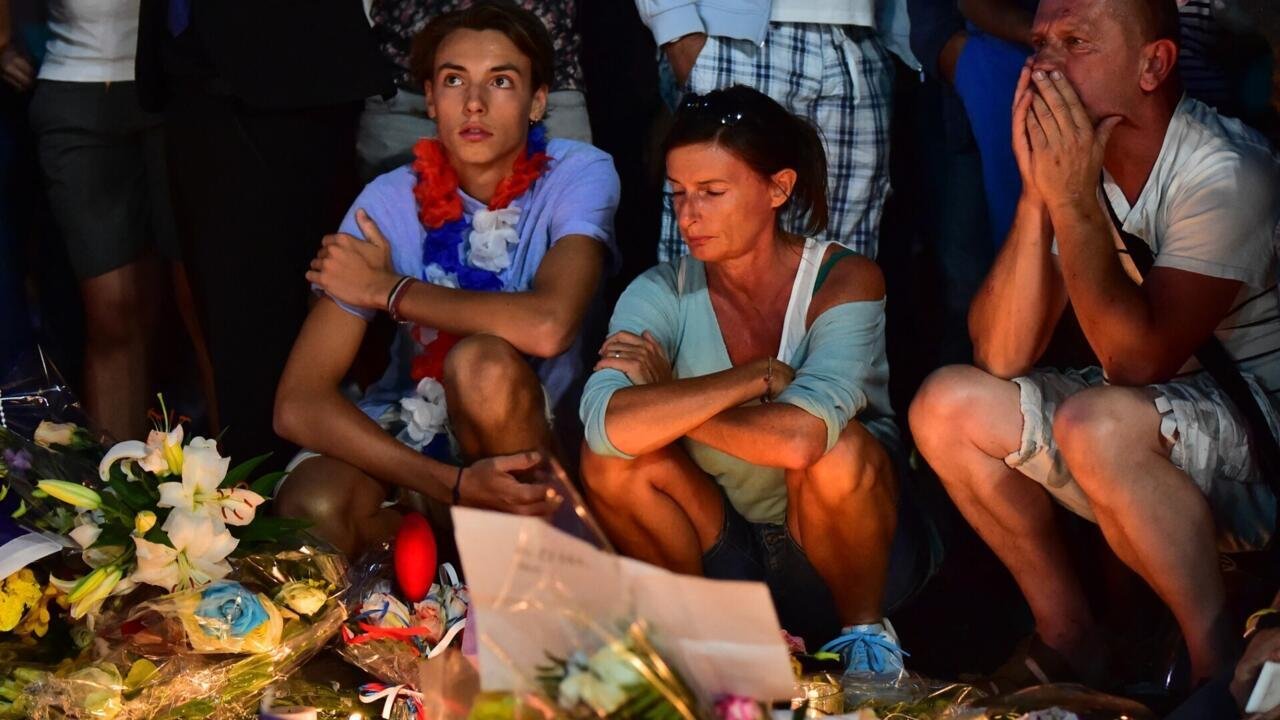
On July 14, 2016, Nice suffered the deadliest attack in its history, which was claimed by the Islamic State group. A truck crashed into the Promenade des Anglais, stunning crowds of spectators gathered to watch Bastille Day fireworks. The attacker killed 86 people and injured hundreds more. Ten years later, our teams returned to the scene of the tragedy to meet survivors and hear their stories.
For the past 10 years, Anne Murris has lived with the pain of losing her daughter Camilla, who died aged 27 when she was hit by a truck on the Promenade des Anglais.
“She was a charming young woman with a mischievous side. She loved to make people laugh and laughed easily,” her mother recalled with tears in her eyes.
On the evening of July 14, 2016, Anne Murris learned of the attack from a notification on her phone while traveling in Scandinavia with her husband, Camilla’s father.
“It was complete panic because we knew Camilla was there.”
Endless waiting
The couple returned to France and spent four agonizing days searching for their daughter. Ann Murris describes the wait as “torture”, saying she suffered from “repeated attacks of tetany”.
When a judicial police officer finally confirmed their daughter’s death, the family was offered the opportunity to view her body. But all that remains are “just two hands behind the glass.”
Anne fainted with grief.
“I know there was a lot of sensitivity towards some families, but that wasn’t the case with us. It was extremely traumatic. Staff should have been better trained and supported by a psychologist when breaking news like this.”
Mother fight
In 2018, Anne Murris founded the Mémorial des Anges association. Since then, she has dedicated herself to supporting the families of other victims and preserving the memory of those killed.
She has launched numerous projects to turn her grief into action: a memorial museum in Nice, an exhibition at Villa Massena to mark the 10th anniversary of the attack, a street photography exhibition, talks in schools and the placement of 86 pebbles – one for each person killed – in the Himalayas.
“My daughter’s death cannot make sense. How can such a barbaric act make sense? The only thing I can do is give meaning to my suffering by working to preserve her memory and help prevent radicalization,” she says.
Anne says these actions also make her “feel like she cares about Camilla.”
The Quiet Hero
Ann Murris gave evidence at both the original trial and the appeal proceedings, which resulted in two men involved in the attack being sentenced to 18 years in prison for their roles in the terrorist plot.
During the hearing, she met another survivor of the attack: Gilles Gambery.
On the evening of July 14, while attending a concert on the Promenade des Anglais, he heard “a huge roar and, above all, screams.” He saw the truck make its way through the crowd and finally stop.
At first he thought it was an accident.
“I thought it was a traffic accident or the driver had passed out.”
As he approached the taxi, the attacker pointed a gun at him. Gamberi tried unsuccessfully to disarm him.
“I heard two shots and realized he was shooting at me.”
Jumping out of the truck, he collided with a policeman running towards him. Gamberi was able to provide vital information regarding the assailant’s location inside the vehicle. The attacker was then shot dead by police.
For many years, Gamberi chose not to speak publicly about his actions. He later called for corrections to what he called inaccurate reports.
“People said I was trying to stop the truck, when in fact it had already stopped.”
A quarter of the dead were children
Soad Darwiche was 15 years old when she went to watch the Bastille Day fireworks with her grandmother, aunt, uncle and younger sister Emma.
“I didn’t really understand what was going on. I just followed the movement of the crowd,” she recalls.
She took refuge in a hotel by the sea, unaware of what had happened to her family.
The next day she learned that the three adults who were with her had died. Her 12-year-old sister Emma was seriously injured.
“Today she suffers from traumatic amnesia,” explains Dina Darwiche, the eldest of three sisters, who was on holiday in Brittany with her mother when the attack occurred.
“Emma doesn’t want to hear about it. Even when she has dreams or memories, she wakes up saying, ‘I don’t want to remember.’
Hearing this news, Dina hurried to Nice with her devastated mother.
Ten years later, the sisters began a new life. Dina became a teacher and volunteer firefighter. Soad works in a restaurant and bought her own apartment.
They managed to create a new daily routine, combining work, friendship and a passion for sports and drawing. But the pain remains.
“We think about our grandmother, aunt and uncle very often, even if we don’t talk about it much, because it’s still very painful,” says Dina.
She remembers her grandmother as “strong and independent,” and her aunt and uncle—both math teachers—as a couple who loved life and enjoyed going to restaurants and cultural events.
Soad adds, “My aunt and uncle were as in love as they were on their first day.”
The Darwiche sisters are officially recognized as victims of the attack. Like them, almost 3,000 people affected by the Nice attack have received support from the Guarantee Fund for Victims of Terrorism. About a quarter of the victims were minors.